High-Performance Cantilever Storage Systems Engineered for Mumbai Industrial Hubs
Manufactured using premium Q355B structural steel, automated robotic welding, and anti-corrosive powder finishes specifically formulated to withstand Mumbai’s demanding coastal humidity and heavy industrial cycles.
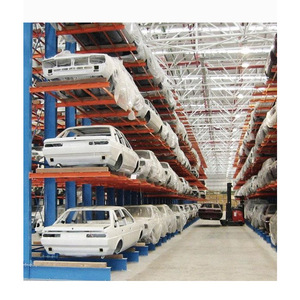
Jracking CE Certified Industrial Shelving Warehouse Racks Heavy-Duty Cantilever Racking System for Car Storage
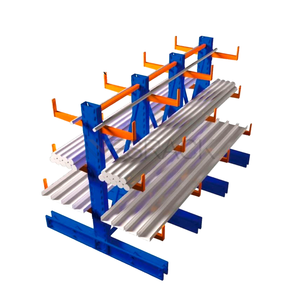
Heavy-Duty 6 Meter High Warehouse Cantilevered Stacking Racks and Shelves Raw Material Storage Rack
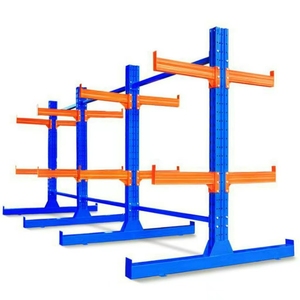
High Quality Cantilever Racking Manufacturer Factory Cantilever Rack Storage Cantilever Shelving For Sale
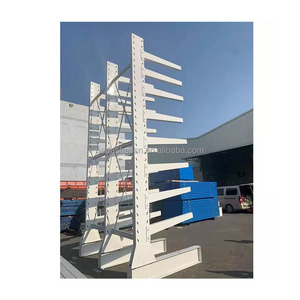
Industrial Rack Shelving Single Sided Heavy Duty Cantilever Racking System Cantilever Racks for Sale
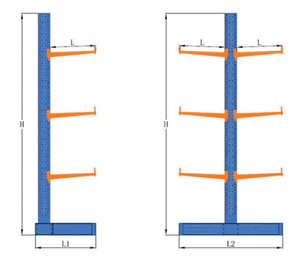
Jracking CE Certified Warehouse Storage Shelving Rack Adjustable Heavy-Duty Cantilever Rack for Steel Profile Storage
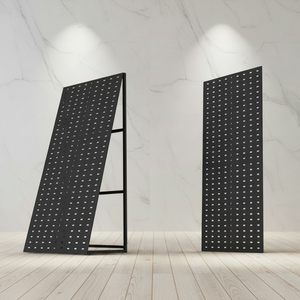
Hot Sell Solid Simple Style Display Rack for Timber Board Floor Lumber Stone
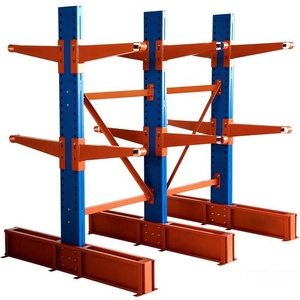
Victory Warehouse Storage Shelving Rack Cantilever Racking Heavy Duty System For Lumber
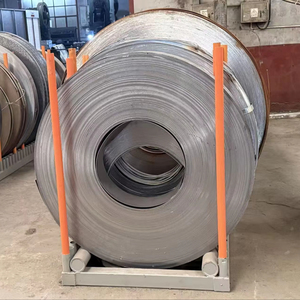
Heavy Duty Steel Coil Storage Rack, Industrial Cradle Rack for Coil Material Handling
2,500+ kg
Arm Load Rating Available
14 - 18 Days
Sea Transit to Nhava Sheva (JNPT)
Zone III
Seismic Engineering per IS 1893
100% FEM
FEM 10.2.02 / EN 15512 Certified
Structural Mechanics & Supply Chain Synergy: The China-to-Mumbai Advantage
A rigorous engineering evaluation of why tier-one logistics developers, pipe manufacturers, and metal stockholders in the Mumbai Metropolitan Region (MMR) leverage China’s advanced structural steel manufacturing capabilities.
1. Structural Steel Metallurgy: Q355B vs IS 2062 Structural Equivalence
In heavy cantilever engineering, the fundamental determinants of safety and structural longevity are modulus of elasticity, yield strength ($\sigma_y$), and charpy impact energy at extreme cyclic loads. For Mumbai’s demanding industrial environments, where heavy steel pipes, rebar bundles, and extrusion dies are frequently shock-loaded onto cantilever arms by high-tonnage forklifts, material specification dictates failure margins.
Our manufacturing plants utilize hot-rolled structural H-sections and heavy cold-formed box sections fabricated from high-grade Q355B low-alloy manganese structural steel (conforming to GB/T 1591). When audited against the Indian standard IS 2062 Grade E350, Q355B exhibits an identical yield strength threshold ($\ge 355\text{ MPa}$ for thickness under 16mm) while providing superior longitudinal elongation characteristics ($\ge 21\%$) and verified Charpy impact toughness testing at 0°C. For medium applications, Q235B serves as a robust equivalent to IS 2062 Grade E250, delivering structural compliance under both FEM 10.2.02 (European Federation of Materials Handling) and the Indian structural steel code IS 800:2007.
| Engineering Property | China Standard: Q355B | India Standard: IS 2062 E350 | Design Impact on Cantilever Arms |
|---|---|---|---|
| Minimum Yield Strength ($R_e$) | 355 N/mm² (t ≤ 16mm) | 350 N/mm² | Prevents permanent arm sag under persistent dead load |
| Tensile Strength ($R_m$) | 470 – 630 N/mm² | 490 N/mm² | Mitigates micro-fissures at high-stress column-arm joints |
| Minimum Elongation ($A$) | ≥ 21% | ≥ 20% | Absorbs dynamic kinetic impacts during forklift placement |
| Carbon Equivalent (CEV Max) | ≤ 0.38 - 0.40% | ≤ 0.42% | Superior weld penetration and HAZ metallurgical integrity |
| Standard Surface Finish | 80–100μm Epoxy / HDG to ISO 1461 | Standard Red Oxide / Enamel | High barrier resistance against Mumbai coastal saline air |
2. Column-Arm Connection Mechanics: Mitigating Cantilever Deflection
Unlike standard selective pallet racking where crossbeams tie vertical uprights together into a closed portal frame, a cantilever system operates on pure cantilever beam mechanics. The entire load placed on the extended arm generates an eccentric bending moment ($M = P \times L$) transmitted directly into the vertical column, inducing severe forward shear stress and base torsion.
Our engineering protocol employs finite element structural optimization (FEA) on two specialized connection typologies:
A. Articulated Pivot Pin System (Heavy-Duty): The arm is secured via heat-treated, high-tensile shear alloy steel pins (Grade 8.8 or 10.9). If an errant reach-truck or forklift strikes the arm from below during retrieval, the arm pivots upward harmlessly rather than shearing off or transferring buckling shock to the vertical upright.
B. High-Tensile Flange Bolted System: Employing laser-cut multi-hole backplates with Grade 8.8 structural bolts, providing rigid horizontal stability with adjustable vertical pitch intervals (100mm, 140mm, or 150mm) for changing stock profiles in Mumbai steel yards.
Deployment Footprint Across Key Mumbai Industrial Clusters
Engineered storage solutions mapped precisely to the land constraints, trade verticals, and structural demands of Maharashtra's primary industrial zones.
Kalamboli Steel Market (Navi Mumbai)
Asia’s largest wholesale steel trading cluster requires extreme load capacities for hot-rolled steel coils, hollow structural sections (HSS), round bars, and stainless steel tubing. High inventory turnaround requires open-access double-sided cantilever columns.
Bhiwandi & Mankoli Logistics Corridor
MMR’s premier fulfillment belt features rapid escalation in commercial rental rates per square foot. Warehouses demand high-bay cantilever systems up to 9–11 meters operated via guide-rail guided Very Narrow Aisle (VNA) reach-trucks or side-loaders for flat-pack furniture, long PVC plumbing conduits, and roll goods.
Taloja, Mahape & Panvel Industrial Belts
Heavy machinery manufacturing, aluminum extrusion plants, and EPC equipment fabricators face chemical, abrasive, and saline atmospheric exposure. Heavy machinery tooling, shaft components, and cast pipes require ultra-stable single-sided perimeter cantilever racks with custom end-stops.
Mustafa Bazar & Lakda Bazar Relocations
Historically dense timber, veneer, and Italian marble slab markets across central Mumbai are relocating inventory to modern industrial warehouses in Navi Mumbai and Panvel. Heavy slabs and seasoned lumber demand non-scratch timber-faced or polyurethane-sleeved cantilever arms to prevent inventory breakage.
Macro Trends Transforming Long-Load Storage Across MMR
Three tectonic structural shifts dictating warehouse infrastructure modernization from South Mumbai to the Outer Ring Expressway.
Land Scarcity Forcing Vertical Expansion
Industrial land leasing rates in Bhiwandi and Panvel have experienced an unprecedented compound annual growth rate over the last five years. Warehouses can no longer afford wide, inefficient floor-stacking of pipes, structural profiles, and sheet goods. Transitioning to 8-meter to 12-meter high cantilever systems increases warehouse cubic utilization by up to 340%, unlocking critical storage volume on existing concrete footprints without signing expensive additional land leases.
Direct Maritime Corridor: Ningbo/Shanghai to JNPT
Navi Mumbai is anchored by Jawaharlal Nehru Port Trust (JNPT / Nhava Sheva), India's premier container gateway. Shipping directly from Chinese manufacturing ports (Shanghai, Ningbo, Qingdao) provides direct sea-transit within 14 to 18 days. This maritime efficiency allows procurement managers to import precision-cut, high-yield Q355B structural cantilever systems with significantly lower freight landed-costs than moving heavy raw steel across overland domestic corridors.
Coastal Micro-Climate Demands Corrosion Class C3/C4 Protection
The Mumbai Metropolitan Region endures extreme monsoonal downpours exceeding 2,500mm annually coupled with ambient relative humidity consistently over 80-90% and saline coastal air from the Arabian Sea. Standard local red-oxide painted racking systems deteriorate and rust within 18 to 24 months. Industrial buyers now specify thermoset powder coating (epoxy-polyester hybrid at ≥80 microns) or Hot-Dip Galvanization to EN ISO 1461 standards, ensuring a 20+ year asset life cycle.
Why International EPCs & Indian Enterprises Partner With Us
Operating state-of-the-art automated manufacturing facilities equipped with CNC roll-forming lines, 12,000-watt fiber laser cutting, and certified structural engineers.
Direct Mill Sourcing Scale
Direct volume procurement of prime Baosteel and Shougang structural steel billets ensures chemical purity, tight yield tolerances, and substantial price stability over local intermediaries.
Rigorous Structural Calculation
Every cantilever project receives a signed static and dynamic calculation report verifying base anchor reactions, column deflection ($\le H/300$), and arm tip deflection ($\le L/200$) under full rated capacity.
Export Sea-Worthy Packaging
Uprights, arms, and base beams are bundled with steel strapping, heavy-gauge protective corner guards, moisture-barrier wrapping, and specialized dunnage for damage-free ocean container de-stuffing at JNPT.
Complete Project Engineering
From initial DWG warehouse CAD layout reviews and column obstacle avoidance to providing load signage, installation blueprints, and torque specifications for your local mechanical installation teams.
From Material Specification to JNPT Clearance: 5-Stage Execution
A transparent, milestone-governed workflow eliminating risk for procurement, safety, and supply chain teams.
Site Survey & Load Spec
Analyzing item dimensions (length, outer diameter, center of gravity), handling equipment, slab compressive strength, and clear height under sprinklers.
CAD Layout & FEA Model
Engineers generate layout schematics balancing aisle widths (wide, counterbalanced, or VNA) with arm pitch optimization to achieve maximum storage density.
Precision CNC Fabrication
Automated plasma cutting, precision column punching, robotic seam welding, shot-blasting to Sa 2.5, and automated electrostatic powder coating.
Container Freight to JNPT
Optimized 40ft High Cube container stuffing plans maximizing ocean freight cubic capacity, complete with packing lists, Mill Test Certificates (MTC), and COO documentation.
Installation Support
Delivery of detailed 3D exploded assembly diagrams, anchor torque charts (M16/M20 chemical or mechanical anchors), and load capacity rating plaques.
Frequently Asked Questions by Mumbai Procurement Directors
Clear, direct answers regarding customs clearance, BIS standards, ocean transit, and localized site engineering.
What are the import procedures, customs tariffs, and port handling for cantilever racks landing at JNPT (Nhava Sheva)?
How do you account for Mumbai's Seismic Zone III requirements in cantilever structural designs?
Roll-Formed vs. Hot-Rolled Structural H-Section Cantilever Racks: Which is best for our facility?
What concrete floor slab specifications are required to install heavy cantilever racks?
Can the cantilever arms be adjusted vertically after installation if our SKU profile changes?
How do you prevent arms from bending or dropping long flexible goods like plastic pipes or thin timber?
Request an Engineered Layout & Landed CIF JNPT Quotation
Send our senior storage engineers your warehouse floor plan, clear ceiling height, and product load specifications. Receive a complete 3D CAD layout, structural calculation summary, and transparent container delivery pricing within 24 hours.