1. The Engineering Definition: What Are Medium Duty Racking Systems?
In modern industrial storage design, the structural continuum is often mischaracterized as a binary choice between light boltless shelving and heavy-duty selective pallet racking. This binary assumption forces facility managers to either over-specify heavy profiles—wasting capital and floor cubic utility—or overload light slotted angle systems, inducing structural risk.
Medium Duty Racking Systems (often termed industrial longspan shelving or hand-loaded wide-span racking) fill this pivotal technical gap. Structurally engineered to support uniformly distributed loads (UDL) between 200 kg and 800 kg per beam level, these systems are constructed from precision cold-rolled open C-profile uprights and interlocking step beams secured with safety spring pins.
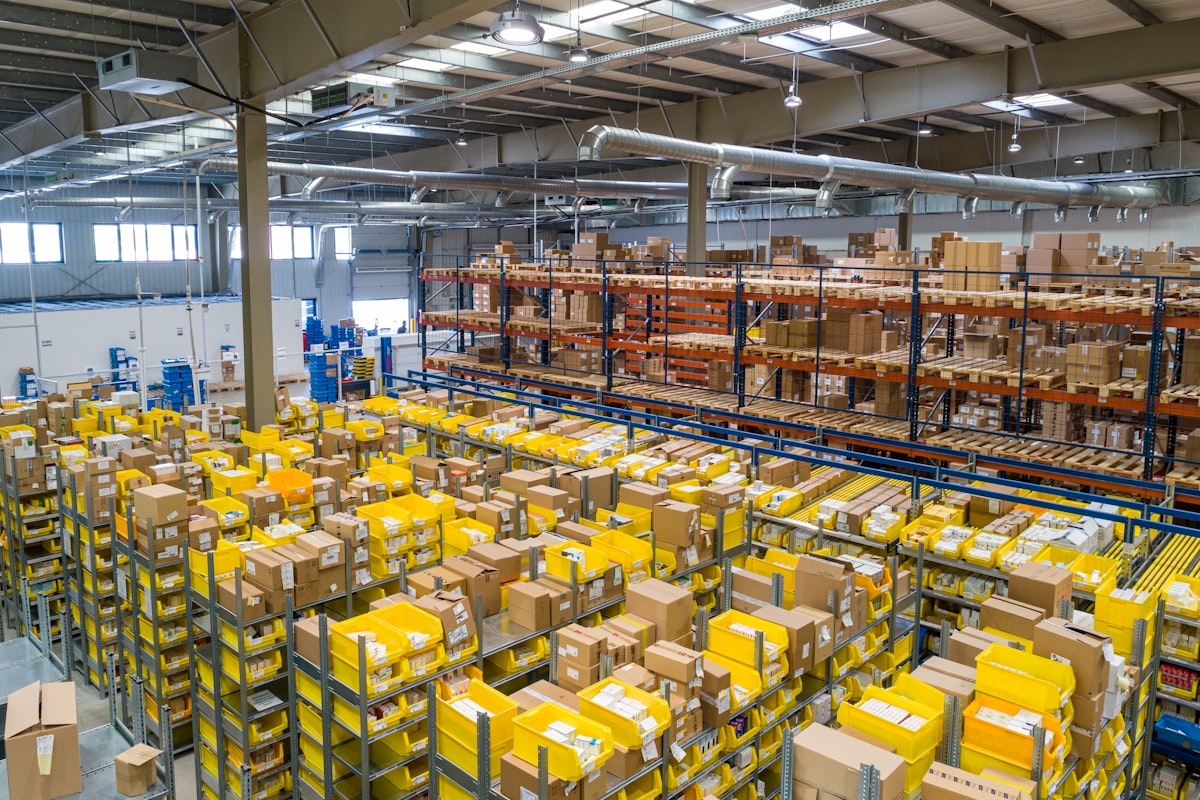
Unlike light commercial shelving, medium duty racking employs heavy-gauge baseplates anchored directly into the warehouse concrete slab using wedge anchors (typically M10 x 80mm). This rigid upright bracing geometry (incorporating alternating horizontal and diagonal structural channels) safely absorbs eccentric dynamic forces generated during rapid manual pick-and-pack, bin retrieval, and cart stocking.
Core Structural Anatomy:
- Upright Frames: Cold-rolled profiles (typical section 55mm x 47mm or 60mm x 50mm, 1.5mm to 2.0mm thickness) punched with 50mm teardrop or butterfly pitch slots for fully adjustable beam heights without unbolting structural fasteners.
- Step Beams: Specially folded P-beam or tube-step profiles (e.g., 50x30x1.5mm, 60x40x1.5mm, 80x50x2.0mm) designed with horizontal recessed flanges that sit flush with steel drop-in shelves, flush-mounted chipboard, or galvanized wire mesh.
- Decking Surfaces: Cold-rolled steel decking panels with integrated underside stiffener ribs, electro-galvanized wire mesh panels conforming to NFPA 13 sprinkler water-penetration directives, or 18mm high-density melamine/plywood boards.
- Safety Beam Clips: Electro-galvanized locking spring clips inserted into beam-end connector jaws to eliminate accidental uplift by forklift tines or manual hand-truck snags.
"Structural failure in hand-loaded warehouses rarely stems from upright column buckling; it almost universally originates at the connector jaw shear point or from unverified beam-tier span deflection exceeding EN 15512 tolerances."
— ILS Middle East Engineering Assessment Division2. Comparative Structural Matrix: Selecting the Optimum Racking Tier
To assist industrial engineers and supply chain directors in formulating precise tenders, the matrix below articulates the technical boundaries between commercial boltless shelving, engineered medium duty racking systems, and selective pallet racks.
| Technical Parameter | Light Boltless Shelving | Medium Duty Racking | Selective Pallet Racking |
|---|---|---|---|
| Nominal Load Range | 50 kg – 150 kg / tier | 200 kg – 800 kg / tier | 1,000 kg – 4,500 kg / tier |
| Clear Bay Span (mm) | 900 mm – 1,200 mm | 1,200 mm – 2,700 mm | 2,300 mm – 3,900 mm |
| Material Handling Mode | Manual hand-carry only | Manual, trolley, picking cart | Counterbalance / Reach forklift |
| Structural Pitch | 25mm / 38mm | 50mm modular pitch | 75mm / 76.2mm pitch |
| Floor Anchoring | Optional / light duty | Mandatory wedge anchor bolts | Heavy M12-M16 chemical anchors |
| Multi-Tier Mezzanine Capable | Rare / Single tier only | High (up to 3-tier catwalks) | Extreme (high-bay rack clad) |
| Primary Industrial Use | Office archives, light spare parts | E-commerce, 3PL, auto spares, retail | Full unit pallet distribution |
3. Recommended Engineering Configurations by Industry Verticals
Not all medium-duty environments exhibit identical operational stresses. Through hundreds of installations across the United Arab Emirates, Saudi Arabia, and Africa, ILS Middle East has engineered specific configurations mapped directly to material flow velocities:
A. High-Velocity E-Commerce Fulfillment & 3PL Hubs
These operations demand rapid SKU accessibility, zero pick errors, and dynamic box configurations. We engineer systems with clear 2,000mm to 2,400mm beam spans utilizing flush-fitting powder-coated steel panels. This eliminates dirt collection and cardboard particulate build-up, enabling pickers to glide plastic storage bins across shelf levels smoothly. Often configured as back-to-back bays with intermediate row spacers to maximize floor density.
B. Automotive Spare Parts, Hardware & Heavy Assemblies
Cylinder heads, brake calipers, and hydraulic pumps impose extreme point loading on decking panels. For automotive logistics, ILS Middle East specifies heavy-gauge step beams (80x50mm profile) paired with galvanized steel panels reinforced with triple longitudinal hat channels. Load capacity is certified up to 800 kg per level, preventing surface dishing and ensuring uncompromised employee safety during heavy hand handling.
C. Garment, Apparel & Hanging Goods Distribution
Modern fashion logistics requires adaptable hybrid systems. Medium duty frames are customized with round or elliptical chrome-plated hanging rails dropped securely into the step beam connectors, allowing hanging garments to reside directly beneath flat-pack folded shelving bins on higher tiers.
4. Future Procurement Trends: Where Medium Duty Storage Is Heading
Procurement directors in 2025 and beyond are no longer evaluating medium duty racking as static, stand-alone equipment. Driven by macroeconomic labor shifts, warehouse real estate escalations, and AI inventory optimization, three distinct trends are reshaping the global racking procurement market:
1. The Transition to Automated Guided Vehicle (AGV) & AMR Micro-Fulfillment
Autonomous Mobile Robots (AMRs) that assist pickers ("follow-me" or "goods-to-person" systems) require precise structural tolerances. Traditional loose-tolerance shelving deflects or sags, confounding automated LiDAR scanning and optical navigation sensors. Procurement requirements now dictate stringent dimensional tolerances (EN 15620 class 400), perfectly plumb upright uprightness, and smooth floor transitions to accommodate automated robotics running alongside manual pick lines.
2. Rack-Supported Catwalk Multi-Tier Mezzanines
With industrial rental rates climbing exponentially across global logistics corridors (such as Dubai South, Riyadh Industrial Cities, and North American distribution hubs), companies are eliminating dead vertical clearance. Rather than installing expensive structural steel mezzanine platforms, smart procurement teams invest in rack-supported multi-tier medium duty shelving. The upright columns are engineered to run vertically up to 9,000mm, supporting integrated intermediate open-steel grid walkways, stairs, and handrail systems. This triples picking surface area at a fraction of the cost of heavy civil construction.
3. Strict Compliance with Sustainable Hot-Climate Powder Coatings
In high-humidity and high-temperature environments across the GCC, Africa, and Southeast Asia, conventional paint coatings degrade, causing micro-corrosion and particulate contamination. Future-proof procurement mandates high-durability thermosetting epoxy polyester powder coatings cured at 200°C, delivering salt-spray resistance exceeding 500 hours without toxic off-gassing.
5. Critical Procurement Engineering Checklist (How to Avoid Costly RFP Mistakes)
When drafting an engineering tender or evaluating manufacturer quotes for Medium Duty Racking Systems, ensure the following parameters are validated:
- Confirm Load Basis (UDL vs. Concentrated Point Loading): Always request certified capacity based on Uniformly Distributed Load (UDL), while confirming the single point-load limit of individual decking panels. An overloaded 500kg tier can fail catastrophically if loaded with two 250kg concentrated steel dies placed side-by-side without internal support hat profiles.
- Beam Deflection Limits: Demand documentation guaranteeing deflection does not exceed 1/200th of the beam span (L/200) under full design loading, in strict accordance with FEM 10.2.02 regulations.
- Raw Material Grade Certification: Require mill test certificates proving structural steel grades (such as Q235B, S235JR, or SS400) with guaranteed yield strengths of ≥ 235 N/mm². Beware of cheap commercial thin-gauge cold-strip metal with unpredictable tensile properties.
- Anchoring System Validation: Specify anchor bolt diameters and pull-out safety calculations based on the compressive strength of your specific floor slab (e.g., C25/30 or C30/37 warehouse slabs).
- Corrosion Protection: Ensure that all hidden components, such as frame diagonal/horizontal bracing and floor baseplates, are zinc-electroplated or hot-dip galvanized to resist subterranean moisture wicked through concrete slabs.

6. Why Global Supply Chains Choose ILS Middle East
Engineering excellence is not an accident—it is a rigorous, calculated discipline. For more than a decade, ILS Middle East has operated as the premier designer, supplier, installer, and relocation specialist for warehouse storage infrastructure across the UAE, Saudi Arabia, the wider GCC, and Africa.
Here is how our engineering methodology shields clients from operational disruption and structural risk:
- Load Calculations, Not Generic Catalog Estimates: We do not sell one-size-fits-all components off an inventory shelf. Every medium duty rack project is designed around your specific package dimensions, pick frequencies, carton weights, and seismic zones, backed by verified engineering calculations.
- Comprehensive In-House CAD & Capacity Modeling: Our structural engineers produce comprehensive 2D CAD floor plans, clear aisle cross-sections, and 3D layout simulations. We verify forklift clearance, turning radii, escape routes, fire hose reel clearances, and sprinkler throw distances before manufacturing begins.
- Trained, In-House Installation Teams: We never sub-contract your structural integrity to uncertified local labor. Our dedicated installation technicians erect, shim, anchor, and torque every frame to precise vertical tolerances, securing beam locks and mounting certified load plaques on every rack run.
- Hot-Climate Powder Coating Technology: Engineered to thrive in challenging Middle Eastern and African warehouse climates, our steel profiles undergo multi-stage degreasing, phosphating, and electrostatic powder coating to ensure lifetime resistance to corrosion, flaking, and scratching.
- Full Lifecycle Support, Relocation & Compliance Audits: As your company scales, our certified inspectors provide annual rack health checks, damaged component replacement, structural re-profiling, and professional relocation services from old facilities into new fulfillment parks.