Heavy-Duty Cantilever & Specialized Storage Solutions
Direct from our certified China manufacturing base: precision-engineered cantilever configurations, multi-tier platforms, and high-density racking custom-designed to eliminate unsupported deflection for oversized goods.
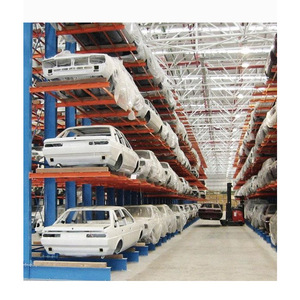
Heavy-Duty Cantilever Racking System for Car Storage
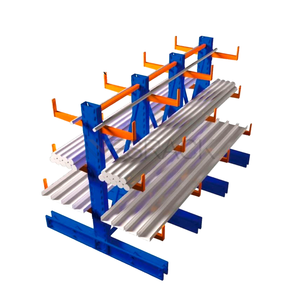
6-Meter High Raw Material Warehouse Cantilever Stacking Rack
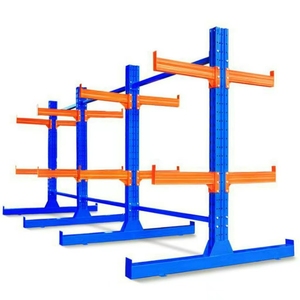
High-Quality Industrial Cantilever Shelving & Storage Rack
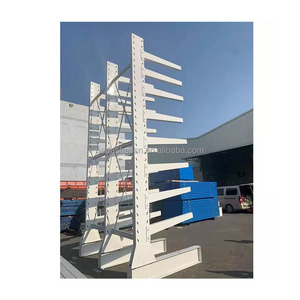
Single-Sided Heavy-Duty Wall Cantilever Racking System
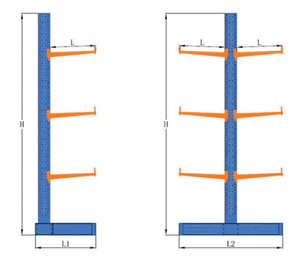
Adjustable Cantilever Rack for Steel Profiles & Tubing
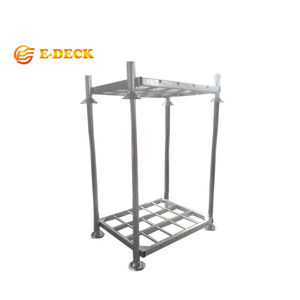
Heavy-Duty High-Density Single Pallet Mobile Racking Base
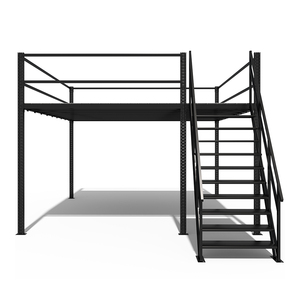
Heavy-Duty Rack-Supported Interlocking Mezzanine System
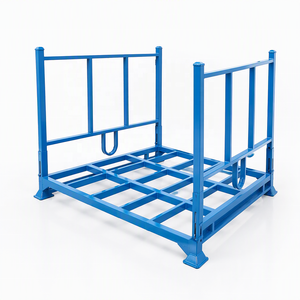
Modular Structural Steel Attic & Stacking Warehouse Shelving
Structural Integrity Analysis: Hot-Rolled vs. Roll-Formed Cantilever Systems
When procuring cantilever racking from China wholesale manufacturers, global warehouse engineers and 3PL supply chain directors must evaluate the structural physics governing long-profile storage. Unlike conventional pallet racking where beam deflection is supported between two vertical end frames, a cantilever racking system relies on isolated columns and free-projecting load arms subjected to combined bending moments, dynamic shear, and torsional twisting.
Industrial cantilever racking systems are categorized into two structural topologies: Roll-Formed Cantilever and Structural Hot-Rolled Cantilever (I-Beam / H-Section). Specifying the wrong manufacturing class leads to catastrophic localized column crippling or permanent arm deflection under cyclic thermal and seismic loading.
Under ANSI MH16.1 section 8.4, cantilever arms are engineered with a designed pre-camber angle (typically 1.5° to 2.5° upward). The allowable static vertical arm deflection under uniform distributed load (UDL) cannot exceed L/200 to L/250 of the arm projection length. Furthermore, column sway deflection must remain within H/250 to prevent dynamic forklift mast impact during dual-side simultaneous loading.
| Performance Parameter | Structural Hot-Rolled Cantilever (H-Beam) | Cold Roll-Formed Cantilever (C/Omega Profile) | Procurement Selection Criterion |
|---|---|---|---|
| Steel Grade Standard | Q355B / ASTM A572 Grade 50 (High Yield) | Q235B / Cold-Rolled SPCC Strip | Structural specified for point loads >1,200kg/arm |
| Impact Resistance (Forklift Collision) | Extreme; solid flange prevents localized tear | Moderate; requires heavy polyurethane wrap guards | Demanding outdoor yards and heavy timber/steel packs |
| Arm Connection Geometry | High-tensile Grade 8.8 / 10.9 bolted pivot joints | Pin-locked wedge brackets or slotted lug hooks | Bolted pivot absorbs impact by deflecting upward safely |
| Maximum Vertical Height | Exceeds 12 meters (single continuous section) | Economical up to 6 meters | High-bay narrow aisle (VNA) cantilever applications |
| Corrosion Finish Options | Hot-Dip Galvanized (ISO 1461 ≥85μm) / Powder Coat | Electrostatic Thermoset Polyester (60-80μm) | Galvanized mandatory for outdoor and sub-zero storage |
Our manufacturing facility in China integrates automated submerged arc welding (SAW) lines and continuous robotic laser punching to ensure arm-to-column connections achieve certified moment-resisting capacity. Finite Element Analysis (FEA) is executed on each project model, simulating worst-case asymmetric single-side loading, wind-drift vectors for outdoor installations, and ground slab anchor pull-out stresses.
Why Global Supply Chains Source Cantilever Racks From Our Mills
From structural steel melt shop traceability to automated containerized shipping, we de-risk the overseas procurement process through strict Western standard conformity and full engineering ownership.
Calculated Structural Design
Every bay is calculated, not estimated. We produce comprehensive structural load certificates, FEA stress models, and stamped engineering drawings based on your exact crane, reach-truck, or sideload forklift specs.
Custom CAD & BIM Layouts
Our engineering department delivers full warehouse layout modeling. We calculate turning radii, aisle clearance buffers, flue spaces, and fire-sprinkler head throw patterns to optimize high-density SKU layout.
Mill Test Certificate (MTC)
Raw steel is directly procured from tier-one Chinese state-owned steel mills (Baosteel, Shougang). Every batch is verified via EN 10204 Type 3.1 chemical composition and tensile elongation tests.
Export Ocean Packaging
Cantilever columns and arms represent heavy, irregular freight. We build bespoke steel transport skids, protective corner angles, and moisture-sealed sea wrap to guarantee zero transport bend or powder abrasions.
Critical Material Handling Scenarios for Cantilever Configurations
Lumber & Engineered Timber
Eliminates vertical upright obstructions. Continuous storage beds allow 2.4m, 3.6m, and 6.0m plywood bundles and glulam beams to sit across multiple arms without point sag.
Piping, Tubes & Structural Steel
Equipped with custom spring-loaded arm pins, welded saddle stoppers, and rubber linings to prevent round bar bundles and stainless conduits from rolling off during forklift retrieval.
Automotive Dismantling (ELV)
Heavy-duty structural arms designed to hold 2.5–3.5 ton end-of-life vehicle shells across 3 to 5 levels, freeing up to 75% of salvage yard ground footprint safely.
Future Procurement Trends in Industrial Cantilever Sourcing
As global supply chains navigate carbon tariffs, smart intralogistics, and labor shortages, international procurement of cantilever systems is undergoing four structural paradigm shifts.
1. CBAM & Carbon Footprint Auditing
European and North American buyers increasingly require Environmental Product Declarations (EPD). Chinese mills are rapidly adopting EAF (Electric Arc Furnace) recycled steel production to slash embedded carbon emissions per metric ton.
2. Knock-Down Modular Base Design
Traditional cantilever bases were fully welded, wasting over 40% of container cube volume. Modern procurement mandates high-strength bolt-together base connections, lowering 40ft HQ freight costs by up to 32% per project.
3. Dynamic IoT Deflection Monitoring
Next-generation heavy cantilever installations incorporate integrated strain-gauge sensors on critical cantilever arms. Real-time telemetry warns warehouse managers of dynamic micro-cracks or continuous load overstress.
4. Hybrid Galvanized Duplex Coating
Demanding coastal lumber yards and chemical facilities are moving away from simple powder coat toward hot-dip galvanization overlaid with thermoset polyester resin, delivering 25+ years of zero-maintenance lifecycle performance.
Technological Innovations Driving Cantilever Storage Engineering
Cantilever racks are evolving from static metal skeletons into automated, high-throughput logistical interfaces integrated with unmanned robotics.
Automated Cantilever AS/RS Stacker Cranes
Integration of ultra-high cantilever racks (up to 24 meters) with automated stacker cranes equipped with telescoping forks. Facilitates rapid, unmanned handling of long aluminum extrusions and structural steel bars without human lift operators.
4-Way Multi-Directional AGV Interface
Warehouses are transitioning from manual side-loaders to automated 4-way guided vehicles. Cantilever upright bases are now manufactured with flush recessed floor rail guides and magnetic navigation docking brackets.
Cantilever-Supported Mezzanines & Roof Truss Systems
Rack-clad building concepts where cantilever columns act as the primary load-bearing building envelope pillars, supporting both external cladding and overhead roof trusses, slashing warehouse construction lead-times in half.
5-Stage Execution Framework for International Buyers
A transparent, risk-free engineering workflow ensuring complete accuracy from site measurement to container arrival.
Site Survey & Load Spec
Confirmation of load dimensions (length, depth, weight), floor slab thickness, forklift lifting height, and seismic zone rating.
FEA Modeling & CAD
Structural engineering generation of CAD floor layouts, moment calculations, beam selection, and full BOM generation.
Automated Fabrication
CNC punching of uprights, robotic arm welding, shot blasting (Sa 2.5), and electrostatic powder coating or hot-dip galvanizing.
QA & Pre-Assembly
Factory trial fit assembly, weld ultrasonic inspection, coating thickness verification, and heavy-duty steel skid packing.
Global Export & Docs
Turnkey customs clearance paperwork (Form E, CO, MTC, CE/ISO certificates) and detailed step-by-step installation manuals.
Frequently Asked Questions: Sourcing Cantilever Racks From China
Engineered answers to the most common technical, logistics, and compliance inquiries submitted by international supply chain directors.
How do I determine whether to choose Roll-Formed or Structural I-Beam Cantilever Racks?
Choose Cold Roll-Formed (Q235B): When individual arm capacity is under 800–1,000 kg, and stored products are relatively lightweight such as PVC conduits, light lumber, furniture boxes, or light retail profiles. Roll-formed offers lower freight weight and economical unit cost.
Choose Structural Hot-Rolled H-Beam (Q355B): When arm capacity ranges from 1,000 kg to over 5,000 kg (storing solid steel billets, heavy plate cassettes, machinery parts, or full automobiles). Hot-rolled columns resist high-impact forklift strikes and are mandatory for outdoor lumber yards, heavy industrial environments, and extreme seismic zones.
What warehouse concrete slab specifications are required for heavy cantilever racking?
How is arm load capacity calculated, and how should operators place goods on cantilever arms?
Critical Warning: If the load is concentrated at the tip of the arm ($L$), the applied bending moment is effectively doubled, cutting the safe working capacity of the arm by 50%. Load charts stamped on our bays detail both UDL and tip-load safety deratings in full accordance with ANSI MH16.1.
How do you protect cantilever racks against corrosion in outdoor lumber or steel yards?
What is the typical ocean freight loading volume for export containers?
Plan Your Storage Project With Certified Structural Engineers
Whether you require single-sided lumber racks, auto-salvage vehicle stacks, or an automated high-bay cantilever warehouse, our technical team provides free CAD layout designs, load deflection simulations, and factory-direct pricing within 24 hours.
Direct connection to engineering & export sales