Heavy-Duty Engineered Industrial Storage Rack Systems
Precision-fabricated pallet racking, high-load cantilevers, automated parcel matrices, and multi-tier shelving systems built to strict ANSI MH16.1 and RMI manufacturing tolerances for Chicago warehouse operators.
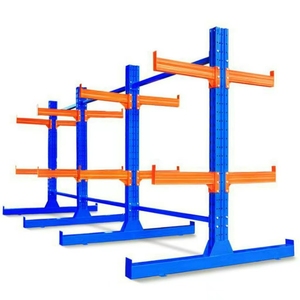
High Quality Cantilever Racking Manufacturer Factory Cantilever Rack Storage Cantilever Shelving For Sale
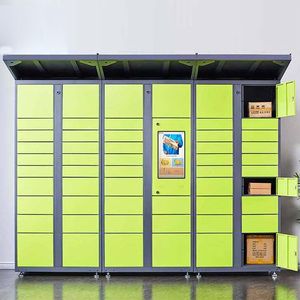
Parcel Delivery Locker Digital Storage Box Steel Automated Locker Metal Electronic Cabinet Face Recognition Smart Lockers
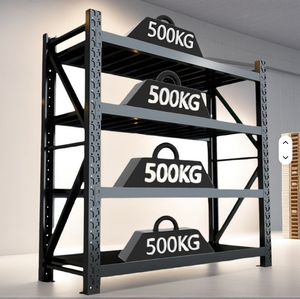
Mracking Industrial Light Duty Durable Steel 5 Adjustable Snap-In Storage Racks Longspan Shelving Powder Coating Garage
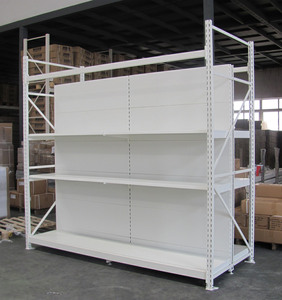
Integrated Hypermarket Display Shelving and Racking to Fit Heavy Duty Products in Shopping Mall Modular System
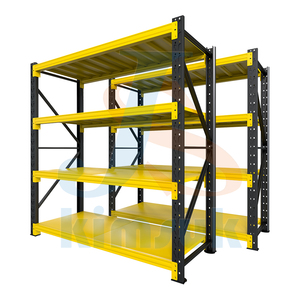
2000*600*2000mm Longspan Display Steel Shelving Medium Duty Stacking Racks & Shelves for Garage Storage
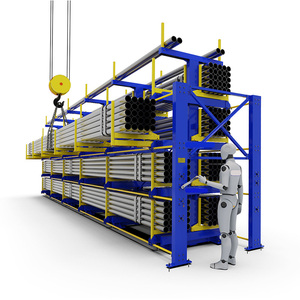
Adjustable Cantilever Storage System, Single Arm Cantilever Rack for Lumber & Aluminum Profiles
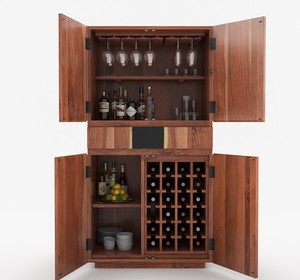
Modern Solid Oak Wood Freestanding Bar Cabinet Wine Rack 4 Storage Compartments Drawers Flat Panel Doors Pindel Handicraft PH792
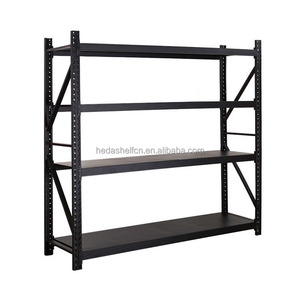
Heavy Duty Metal Garage Shelving Industrial Shelves 4 Tier Boltless Durable Shelves Warehouse Longspan Rack
Engineering White Paper: Heavy Industrial Racking Design for the Greater Chicago Logistics Core
The Chicago metropolitan area—anchored by Will County’s massive intermodal freight clusters in Elwood and Joliet, the O’Hare air cargo logistics submarket, and the historic manufacturing districts along the Calumet River—represents the busiest rail, freight, and distribution nexus in North America. Specifying industrial storage systems in this region requires engineering discipline far beyond standard catalog load tables. Facility managers and structural engineers must navigate the interplay of high-cycle forklift abuse, sub-zero cold-storage thermal dynamics, specific Cook County slab bearing pressures, and strict municipal building code permitting under the City of Chicago Department of Buildings (DOB).
As an established OEM industrial storage rack manufacturer, we engineer custom structural (C-channel hot-rolled) and high-yield roll-formed (closed-tube and open-step teardrop) racking systems that comply natively with ANSI MH16.1: Specification for the Design, Testing and Utilization of Industrial Steel Storage Racks, the International Building Code (IBC) Chapter 16, and regional seismic accelerations defined by the USGS for the Illinois basin.
Structural Mechanics: Hot-Rolled Structural Channel vs. Cold-Formed Roll-Formed Steel
When specifying custom warehouse storage within Chicago logistics corridors, the foremost engineering choice is between cold-rolled teardrop roll-formed profiles and hot-rolled structural steel C-channels. Roll-formed uprights (engineered from high-strength ASTM A1011 structural quality carbon steel sheet) offer lightweight economy, rapid adjustability on 2-inch vertical increments, and superior modularity for retail distribution and e-commerce picking modules.
However, for high-throughput 3PL cross-dock facilities along the I-55 and I-80 corridors, heavy grocery distribution centers, and sub-zero blast freezers throughout Cicero and Bedford Park, hot-rolled structural steel (ASTM A36 and A572 Grade 50) is the industry benchmark. Structural racking features substantial channel columns with thick structural flanges that deliver up to 300% greater impact resistance against lateral forklift collisions. Unlike thin-gauge open sections that buckle under oblique fork strikes, structural C-channel uprights dissipate kinetic energy throughout the frame matrix, preventing catastrophic progressive collapse.
Furthermore, our OEM beam-to-column connections are engineered with grade-5 bolted structural moment clips or heavy-duty 4-pin tear connectors with integrated auto-engaging gravity locks. This eliminates beam dislodgement risks during aggressive high-speed pallet elevation, exceeding the 1,000-lb upward shear threshold mandated by OSHA 1910.176(b).
Localized Application Scenarios Across Greater Chicagoland
Our OEM manufacturing lines produce application-specific storage architectures engineered for the operational demands, ceiling heights, and floor slab ratings of Chicago's major industrial submarkets.
I-80 & I-55 Intermodal Freight Hubs (Joliet & Elwood)
Serving mega-scale distribution complexes at CenterPoint Intermodal Center. Facilities here operate with 36-foot to 40-foot clear ceiling heights and high SKU turnover. We supply double-deep and selective high-bay pallet racking with enlarged footplates (8" x 8" x 3/8") to distribute heavy concentrated loads across post-tensioned 7-inch slabs without exceeding localized shear thresholds.
O’Hare Logistics & Air Cargo Corridor (Elk Grove & Des Plaines)
In high-velocity freight transfer zones surrounding ORD, warehouse footprint is at a premium. We deploy high-density Push-Back and Pallet Flow Gravity-Fed Racking (FIFO/LIFO). Using engineered nesting carts and heavy-duty steel skate wheels with centrifugal speed controllers, operators achieve 75% higher cubic storage density compared to standard selective layouts.
Chicago Central Manufacturing & Steel Fabrication (Calumet & Cicero)
For midwest steel service centers, heavy stamping plants, and architectural machinery producers, standard pallet racks are insufficient. We fabricate heavy-duty structural Cantilever Racking featuring continuous center columns up to 30 feet tall, with tapered arms holding 5,000+ lbs each to store structural tubing, bar stock, raw plate, and lumber without vertical column obstruction.
Chicagoland Warehousing Trends & Engineering Demands
How macro-economic shifts, vertical facility densification, and cold-chain expansions are transforming storage infrastructure specifications throughout Northern Illinois.
High-Bay Vertical Clear Height Expansion
New Class-A spec builds in Kenosha, Romeoville, and Aurora feature 36' to 44' clear heights. Our OEM manufacturing utilizes heavy-gauge structural uprights designed with low slenderness ratios (K*L/r) to suppress torsional column buckling under maximum top-tier pallet loads.
Automation-Ready & AMR Integration
Chicagoland warehouses face severe industrial labor shortages. We engineer pallet rack base profiles with recessed lower bracing and reinforced floor level entry tracks to facilitate autonomous mobile robots (AMRs), automated guided vehicles (AGVs), and 24/7 radio shuttle carts.
Cold Chain & Freezer Metallurgy
With massive grocery hubs across Bridgeview and Bedford Park, blast freezers operate down to -20°F. We utilize micro-alloyed structural steels that prevent low-temperature ductile-to-brittle transitional phase shifts, protected by hot-dip galvanizing or cryogenic thermoset powders.
Seismic & NFPA Flue Compliance
Under Illinois seismic zone maps and City of Chicago DOB guidelines, installations must strictly satisfy ASCE 7-16 drift limits. Our designs integrate factory-welded longitudinal and transverse flue space stops to ensure constant 6" water curtain channels for ESFR fire sprinklers.
OEM Industrial Storage Rack Structural Comparison Matrix
Compare our direct-manufactured storage systems across structural parameters, material standards, deflection thresholds, and ideal Chicagoland facility deployments.
| Racking System | Structural Profile | Yield Strength | Deflection Limit | Typical Chicago Application |
|---|---|---|---|---|
| Heavy-Duty Selective (Teardrop) | Roll-Formed Open Step Beam & Upright | 50,000 - 55,000 PSI | L / 180 (Beam span) | 3PL E-commerce Pick Modules, Retail Distribution Centers (Bolingbrook, Joliet) |
| Structural Bolt-Together Racking | Hot-Rolled Structural C-Channel | 50,000 PSI (A572 Gr 50) | L / 240 (High-Rigidity) | Heavy Freight Cross-Docks, Cold Storage Freezers, Heavy Manufacturing (Cicero, Bedford Park) |
| Heavy Cantilever Racks | Solid Wide-Flange (W-Beam) Columns | 36,000 - 50,000 PSI | L / 180 (Arm cantilever) | Steel Pipe, Extrusions, Sheet Metal, Timber Yards (Calumet Industrial District) |
| High-Density Drive-In / Shuttle | Hybrid Roll-Formed & Structural Rail | 55,000 PSI | L / 200 (Rail under load) | High-Volume Food & Beverage, Temperature-Controlled Vaults (O'Hare Air Cargo Corridor) |
Enterprise Advantages: Why Tier-1 Facilities Partner with Our OEM Manufacturing
Procuring industrial warehouse storage racks directly from our primary OEM manufacturing facility removes distributor markups, guarantees metallurgical traceability, and empowers your engineering team with complete custom dimension control. Our end-to-end manufacturing process adheres to strict ISO 9001 quality management systems and American Welding Society (AWS) D1.1 structural welding protocols.
Chicago Procurement & Facility Manager Technical FAQ
Critical structural, permitting, and operational questions answered for warehouse operations directors, industrial contractors, and supply chain procurement specialists.
What are the specific permitting and calculation requirements for racking in the City of Chicago?
In the City of Chicago and Cook County, storage rack installations exceeding 8 feet in height are classified as commercial interior building structures under the Chicago Building Code (CBC Title 14B). The Department of Buildings (DOB) mandates a formal building permit backed by structural calculation packages sealed by an Illinois-licensed Structural Engineer (SE). Our OEM engineering team provides detailed finite element analyses (FEA), concrete slab anchor pullout calculations (based on ACI 318 Chapter 17), and seismic drift modeling compliant with ASCE 7-16 to facilitate rapid plan examination approval.
Structural steel vs. roll-formed steel: Which is optimal for high-volume Midwest logistics?
The decision balances upfront capital expenditure against operational maintenance costs. Roll-formed steel is cost-effective for pure e-commerce or retail picking with standard counterbalance trucks. However, in high-speed Chicago cross-dock and cold-storage operations where reach trucks move at 8-10 mph in narrow aisles, fork impacts are inevitable. Structural C-channel racking features significantly thicker web and flange walls, resisting impact damage and reducing lifetime rack repair, beam replacement, and OSHA shutdown events by over 60%.
How do cold Chicago winters impact rack metallurgy and finish specifications?
Midwest freeze-thaw cycles and indoor humidity variations cause standard painted finishes to bubble and peel, fostering subsurface oxidation. For blast freezers (-20°F) or unconditioned transfer docks, standard cold-rolled steel risks cold embrittlement. We utilize modified carbon-manganese structural steels engineered with Charpy V-notch impact toughness for cryogenic conditions. For finishes, we apply hot-dip galvanizing (ASTM A123) or a proprietary 5-stage zinc-phosphate immersion pre-treatment followed by high-adhesion polyester powder coating tested to 1,000 hours of salt spray exposure.
What slab thickness and concrete compressive strength (PSI) are required for 36-ft racks?
For high-bay installations of 32 to 40 feet with bay capacities exceeding 50,000 lbs, concrete floor slabs must typically provide a minimum thickness of 6 to 8 inches with an unconfined compressive strength (f'c) of 4,000 PSI or higher. Our engineering group evaluates your facility’s geotechnical report and floor core data to calculate maximum allowable point loads, selecting custom baseplate dimensions (such as 10" x 10" x 1/2") and dual heavy-duty wedge anchors (e.g., Hilti KB-TZ2 or Simpson Strong-Tie) to prevent slab punch-through or micro-fracturing.
How does your OEM facility accommodate non-standard pallet geometries?
Because we operate automated, in-house roll-forming mills and robotic CNC plasma tooling, we are not limited to standardized catalog bay configurations. Whether your operation handles 40" x 48" GMA pallets, 48" x 48" chemical drums, European 800 x 1200 mm units, or specialized automotive engine racks, we custom-engineer beam lengths (such as 96", 108", 120", or 144"), beam profile depths (from 3.5" up to 6.5"), and heavy-gauge formed drop-in wire decking with tailored waterfall channels.
What is the lead time for custom OEM manufacturing and delivery to Chicago?
From finalized CAD layout approval and structural signoff, standard OEM production lead time is approximately 4 to 6 weeks. Direct freight routing via container vessel and rail intermodal straight into the Joliet/Elwood intermodal terminals or flatbed truck transfer ensures reliable, damage-free delivery. We provide precision sequence-packed shipping containers (uprights pre-bundled, beams banded with dunnage protection) to accelerate on-site mechanical installation.
Can your storage rack systems integrate directly with AGVs, AMRs, and AS/RS?
Yes. Automated Guided Vehicles and high-density Automated Storage and Retrieval Systems (AS/RS) require strict deflection tolerances (often L/300 or L/400) and laser-calibrated plumb tolerances within 1/16th of an inch. Our OEM manufacturing integrates custom ground-level optical target cutouts, bottom-tier guide rails, reinforced pallet stop bars, and precision-machined shuttle tracks that interface with robotic material handling systems.
What are OSHA and RMI requirements for warehouse rack safety inspections?
OSHA General Duty Clause (Section 5(a)(1)) and RMI ANSI MH16.1 dictate that warehouse rack systems must be maintained in structurally sound condition with clearly visible rated load plaques affixed to every row. Any frame experiencing severe denting, column out-of-plumb exceeding 0.5 inches per 10 feet, or sheared anchors must be unloaded immediately. We provide comprehensive load-rating plaques, detailed inspection checklists, and rapid-dispatch OEM replacement components engineered to exact original drawings.
Request an Engineered Layout & Direct Factory Quotation
Consult directly with our structural engineering team. Whether you are outfitting a 500,000 sq. ft. intermodal facility in Joliet, reconfiguring an air cargo transfer hub near O'Hare, or upgrading a heavy industrial facility in Chicago, we deliver load-certified storage racks engineered for longevity, safety, and operational density.
Send an Inquiry