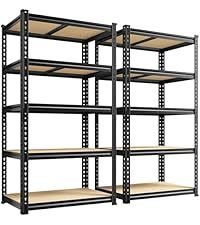
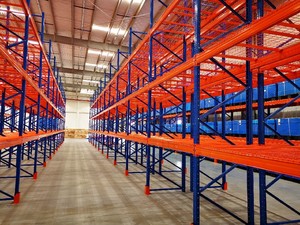
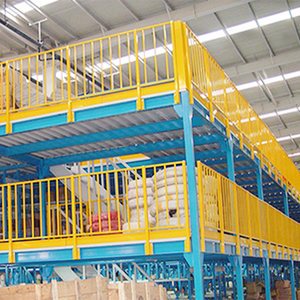
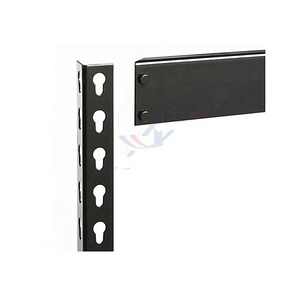
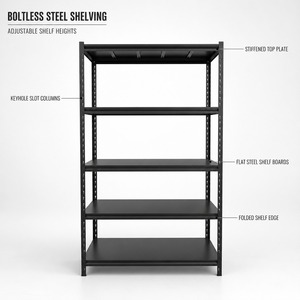
Boltless Steel Shelving Adjustable Storage Rack Slotted Angle Display Stand Painted Corrosion Protection for Warehouse
Finish: Epoxy Powder Coated
Application: E-commerce picking, spare parts
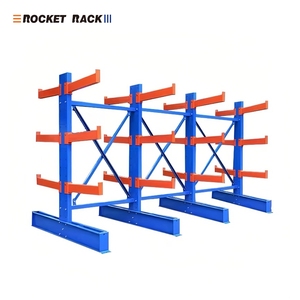
Direct factory manufacturing of structural steel cantilever, multi-tier mezzanines, and industrial boltless racking. Fully compatible with teardrop systems and engineered for seamless facility reconfiguration across Greater Houston warehouses.
As North America’s premier energy capital and the home to the nation’s largest foreign-waterborne tonnage port, the Greater Houston metropolitan area—encompassing Harris County, Fort Bend, and Montgomery County—is undergoing a rapid realignment in warehouse logistics. Supply chain reshoring, nearshoring initiatives, and the massive expansion of multi-modal cross-docking facilities along the Port of Houston, Baytown, Brookshire, and the Grand Parkway (SH 99) have driven industrial occupancy rates to historical highs. Facility operators, logistics directors, and regional distribution vice presidents are faced with a challenging dilemma: how to migrate, reconfigure, and scale enterprise racking infrastructure under demanding operational schedules without incurring excessive capital expenditures or triggering severe regulatory bottlenecks.
Executing a warehouse racking relocation project across Houston is substantially more complex than a standard domestic freight operation. It requires a deep understanding of local compliance frameworks, specifically the International Building Code (IBC 2021/2024 as adopted by the City of Houston and Harris County), the Rack Manufacturers Institute (RMI) MH16.1 specification, and OSHA 1910.176 regulations governing safe material storage. When industrial operations expand from legacy sites in Southeast Houston or the Highway 225 industrial belt to 36-foot-clear modern distribution hubs in Katy or Brookshire, structural load limits, seismic acceleration coefficients, and anchor bolt pull-out loads change drastically.
By partnering directly with a top-tier Chinese manufacturing facility and exporter that integrates engineering-grade decommissioning, intermodal export packing, custom fabrication of missing or damaged components, and on-site Texas Professional Engineer (PE) stamped design validation, enterprise operators unlock between 40% and 55% direct savings over local equipment distributors while maintaining zero compromise on structural integrity.
The traditional model of acquiring new racks or paying domestic contractors to modify legacy systems frequently exposes Houston operators to massive material markups, non-matching aftermarket components, and fragmented accountability. The table below delineates the structural, financial, and logistical variances between traditional localized supply channels and our direct-factory integration model.
| Evaluation Metric | Traditional Local Distributor / Broker | Our Factory-Direct Relocation & Supply Pipeline |
|---|---|---|
| Upfront Material CAPEX | 35% – 60% dealer markups on structural steel | Direct mill-to-site pricing; Chinese mill certificates verified |
| Damaged Component Lead Times | 12 – 20 weeks for custom upright and beam fabrications | Rapid-batch fabrication (14 days) + container consolidation |
| Engineering Compliance | Often outsourced; generic load capacity placards | Custom finite element analysis (FEA) stamped to RMI & Houston IBC |
| Corrosion Resistance Treatment | Standard single-coat shop enamel (under 150h salt spray) | Electrostatic thermoset polyester powder coat (>1,000h salt spray) |
| Turnkey Dismantle-to-Rebuild | Fragmented 3rd party labor; unindexed teardowns | Systematic laser scan, RFID member tagging & precision re-anchoring |
From Houston laser-guided structural surveys to factory-engineered supplemental manufacturing, our seamless turnkey methodology eliminates operational downtime.
Non-destructive testing (NDT) of existing uprights, footplates, and load beams. Laser measurements of column plumblines, frame deflection, and slab core conditions.
Re-engineering bay profiles to optimize clear-height clearance at the receiving facility. Recalculation of seismic response per ASCE 7-16 and City of Houston fire codes.
Systematic de-installation with barcoded tagging for each beam and brace. Immediate factory fabrication of supplemental frames, row spacers, and replacement uprights.
Heavy intermodal container coordination via Port of Houston (Barbours Cut & Bayport terminals) directly to the target staging facility, eliminating secondary transfers.
High-torque chemical/wedge anchoring with certified embedment depths. Final installation of high-visibility rated load signs, safety lock pins, and compliance signoff.
Houston’s unique industry footprint demands highly specialized storage architectures—from OCTG energy tubulars in Pasadena to cross-docking consumer goods along the I-10 corridor.
Facilities near Pasadena, Deer Park, and Baytown handle massive volumes of high-density polyethylene (HDPE) pellets, chemical drums, and valve components. Our heavy-duty selective and double-deep racking configurations integrate customized chemical spill containment basins, structural drum cradles, and fire sprinkler flue-space baffles that strictly satisfy NFPA 30 combustible liquid storage guidelines.
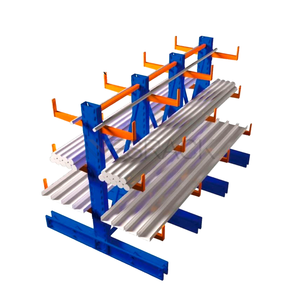
Oil Country Tubular Goods (OCTG), drill collars, and heavy subsea manifold components require unconstrained horizontal loading capacity. Our structural cantilever systems deliver up to 5,500 lbs per arm capacity with custom roll-stops and pipe retainers. When oilfield service suppliers relocate their machine shops, our teams manage column dismantle, frame extension, and heavy foundation anchoring.
The booming I-10 West logistics submarket is dominated by national retailers and high-velocity 3PL operators operating within 36-to-40-foot clear-height modern footprints. We relocate, extend, and erect multi-tier rack-supported mezzanines, boltless rivet picking shelves, and narrow-aisle (VNA) selective configurations that turn unused air rights into high-density fulfillment zones.
By pairing certified Chinese structural steel fabrication with dedicated relocation engineering, we remove every vulnerability associated with third-party supply chains.
Manufactured from high-yield Q235B and Q355B structural coil conforming directly to ASTM A1011 standards. Every production heat carries mill chemical analysis and physical tensile certification to guarantee yield points under heavy dynamic loads.
Automated 24-station CNC roll-forming lines guarantee upright pitch tolerance within ±0.5 mm over a 40-foot length. Teardrop punching, structural open-channel, and slotted-angle configurations offer 100% interchangeability with major American racking profiles.
Engineered specifically to survive Houston’s humid sub-tropical climate. Automated 5-stage pre-treatment, nano-ceramic silane conversion, and electrostatic thermoset polyester powder coating deliver over 1,000 hours of continuous ASTM B117 salt-spray corrosion resistance.
Unlike pure equipment brokers, our factory functions as your infinite spare parts depot during relocations. If dismantling reveals damaged uprights or if your new building requires taller frames, we fabricate exact-match components in 14 days and coordinate sea freight.
The Greater Houston warehouse landscape is undergoing fundamental transformation, driven by infrastructure investments at Port Houston’s container terminals and large-scale industrial relocations across the southern and western perimeters. Understanding these macro trends is vital for plant managers, industrial real estate directors, and supply chain operators planning equipment upgrades or warehouse relocations.
New industrial parks in Conroe, Brookshire, and Baytown standardly construct 36' to 40' clear-height slabs. Operators relocating from 24' legacy warehouses are actively retrofitting existing frames with factory-welded column splices and supplemental reinforcement channels, avoiding the steep expense of all-new upright purchases.
With recurring tropical weather systems and Gulf Coast flood risks, Harris County permitting offices enforce stringent building anchor mandates. Racking anchor embedment must withstand dynamic base shear, while bottom rack levels require anti-corrosive elevated footplates and galvanized base protection.
Due to local labor costs, logistics facilities are migrating from standard fork-truck operations to autonomous mobile robot (AMR) picking channels and four-way radio shuttle systems. Relocating existing racking requires exact realignment of rail tolerances down to millimeter precision.
Real-world engineering, municipal permitting, and logistics answers from our structural relocation teams.