High-Bay Containment & Integrated Structural Racking Systems
Engineered storage infrastructure engineered for dynamic kinetic absorption, severe industrial forklift environments, and zero-defect warehouse throughput compliance.
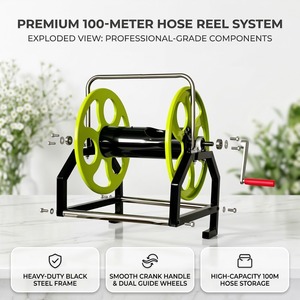
Agricultural Water Pipe Storage Rack Garden Heavy Duty Hand Crank Hose Reel Spraying Pipe Winding Steel Frame 100m Long Life
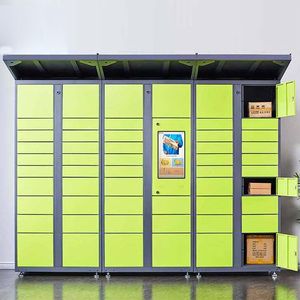
Parcel Delivery Locker Digital Storage Box Steel Automated Locker Metal Electronic Cabinet Face Recognition Smart Lockers
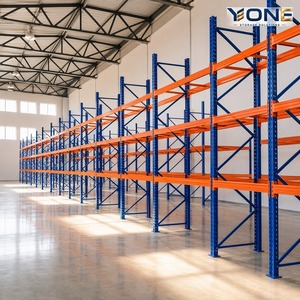
Steel Storage Rack Heavy Duty Pallet Racking Q235B Steel Selective Racking for Racks Industriales Warehouse Storage
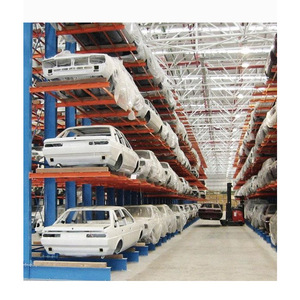
Jracking CE Certified Industrial Shelving Warehouse Racks Heavy-Duty Cantilever Racking System for Car Storage
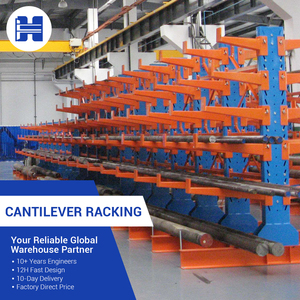
Lumber Storage Cantilever Rack Heavy Duty Steel Timber Wood Racking System Supplier
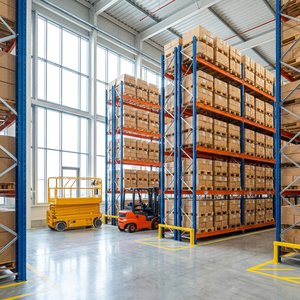
Warehouse Equipment Heavy Duty Pallet Rack Steel Storage Racking System Supplier
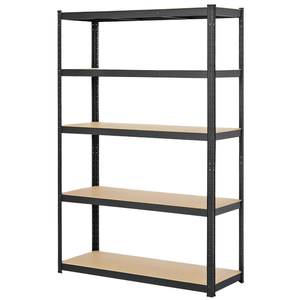
Electronic Commercial 5 Layer Steel Storage Shelving Racks Heavy Duty Warehouse Shelves Boltless Rivet Rack Easy Assemble
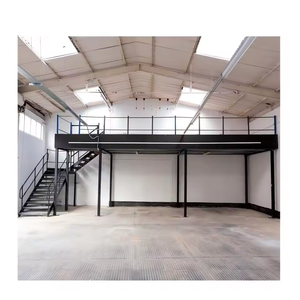
High Capacity Mezzanine Floor Heavy Duty Structural Steel Platform For Warehouse
1. Structural Dynamics & Flue-Space Safety in High-Density Warehousing
In modern automated logistics facilities, the pallet rack interface represents a high-risk operational boundary. As distribution hubs scale vertically—often exceeding 12 to 18 meters of clear ceiling height—the risk of dislodged inventory or unit-load displacement escalates exponentially. Pallet safety netting operates not merely as a passive fabric screen, but as an active dynamic load-deflection system designed to absorb kinetic energy when a forklift operator over-pushes a pallet load, or when unstable secondary packaging collapses at elevated heights.
According to standard mechanical impact formulations, a typical 1,000 kg pallet entering an over-push condition at a modest forklift velocity of 0.8 m/s delivers kinetic energy governed by:
For a 1,200 kg loaded wooden GMA pallet traveling at 1.0 m/s during misalignment, the safety net and bracket assembly must immediately dissipate 600 Joules of dynamic energy while simultaneously distributing tension vector forces to the rack upright columns without provoking plastic frame deformation.
Furthermore, international fire safety standards (NFPA 13) dictate that longitudinal and transverse flue spaces—the vertical gaps between back-to-back rack bays—must remain clear of obstruction to allow sprinkler discharge to penetrate deep into lower rack tiers during early-stage combustion. Rigid steel mesh panels or haphazard plywood partitions often deflect into or permanently obstruct these flue openings. Conversely, engineered rack safety nets manufactured from high-tenacity filaments maintain precise elasticity; upon impact, they stretch to arrest falling cartons, then rebound toward their equilibrium plane, ensuring unobstructed vertical water flues and keeping transit corridors safe for order pickers.
Zero Push-Through Deflection
Engineered offset standoff brackets (100mm to 300mm) accommodate pallet overhang while keeping heavy inventory firmly inside the bay boundary.
NFPA 13 Fire Sprinkler Ingress
Open aperture geometry (from 20mm to 75mm) guarantees maximum ceiling-mounted ESFR sprinkler droplet penetration through flue spaces.
Seismic Shock Mitigation
Flexible synthetic mesh dampens lateral cyclic acceleration during seismic events, preventing resonance amplification throughout selective rack runs.
2. Material Science Comparison: HTPP vs. Nylon vs. Polyester vs. Steel Wire
Selecting a certified rack netting factory requires an in-depth understanding of yarn extrusion chemistry, UV degradation resistance, tensile strength decay, and flame-retardant chemistry. The four dominant materials used across global industrial warehousing are High-Tenacity Polypropylene (HTPP), Polyamide (Nylon 6 / 6.6), High-Tenacity Polyester (PET), and Welded Steel Wire Mesh.
| Material Classification | Specific Gravity | Tensile Strength (cN/dtex) | Elongation at Break | Moisture Regain | Flame Retardancy Profile | Operational Rating |
|---|---|---|---|---|---|---|
| High-Tenacity Polypropylene (HTPP) | 0.91 g/cm³ (Floats) | 7.5 – 8.8 | 18% – 24% | < 0.1% (Hydrophobic) | Self-extinguishing with halogen-free FR additive | Top Choice: Ambient & Cold |
| Nylon (Polyamide 6.6) | 1.14 g/cm³ | 8.0 – 9.2 | 22% – 30% | 4.0% – 4.5% (Hygroscopic) | Melts with smoke generation; NFPA 701 treated | Moderate: High-Load Dry |
| Polyester (PET) | 1.38 g/cm³ | 7.8 – 8.5 | 12% – 16% | 0.4% – 0.6% | High ignition threshold; compliant with DIN 4102 B1 | Superior: Low-Creep Tension |
| Galvanized Welded Wire Mesh | 7.85 g/cm³ | Steel tensile yield | < 2.5% (Rigid) | 0.0% (Corrosion prone) | Non-combustible (Class A1) | Rigid: Heavy Capital/Maintenance |
While steel wire mesh has historically been retrofitted to pallet racks, its rigidity is fundamentally mismatched with localized dynamic pallet strikes. A direct hit from an 800 kg pallet bends welded steel wires beyond their yield point, permanently detaching them from column clips and creating jagged puncture hazards.
In contrast, knotless High-Tenacity Polypropylene (HTPP) raschel-knitted netting demonstrates isotropic force dispersion. The interlaced microfilaments elongate synchronously upon impact, engaging surrounding cells across the entire net perimeter via heavy-gauge perimeter border ropes (typically 8mm to 12mm braided polypropylene cord). This mechanical synergy minimizes the reaction load transferred to any single beam-to-column connector pin.
3. Global Procurement Trends: High-Bay Automation, ESG, and Smart Containment
Industrial safety containment is transitioning from a reactive plant-maintenance checklist item to an essential part of enterprise supply-chain resilience. Across the United States, Europe, the GCC, and Asia-Pacific, procurement directors are revamping specifications around three macro-trends:
ASRS & High-Speed Shuttle Integration
Automated crane corridors operate at speeds exceeding 3 m/s. High-density netting arrays now feature flush-mount tensioned aircraft cables that eliminate snag points for autonomous shuttles and optical sensors.
Circular Polyolefins & ESG Procurement
Leading European and American retailers demand life-cycle emission declarations (EPDs). Advanced factories are deploying 100% recyclable mono-polymer nets that eliminate blended composite fibers.
Integrated IoT Tension Monitoring
New high-bay facilities utilize embedded strain-gauge load cells at terminal eyebolts, alerting warehouse management systems (WMS) the moment a pallet impacts the netting or perimeter cable tension drops below safety margins.
Why Tier-1 Warehouses Source from Direct Industrial Netting Exporters
Combining heavy-duty cold-formed steel racking fabrication with specialized technical textile engineering for comprehensive fall prevention.
Calculated Bay Loading
Every net and bracket assembly is matched to specific beam lengths, upright depths, and pallet weights under strict FEM 10.2.02 and ANSI MH31.1 protocols.
Clash-Free Engineering
Our in-house design engineers model rack upright slots, diagonal bracings, sprinkler risers, and guide rails in 3D CAD before cutting and weaving begin.
Thermal & Cold-Chain Toughness
Our high-tenacity polymers and powder-coated steel hardware maintain full elastic ductility from -35°C walk-in blast freezers to +55°C ambient desert warehouses.
Turnkey Export & Relocation
Full project export packaging with precut cables, turnbuckles, snap hooks, and rated load compliance documentation delivered worldwide.
Industrial Buyer & Logistics Engineer FAQ
Clear, engineering-driven answers to the most common questions raised during safety audits and procurement evaluations.
▸ What mesh aperture size is required for mixed-SKU selective pallet racking?
Standard pallet bays handling whole-pallet stretch-wrapped goods typically utilize 45mm to 50mm square mesh. However, in retail order picking or broken-case distribution corridors, apertures are reduced to 20mm to 25mm to capture individual falling cartons or small containers without secondary wire containment.
▸ How does rack safety netting comply with OSHA standard 1910.176(b)?
OSHA 1910.176(b) mandates that storage of material shall not create a hazard, and that bags, containers, and bundles stored in tiers shall be stacked, blocked, interlocked, and limited in height so they are stable and secure against sliding or collapse. High-tenacity rack safety netting directly meets this requirement by providing a continuous physical barrier that arrests sliding stock over transit aisles.
▸ Can netting be installed flush with the rack frame, or is a standoff bracket necessary?
If pallet loads hang past the rear load beam (standard pallet overhang is 50mm to 100mm), flush netting will be abraded during loading. In these configurations, heavy-duty tubular steel standoff brackets (100mm, 150mm, or 300mm offset) must be installed to create a protective buffer, allowing seamless pallet placement while maintaining containment.
▸ How does synthetic safety netting affect warehouse fire insurance and sprinkler heads?
Synthetic netting with open mesh construction has a solid surface area ratio below 20%, satisfying NFPA 13 requirements for vertical flue apertures. This ensures in-rack and ceiling fire sprinkler discharge passes freely through the storage bays. Furthermore, nets can be specified with flame-retardant chemistry complying with NFPA 701 or DIN 4102 B1 testing standards.
▸ What hardware cables and anchoring components are specified for dynamic loads?
Industrial installations utilize 5mm to 6mm 7x19 galvanized or stainless steel aircraft cable. Cables are tensioned with closed-body jaw-and-jaw turnbuckles, forged eyebolts rated for dynamic shear, and dual cable clamps at terminations. The netting border rope is secured to the cable line via forged zinc-plated spring snap hooks or carabiners spaced every 200mm to 300mm.
▸ How does extreme cold storage affect netting tensile strength?
Standard polyamide (nylon) can absorb ambient moisture, which can freeze and cause fiber embrittlement in cold storage facilities (-25°C to -35°C). For blast freezers and cold-chain hubs, High-Tenacity Polypropylene (HTPP) or solution-dyed Polyester (PET) is specified because both are hydrophobic (<0.1% moisture absorption) and maintain impact elasticity without brittle fracture.
▸ What is the standard inspection and recertification frequency for rack netting?
Under EN 15635 and ANSI MH31.1 guidelines, visual inspections should be conducted weekly by on-site safety personnel, looking for yarn abrasion, severed strands, loose turnbuckles, or damaged brackets caused by forklift impact. An annual documented inspection by an accredited racking safety engineer is mandatory to recertify dynamic load capacity.
▸ Can netting systems be reconfigured when pallet bay beam heights change?
Yes. Modular vertical cables run continuously from baseplates to upper upright caps, allowing intermediate horizontal support cables to be repositioned up or down the rack upright perforations whenever beam elevations are re-slotted to accommodate changing pallet heights.
Engineer Your Facility for Zero Fall Casualties & Full Regulatory Compliance
Submit your bay dimensions, clear height constraints, and unit-load parameters. Our structural engineering team provides clash-free CAD layouts, tensioned net bill-of-materials, and factory-direct export shipping across global ports.