Engineered Heavy-Duty Industrial Racking & Plant Equipment
Discover our mission-critical warehouse, mold tooling, cantilever, and intelligent dispatch systems. Fabricated with structural Q235B cold-formed steel and certified for maximum load deflection thresholds.
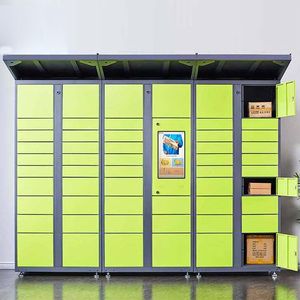
Parcel Delivery Locker Digital Storage Box Steel Automated Locker Metal Electronic Cabinet Face Recognition Smart Lockers
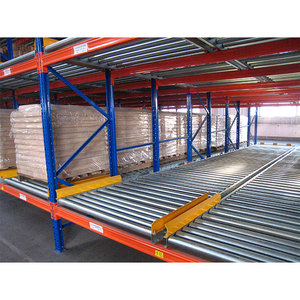
Q235 Steel 2000kg Capacity FIFO High Density Industrial Warehouse Storage Gravity Pallet Flow Rack System
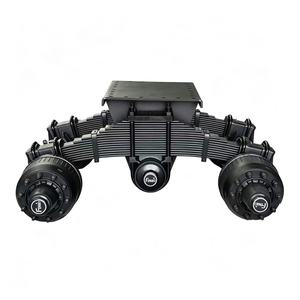
High Strength 24T-32T Bogie Type Single Point Suspension System Heavy Duty Cantilever Suspension For Mining & Dump Trailers
Heavy Duty Mobile Shelving Pallet Rack Warehouse & Supply Selective Racking Boltless Shelving System

2-Tier 20-Inch LED Lighted Whiskey Rack USB Supported Home Bar Shelf with RF Remote Illuminated Wine Rack
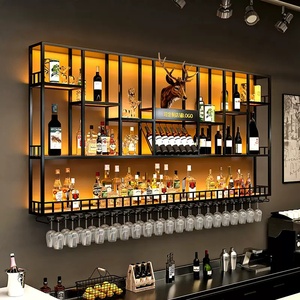
High Quality Metal Bar Cabinet Wall Mounted Wine Rack Customized Industrial Led Lights Pub Bar Wine Display Shelf
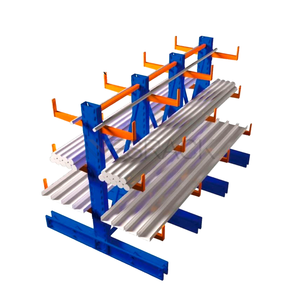
Heavy-Duty 6 Meter High Warehouse Cantilevered Stacking Racks and Shelves Raw Material Storage Rack
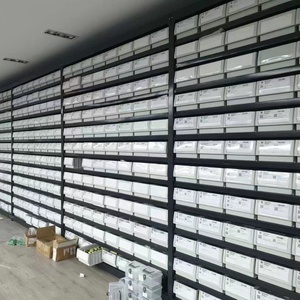
Industrial Vertical Carousel Small Parts Storage Organizer Plastic Storage Shelf Bins for Cabinet Shelves
Executive Engineering Brief: Modern Tooling & Mold Storage Dynamics
In modern high-speed plastic injection molding, automotive stamping, and aluminum die-casting plants, heavy tooling represents up to 40% of total capital expenditure. Standard warehouse pallet racks are inherently ill-suited for dense, concentrated tool steel assemblies. Standard pallet beams are engineered to support uniformly distributed loads (UDL), whereas injection molds, progressive stamping dies, and cold-forging matrices present extreme point-load concentrations that induce catastrophic deflection, torsional stress, and frame buckling if miscalculated.
A true heavy-duty mold storage rack is a dedicated structural engineering asset. Designed with roll-out sliding decks, secondary bearing supports, and interlocking crane access cantilevers, mold racks transform unorganized floor space into an efficient, safe tooling inventory hub. By eliminating hazardous ground-level mold stacking, facilities instantly achieve SMED (Single-Minute Exchange of Die) lean operations, while safeguarding multi-ton tooling investments against impact, moisture degradation, and guide-pin misalignment.
Structural Topology Comparison: Mold Rack Configurations vs Standard Racking
Plant engineers and operations directors must evaluate structural rigidity, drawer extension ratios, and handling overhead when specifying die storage infrastructure. The following engineering matrix contrasts standard configurations designed to FEM 10.2.02 and ANSI MH16.1 safety specifications:
| System Classification | Standard Load Capacity | Extension Ratio | Primary Material Spec | Handling Equipment Synergy | Deflection Index |
|---|---|---|---|---|---|
| Full-Open Roll-Out Mold Rack | 1,000 kg – 5,000 kg / level | 100% Full Extension | Q235B / Q355B Heavy Gauge Steel | Overhead Crane / Monorail Hoist | < L / 350 under maximum dynamic load |
| Semi-Open Drawer Die Rack | 500 kg – 2,000 kg / level | 50% – 65% Partial Extension | Structural Channel C-Section | Electric Stacker / Counterbalance Forklift | < L / 300 under static UDL load |
| Heavy-Duty Fixed Beam Tool Rack | 2,000 kg – 8,000 kg / tier | 0% (Rigid Solid Deck) | Heavy Box Beam + Welded Baseplate | Heavy-Duty Forklift / Dedicated Stacker | < L / 400 under concentrated point load |
| Automated Tooling ASRS Matrix | 500 kg – 3,500 kg / cassette | 100% Automated Retrieval | Cold-Drawn Precision Alloy Guides | Automated Storage & Retrieval Crane (SRU) | < L / 500 for optical sensor alignment |
Finite Element Analysis (FEA) & Mechanical Integrity Metrics
A premier mold storage racks manufacturer validates every upright, cross-tie, guide rail, and locking pin through rigorous FEA stress simulations. When a multi-ton injection mold is extracted on a full-extension sliding shelf, the center of gravity shifts outward from the vertical column axis, generating immense overturning moments ($M = F \times d$) and horizontal shear force across the anchorage floor slab.
Overturning Moment Control
Integrated mechanical anti-tipping interlocks ensure only one drawer can be extended at any given time, preventing cumulative center-of-mass displacement and catastrophic rack collapse.
Precision Bearings & Rollers
Hardened chromium-steel double-shielded guide bearings with heavy-gauge carbon steel channels ensure effortless manual extension even at a maximum 3,000kg shelf rating.
Anchor Pull-Out Capacity
Calculated anchoring using Hilti or Fischer chemical anchor bolts into minimum 25 MPa reinforced concrete slabs, resisting dynamic horizontal shear and seismic excitation.
Future Procurement Trends in Industrial Mold Storage (2025–2035)
As Industry 4.0 digitizes stamping and injection molding production plants, mold storage infrastructure is transitioning from passive steel shelving into intelligent, monitored tooling assets. Global supply chain procurement officers must account for these technical macro-shifts:
IoT & RFID Smart Tool Identification
Every die level is integrated with UHF RFID and optical sensors, syncing mold locations, maintenance shot counts, and PM intervals directly to the factory MES/ERP database.
Heavy AGV / AMR Staging Interfaces
Die racks engineered with powered push-pull roll-off mechanisms allow autonomous guided vehicles to dock, extract, and shuttle multi-ton molds directly into press clamping platens.
Motorized & Mechanical Assist
Transition from manual human pulling forces to electro-mechanical linear actuators or planetary gear cranks, reducing operator fatigue and complying with ISO 11228-2 ergonomics.
Recycled Structural Steels
Sourcing low-embodied carbon Q355B structural steel and non-VOC thermoset electrostatic powder coatings, aligning factory tooling assets with Scope 3 ESG targets.
Why Tier-1 Manufacturers & Engineering EPCs Partner With Us
Drawing on an established manufacturing lineage serving heavy industries across the UAE, GCC, Africa, and global manufacturing corridors, our engineering philosophy eliminates every structural failure point through calculated precision.
Load-Engineered Integrity
Uprights, beam sections, and sliding rollers are calculated from actual die dimensions and point-load profiles, complete with documented deflection limits and rated load safety signs on every bay.
Site Survey & 3D Modeling
We model plant layouts, crane approach distances, overhead sprinkler clearances, and floor slab load-bearing capacities using advanced CAD/BIM software before steel fabrication begins.
Hot-Climate Anti-Corrosion
Electrostatic powder-coated steel cured at high temperatures delivers exceptional chemical, hydraulic oil, and high-humidity resistance across demanding factory floor environments.
Certified Turnkey Installation
Experienced in-house installation crews anchor, level, plumb, and verify every dynamic drawer stop, complemented by lifetime relocation, structural inspection, and re-certification services.
Mold Storage Racks Engineering & Procurement FAQ
Direct answers to the most common questions raised by plant managers, tooling supervisors, and strategic procurement teams.
What is the difference between static load capacity and dynamic pull-out capacity?
Static load capacity represents the maximum mold weight a shelf deck can hold when fully retracted and stationary inside the rack structure. Dynamic pull-out capacity accounts for the shifting moment arm, bearing friction, and momentum induced as the drawer is pulled outward. Our mold racks are engineered with a minimum 1.5x to 2.0x safety factor over the dynamic load rating to prevent structural fatigue or guide deformation.
Can mold racks be integrated with existing overhead gantry or monorail cranes?
Yes. Our full-extension (100% open) mold storage racks are specifically engineered with top-open cantilever frameworks. When a drawer is rolled out completely, the upper envelope is unobstructed, enabling the overhead factory bridge crane or an integrated electric monorail chain hoist to lower rigging slings directly over the mold eyebolts without dangerous angled hoisting.
What concrete slab specifications are necessary for heavy die storage installations?
For installations accommodating 2,000kg to 5,000kg per drawer, we recommend a non-shrink, reinforced industrial concrete slab of at least 150mm to 200mm thickness with a compressive strength of C25/30 (minimum 25-30 MPa). During our engineering site survey, anchor bolt pull-out calculations are validated to ensure concrete expansion anchors resist dynamic shear and overturning moments.
How do safety locking mechanisms protect shop floor operators during mold extraction?
Every drawer level incorporates two layers of mechanical protection: an independent mechanical positioning pin that secures the shelf in both the fully-retracted and fully-extended positions, and an optional sequential interlock mechanism that prevents two drawers in the same bay from being extended concurrently, preserving the center-of-gravity envelope.
Transform Your Tooling Logistics & Floor Efficiency Today
Consult with our storage application engineers to calculate bay capacities, optimize crane clearances, and generate a bespoke 3D CAD facility layout tailored to your injection molds and stamping dies.