Precision-Engineered Industrial Storage & Wire Mesh Infrastructure
Manufactured using high-tensile cold-drawn steel wire, dynamic robotic resistance welding lines, and rigorous FEM/EN finite element analysis to ensure maximum structural integrity.
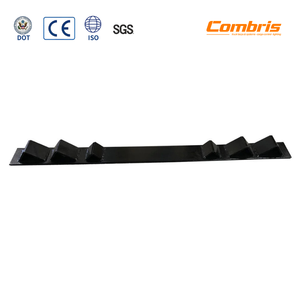
Steel Coil Rack for Flatbed Trailer Hotshot Trucking Coil Securement Dunnage Rack Heavy Duty Metal Coil Holder
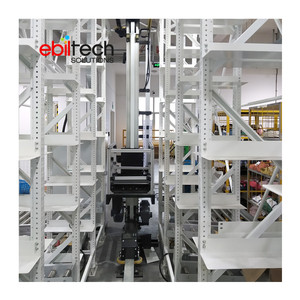
Automated Storage And Retrieval Racking System Miniload Asrs Storage
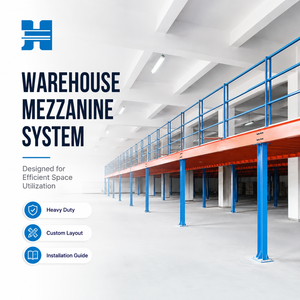
H-Beam Steel Mezzanine Floor Industrial Platform Mezzanine
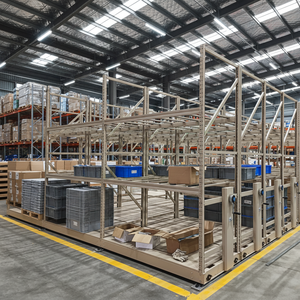
Heavy Duty Pallet Rack Mobile Steel Shelf Racks Warehouse
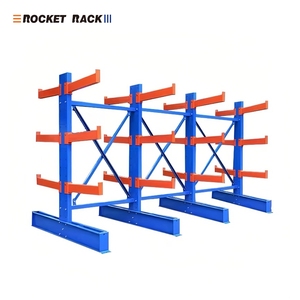
Stackable Heavy Duty Shelf Warehouse Shelves Heavy Duty Cantilever Steel Coil Rack
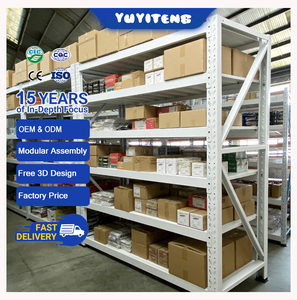
Boltless Rivet Shelving Medium Duty Easy Assembly Metal Rack with Galvanized Surface
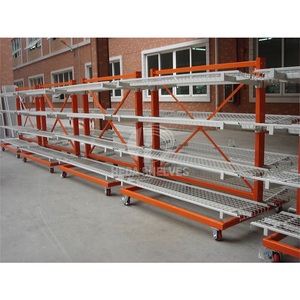
Telescopic Cantilever Pipe Rack Heavy Duty Garment Rack Shelving Garage Metal Racks For Warehouse Storage With Wheels
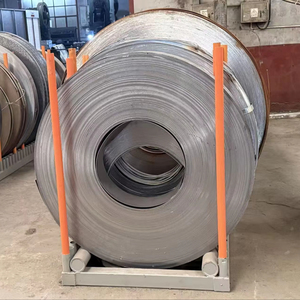
Heavy Duty Steel Coil Storage Rack, Industrial Cradle Rack for Coil Material Handling
1. The Evolution of Wire Mesh Shelving: Global Structural Demands
In modern industrial logistics, cold-chain distribution, and automated order fulfillment centers, wire mesh shelving and wire decking have evolved from passive horizontal separators into critical load-bearing structural elements. Global procurement directors and enterprise facilities managers no longer view wire shelving solely through the lens of baseline pricing. Instead, strategic decisions are governed by strict seismic compliance (ANSI MH16.1), uniform distributed load (UDL) tolerances (ANSI MH28.2), automated sprinkler flue penetration (NFPA 13), and structural durability under cyclic fatigue loading.
China has solidified its position as the premier manufacturing powerhouse for engineered wire mesh storage systems by coupling comprehensive domestic steel coil supply chains with high-speed automated resistance spot welding technologies. Modern Chinese fabricators have successfully transitioned from manual cold-drawing and jig welding to fully integrated production ecosystems. These encompass roll-forming, computerized CNC multi-point mesh grid welding, continuous pre-treatment phosphate washing, and automated electrostatic powder coating or continuous hot-dip galvanization.
Engineering Core Principle: Industrial wire decking is fundamentally designed to prevent internal pallet deflection, distribute irregular load footprints, and protect personnel from dropped items while maintaining greater than 70% open area for fire sprinkler water wash-through. Under ANSI MH28.2 standards, deflection under rated capacity must never exceed L/200, where L is the unsupported beam span.
2. Structural Anatomy: Channel Profiles & Welded Wire Matrix
The structural efficacy of an industrial wire mesh shelf or rack deck depends on the synergy between the cold-drawn steel wire diameter, the orthogonal grid pattern pitch, and the cross-sectional geometry of the underlying support channels. Selecting the appropriate structural configuration dictates both cost efficiency and field safety:
Standard Flanged Waterfall
The wire shelf mesh extends over the front and rear face of the load beam with a 90-degree formed waterfall edge (1.5" to 1.75"). Universal flange channels rest securely on both step beams and roll-formed box beams, preventing horizontal slippage during pallet staging.
Inverted Flared Step Deck
Configured specifically for structural C-channel and structural structural steel beams where top step flanges are absent. The flared channel profile broadens at the contact perimeter, maximizing surface friction and eliminating snag risks from guided forklift forks.
Flush Inset Drop-In Mesh
Engineered without external waterfall lips to sit flush inside the inner step recess of the pallet beam. This profile leaves the beam's front face unobstructed for barcode labels, Pick-to-Light electronic sensors, and narrow-aisle hand-loading operations.
When selecting wire diameters (typically ranging from 4.0 mm to 6.0 mm / 8-gauge to 4-gauge) and support channels (14-gauge to 16-gauge cold-formed steel), structural engineers evaluate concentrated point loads, line loads from skids or plastic tote runners, and dynamic shock coefficients from rapid forklift drops.
| Wire Gauge & Channel Configuration | Standard Grid Pitch | Channel Count per Deck | Rated Capacity (UDL) | Deflection Limit (L/200) | Primary Application Environment |
|---|---|---|---|---|---|
| 4.5 mm Wire / 16 Ga. Standard U-Channel | 50 mm × 100 mm (2" × 4") | 3 Channels (42" Depth) | 2,000 lbs (910 kg) | Max 5.3 mm on 42" Span | Standard Distribution General Carton & Pallet |
| 5.0 mm Wire / 14 Ga. Heavy-Duty Flange | 50 mm × 100 mm (2" × 4") | 4 Channels (42" Depth) | 2,500 lbs (1,135 kg) | Max 4.8 mm on 42" Span | Heavy Industrial 3PL Logistics Hubs |
| 5.8 mm Wire / 14 Ga. Inverted Flared | 50 mm × 50 mm (2" × 2") | 5 Channels (48" Depth) | 3,500 lbs (1,590 kg) | Max 4.2 mm on 48" Span | Heavy Machinery Casting & Automotive Components |
| 6.0 mm Wire / Structural Channel Step | 25 mm × 100 mm (1" × 4") | 6 Channels (48" Depth) | 4,500 lbs (2,045 kg) | Max 3.5 mm on 48" Span | Hazardous / Extreme Chemical Drums & Liquid IBCs |
3. Technological Advancements in Wire Mesh Manufacturing
The manufacturing architecture in leading Chinese wire shelving factories has transitioned radically away from labor-intensive manual operations. Leading manufacturers maintain automated production lines governed by closed-loop Quality Control (QC) systems. The adoption of robotic production methodologies has drastically increased tensile weld strength consistency and minimized dimensional tolerances.
Automated Resistance Multi-Welding
Utilizing high-power medium frequency inverter DC (MFDC) welding lines that execute up to 64 spot welds simultaneously. This guarantees uniform penetration depth and prevents metallurgical burn-through, delivering shear strengths exceeding 5.5 kN per weld joint.
Laser-Guided Roll-Forming
Continuous CNC roll-forming lines transform structural strip coils into support channels with inline hydraulic punching. Integrated optical sensors measure profile dimensions in real time, sustaining channel angle tolerances within ±0.3 degrees.
Eco-Friendly Pre-Treatment
Modern pre-treatment stages utilize non-toxic zirconium and nano-ceramic conversion coatings instead of conventional heavy iron phosphates. This improves powder adhesion, boosts impact resistance, and lowers ecological waste disposal footprints.
Hybrid Anti-Corrosion Finishes
From triple-pass bright zinc electroplating (with blue-passivated trivalent chromium) to heavy continuous Hot-Dip Galvanizing (HDG) per ISO 1461, coatings are engineered to survive extreme humidity, coastal salt-air, and sub-zero blast freezers (-30°C).
4. Strategic Global Procurement Trends (2025–2030)
Enterprise procurement professionals navigating supply chain volatility, dynamic sea freight tariffs, and carbon accounting imperatives are adopting sophisticated sourcing strategies. Understanding these emerging macro patterns enables purchasing groups to protect working capital while maintaining factory floor timelines:
Container Load Optimization (TEU Fill Efficiency): Due to the geometric nature of wire decking and shelving, shipping unnested or inefficiently bundled products results in paying freight on empty air. Forward-thinking China manufacturers now deploy 3D container load simulation software (like Cape Systems or Cube-IQ) during quoting phases. By engineering flared nesting profiles and modular nested bundles secured with heavy steel banding and corner-angle protectors, manufacturers achieve container space utilization exceeding 92%, fitting up to 1,800 standard 42" × 46" wire decks per 40ft High Cube container.
Shift Toward ESG & Carbon Traceability: Western tier-1 retailers, global 3PL operators, and multinational pharmaceuticals increasingly mandate verified Environmental Product Declarations (EPDs) and Scope 1-3 carbon tracking. Top-tier manufacturers in China are responding by utilizing electric arc furnace (EAF) secondary steel, integrating rooftop solar arrays in their rolling mills, and securing ISO 14064 greenhouse gas validation to ensure overseas buyers maintain green supply chain compliance.
Integration with Automated Guided Vehicles (AGVs) & ASRS: As warehouses transition from standard counterbalanced forklifts to autonomous mobile robots (AMRs) and automated miniload storage retrieval cranes, wire mesh shelving must adhere to tighter manufacturing tolerances. Conventional hand-welded decks often present wire burrs or variance in waterfall drop angles that can trigger optical sensor errors on automated equipment. Modern precision manufacturing guarantees deburred wire perimeters and robotically formed waterfall channels to accommodate automated sensor navigation.
5. Technical Competencies & Manufacturing Advantages
Integrating extensive regional engineering field expertise with high-volume precision manufacturing capacity, our systems deliver verifiable performance advantages tailored to complex warehouse footprints across the Middle East, GCC, Africa, and global logistics corridors:
Certified Engineering to FEM & EN Standards
Every shelving run and pallet racking component is calculated strictly in accordance with FEM 10.2.02 and EN 15512 structural design codes. We perform real-world FEA stress simulations to ensure uprights, load beams, and wire decking withstand point impact shocks and sustained seismic forces.
Extreme-Climate Anti-Corrosion Formulations
Designed to thrive in high-ambient, corrosive environments—such as coastal hubs and tropical humidity—our surface coatings combine shot-blasting surface preparation (Sa 2.5) with thermosetting epoxy-polyester powder coats cured at 200°C, delivering salt-spray endurance beyond 720 hours.
End-to-End Lifecycle Delivery
From initial site survey, slab strength calculation, and custom CAD layout optimization to precision container export packing, certified turnkey installation, load signage handover, and future facility relocation services, our engineering teams ensure lifecycle compliance.
6. Frequently Asked Questions (Technical Sourcing & Engineering)
Direct technical answers to common engineering questions faced by procurement managers, industrial project engineers, and safety directors when sourcing wire mesh shelving and racking systems from China:
What engineering standards govern industrial wire mesh decking and shelving load ratings?
In North America, industrial wire decking design, testing, and utilization are governed by ANSI MH28.2 (published by the Rack Manufacturers Institute / SMA). This standard defines test methodologies for uniformly distributed static loads, concentrated line loads, and point loads, mandating that maximum deflection under full rated load must not exceed L/200 (where L is the span between beam supports). In Europe and international markets, systems adhere to EN 15512:2020 (Steel static storage systems) and FEM 10.2.02 principles to evaluate dynamic safety factors and beam-deflection stability.
How do I determine whether to specify Zinc Electroplating, Hot-Dip Galvanizing, or Powder Coating?
The choice depends on operating ambient conditions, chemical exposure, and budget: Electro-Galvanized Zinc (ASTM B633): Ideal for dry indoor ambient warehouses, retail backrooms, and e-commerce picking tiers. Offers an aesthetically bright, smooth finish at minimal cost. Powder Coating (Epoxy-Polyester): Best for color-coded warehouse zoning, indoor aesthetic continuity, and light washdown environments. Available in custom RAL shades. Hot-Dip Galvanizing (ISO 1461): Mandatory for blast freezers (-30°C), refrigerated cold-storage rooms, outdoor open-air storage, and chemical containment bays where continuous condensation or high salinity would oxidize standard zinc or paint coatings.
Why is wire mesh shelving preferred over solid timber or steel decking for fire safety?
Under international building safety standards and NFPA 13 (Standard for the Installation of Sprinkler Systems), solid shelving decks (such as plywood, MDF, or solid sheet steel) act as umbrella barriers that obstruct ceiling fire sprinkler water from penetrating lower storage tiers during a thermal event. Wire mesh shelving features an open area ratio exceeding 70%, permitting unimpeded water curtain drainage down through all rack levels while facilitating smoke detection and emergency illumination.
What specific details are required to engineer an accurate custom wire shelving quote?
To deliver an optimized structural drawing and competitive FOB/CIF quotation, engineering teams require: (1) Exact beam profile type (e.g., standard step beam with 1-5/8" step, structural box beam, or structural channel); (2) Rack bay dimensions: Beam span (length) and upright frame depth (distance between external beam faces); (3) Required load capacity per deck (e.g., 2,500 lbs UDL); (4) Type of stored unit loads (e.g., GMA wooden pallets, four-runner plastic skids, or loose cartons); and (5) Operating environment characteristics (ambient humidity, freeze-thaw cycles, or indoor HVAC climate).
How does a China manufacturer ensure consistent weld integrity across millions of spot welds?
Leading fabricators eliminate manual spot welding in favor of computerized medium-frequency resistance welding machines. The process controls electrode pressure, electrical current duration, and cooling water flow. Production batches undergo systematic destruct-testing via pneumatic shear testers, where weld joints must demonstrate base metal tear-out rather than planar weld separation (tensile shear load minimum of 4.5 to 5.5 kN). Dimensional verification is conducted using go/no-go optical jigs prior to finish coating application.
What strategies are employed to prevent freight damage during overseas container shipping?
Wire mesh decks and shelving components are tightly nested in customized count stacks (typically 50 to 75 pieces per bundle) positioned upon solid heat-treated hardwood dunnage or heavy-gauge steel skids. Every bundle is protected with heavy cardboard corner boards, wrapped in waterproof stretch film, and bound using heavy-tensile polyester or steel strapping. In-container load planning utilizes heavy timber dunnage bracing and pneumatic air bags to prevent cargo shifting during transoceanic transit.
Connect Directly with a Senior Storage Structural Engineer
Obtain engineered CAD layouts, comprehensive ANSI MH28.2 / FEM deflection calculations, and factory-direct volume pricing within 24 hours. Accelerate your project lead times with certified manufacturing intelligence.