Featured Industrial Storage & Material Handling Equipment
Engineered around international FEM and EN design principles, our factory-certified systems integrate high-tensile Q235 cold-drawn steel, precision automated robotic mesh welds, and load-tested structural configurations for heavy-duty industrial warehouses, cold chain distribution hubs, and high-density manufacturing centers.
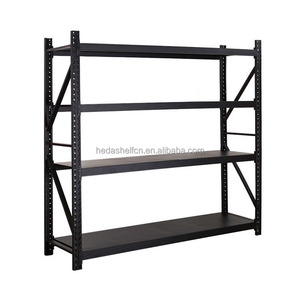
Heavy Duty Metal Garage Shelving Industrial Shelves 4 Tier Boltless Durable Shelves Warehouse Longspan Rack
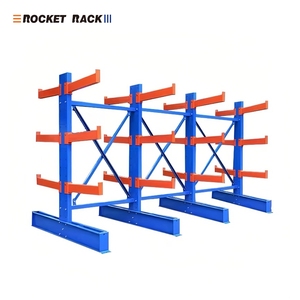
Stackable Heavy Duty Shelf Warehouse Shelves Heavy Duty Cantilever Steel Coil Rack
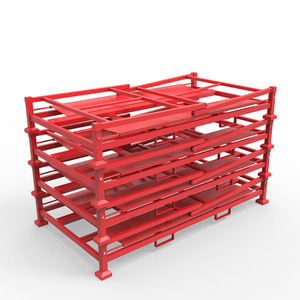
Foldable Stacking Turnover Rack Fabric Metal Steel Pallet Movable Foldable Stacking Shelf for Warehouse
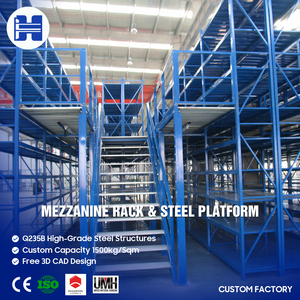
Q235 Steel Industrial Loft Design Mezzanine Racking System For Industrial Factory High Quality Supply Fast Delivery
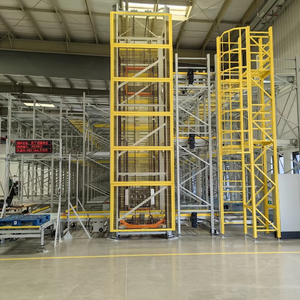
Advanced Intelligent Library Selective Pallet Rack with Efficient Conveying System High Efficiency Stacking Racks & Shelves
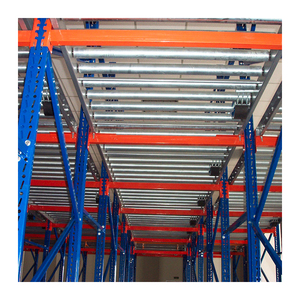
Pallet Flow Rack High Quality Fifo Warehouse Storage Racks Gravity Pallet Flow Racking First In First Out Rack System
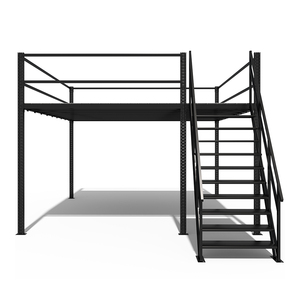
Heavy Duty Rack Industrial Mezzanine Interlocking Floor Rack Attic Racking System For Warehouse Storage
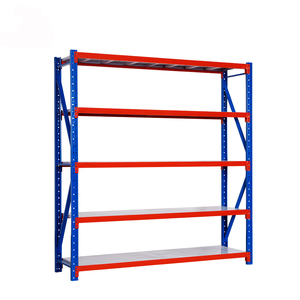
Dongguan Manufacturer Factory 500kg Loading Capacity Medium Duty Warehouse Rack For Sale
Engineering Blueprint: Chinese Manufacturing Standards for Collapsible Wire Mesh Containers
In modern global intralogistics, industrial wire mesh containers—frequently termed wire baskets, stillages, or collapsible pallet cages—serve as the foundational unit-load carriers for automotive stamping lines, cold-chain fulfillment, casting foundries, and automated distribution hubs. Procuring directly from certified Chinese manufacturers requires an exhaustive technical comprehension of structural metallurgy, robotic welding tolerances, and finite element stress analysis rather than superficial dimensional comparisons.
A premier Chinese manufacturing exporter builds wire mesh storage systems strictly utilizing prime Q235B low-carbon structural steel (equivalent to ASTM A36 and European S235JR). The continuous cold-drawing process increases the raw carbon wire’s tensile yield strength from an initial 235 MPa to upwards of 450–550 MPa. This strain-hardening treatment guarantees that wire gauge diameters (typically ranging from 4.8 mm to 6.4 mm ±0.05 mm) withstand acute dynamic lateral impact during forklift transport and multi-level vertical stacking.
Robotic Spot-Welding Matrix
Precision multi-head spot welders execute continuous grid cross-welds at 50×50 mm, 50×100 mm, or 100×100 mm centerlines. High current penetration fuses nodes to exceed a minimum shear resistance of 2,500 N per node, preventing seam detachment under concentrated dynamic surging loads.
Channel Base & Foot Lug Geometry
Under-chassis structures utilize 1.8 mm to 2.5 mm press-formed U-channel steel ribs welded to cold-drawn perimeter bases. Robotic stamping produces flared, self-centering stacking feet that achieve safe 4-high dynamic stacking when fully loaded at 1,500 kg capacities.
Positive Spiral Locking Mechanisms
Sides are connected using heat-treated helical spiral coils and heavy-gauge drop-gate hinges. Ergonomic front half-drop gates feature spring-loaded positive safety latches, allowing picker access without sacrificing sidewall structural rigidity under maximum payload stress.
Technical Specification Matrix: China Export Standard Wire Containers
Evaluating export grade wire mesh containers across standardized geometric footprints, load classifications, and physical tare weights. Data models reflect heavy-duty industrial configurations certified for global maritime logistics.
| Standard Model | Exterior Dimensions (L×W×H mm) | Wire Diameter (mm) | Mesh Pitch (mm) | Rated Dynamic Load | Static Stack Limit | Nesting Volume Ratio |
|---|---|---|---|---|---|---|
| WMC-01 Light | 800 × 600 × 640 | 4.8 mm | 50 × 50 | 500 kg | 4-High (2,000 kg) | 1 : 4.5 |
| WMC-03 Standard | 1000 × 800 × 840 | 5.8 mm / 6.0 mm | 50 × 50 / 50 × 100 | 1,200 kg | 4-High (4,800 kg) | 1 : 5.0 |
| WMC-05 Heavy | 1200 × 1000 × 890 | 6.0 mm / 6.2 mm | 50 × 100 | 1,500 kg | 4-High (6,000 kg) | 1 : 5.2 |
| WMC-07 Foundry Max | 1200 × 1000 × 1000 | 6.4 mm Reinforced | 50 × 50 Heavy | 2,000 kg | 3-High (6,000 kg) | 1 : 4.0 |
| Euro Gitterbox (DIN 15155) | 1240 × 835 × 970 | Corrugated + 5.0 mm | Selective Wire / Sheet | 1,500 kg (UIC Certified) | 4-High Standard | Rigid / Non-Foldable |
Surface Engineering: Electro-Galvanizing vs. Hot-Dip Galvanizing vs. Powder Coating
Export shipments destined for extreme environments—such as the high-salinity ports of the Middle East (Jebel Ali, Dammam), the humid tropical zones of Sub-Saharan Africa, or chemical cold-storage vaults in North America—demand targeted surface passivation. Top-tier Chinese manufacturers apply three core surface coatings based on precise operational wear profiles:
Electro-Zinc Passivation (Cr3+)
Electrolytic deposition yields a bright, uniform 12–18 μm zinc boundary followed by environmentally friendly trivalent chromium passivation. Best for dry indoor warehouses, auto assembly plants, and rapid inventory turns. Meets 72–96 hours ASTM B117 salt spray standards.
Hot-Dip Galvanizing (ISO 1461)
Containers undergo total acidic pickling followed by immersion in a 450°C molten zinc bath. Metallurgical bonding produces an impenetrable 65–85 μm intermetallic Fe-Zn layer. Designed for sub-zero cold rooms, coastal yards, and chemical ports. Resists corrosion for over 500 hours in ASTM B117 testing.
Dual Thermoset Powder Coat
An advanced multi-stage iron phosphate pre-treatment followed by electrostatic deposition of TGIC-free polyester or epoxy-polyester powder (80–120 μm) cured at 200°C. Delivers superior visual SKU segregation, non-scratch surface finish, and food-grade safety handling compliance.
Future Procurement Trends: Automated Logistics & Smart Factory Integration
Procurement strategies in the material handling sector are rapidly pivoting from static warehouse storage units to dynamically traceable, robotics-integrated assets. When sourcing wire mesh containers from China over the next five years, corporate buyers and supply chain executives must prioritize the following transformative shifts:
AGV / AMR Base Profiles
Containers are now manufactured with millimeter-precise laser-cut skid guides and integrated underbody optical targets, facilitating autonomous docking by Autonomous Mobile Robots (AMRs) and conveyor transfer tables.
IoT & RFID Sensor Pockets
Export models now incorporate shielded, recessed mounting brackets for RFID tags and BLE active beacons, delivering automated end-to-end telemetry across multinational closed-loop supply chains without transit damage.
Raw Material Index Hedging
Sophisticated global procurement groups link enterprise supply contracts directly to the Shanghai Metal Exchange (SHFE) wire rod pricing index, mitigating spot market price volatility through predictable transparent rate models.
CBAM Decarbonization Audits
In response to EU Carbon Border Adjustment Mechanism (CBAM) rules, Chinese Tier-1 exporters utilize EAF (Electric Arc Furnace) recycled green scrap steel, providing certified cradle-to-gate carbon footprint verification documents.
Why Tier-1 Global Procurement Teams Partner With Our Factory
Anchored in comprehensive engineering discipline, our factory designs, fabricates, and exports structural industrial storage systems across the United Arab Emirates, Saudi Arabia, Qatar, the broader GCC, Africa, Europe, and the Americas. We eliminate supply chain risks through calculated design rigors, robotic repeatability, and comprehensive lifecycle validation.
Calculated Load Engineering
Every base channel profile, wire gauge combination, and weld node matrix is rigorously derived using FEM 10.2.02 and EN 15512 engineering principles. Systems receive finite element stress analysis (FEA) to confirm safety factors of 2.0 to 2.5 under both static and dynamic forklift operation.
End-to-End Layout Integration
We provide complete architectural CAD drafting, modeling container footprint interfaces with reach trucks, VNA narrow aisle forklifts, floor slab load boundaries, and automated pallet conveyor runs to maximize clear-height utilization.
Automated Robotic Welding
Computer-controlled 3D multi-point spot-welding lines ensure uniform dimensional tolerances (±1.5 mm). Foot cups, hinge pins, and locking brackets are robotically positioned to ensure smooth field folding and stable vertical interlocking.
Certified Container Stuffing
Our engineers optimize export packaging configurations: collapsed wire containers are packed on customized steel skids with protective strapping, achieving up to 350–420 units per 40ft High Cube ocean container, minimizing landed shipping costs per unit.
Frequently Asked Questions: Sourcing Wire Containers from China
Straightforward, technical answers curated by factory structural engineers to streamline international supply chain due diligence, quality inspections, and port logistics management.