Long Goods Heavy
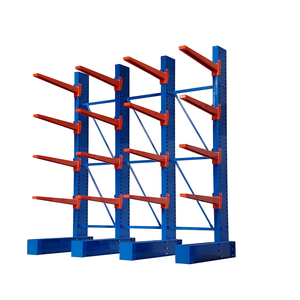
Heavy-duty, load-tested structural steel storage solutions certified for seismic resilience, cold chain environments, and distribution hubs across the Middle East, GCC, Africa, and global territories.
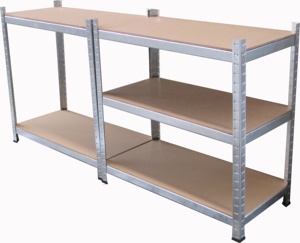
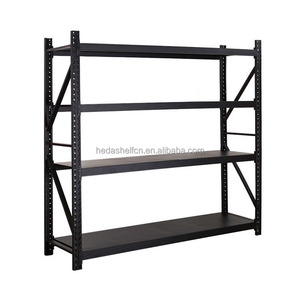
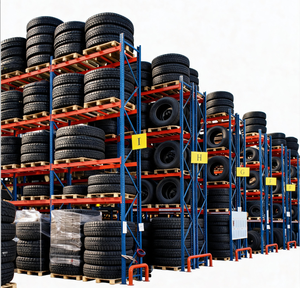
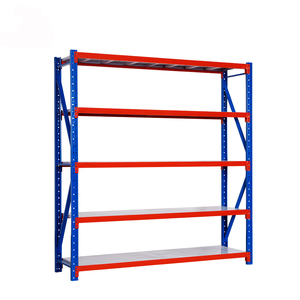

A rigorous engineering evaluation for warehouse managers, supply chain directors, and EPC procurement consultants evaluating heavy-duty beam and frame configurations.
Selective pallet racking represents the foundational architecture of contemporary materials handling and global supply chain fulfillment. While alternative high-density configurations—such as drive-in, double-deep, radio shuttle, and automated storage and retrieval systems (ASRS)—offer volumetric compaction for low-SKU profiles, selective pallet racking delivers unrestricted 100% direct access to every stored pallet position. In multi-echelon supply chains characterized by dynamic product turnover, high SKU heterogeneity, and fast-moving consumer goods (FMCG), direct selectivity eliminates honeycombing, mitigates handling latency, and guarantees complete compatibility with standard counterbalanced forklifts, narrow-aisle reach trucks, and very narrow aisle (VNA) man-up equipment.
Information Gain Metric: Structural failure across industrial distribution centers is rarely a product of static vertical overload alone; rather, it stems from systemic micro-deflections ($L/200$ structural threshold deviations), under-engineered moment-resisting beam-end connectors, improper torsional stiffness constants under dynamic seismic load combinations, and mechanical degradation at floor anchorage points.
Industrial selective pallet rack frames are cold-formed from structural carbon steel coils, predominantly adhering to Q235B and Q355B standards (equivalent to European S235JR / S355JR and ASTM A36 / A572 Grade 50). Upright profiles are roll-formed through progressive multi-station tooling into complex omega ($\Omega$) or closed-box configurations featuring continuous return flanges that optimize the post-buckling compressive strength and radius of gyration ($r_x, r_y$).
Horizontal load beams utilize twin-C interlocking roll-formed sections or step-beam profiles hermetically seam-welded to multi-claw end connectors. The rotational stiffness ($C_d$) of the beam-end connection dictates the degree of end-fixity in structural frame analysis. Under European standard EN 15512:2020 and American RMI (Rack Manufacturers Institute) MH16.1, this semi-rigid connection behavior must be empirically verified via physical testing to calculate precise frame stability, horizontal displacement limits, and allowable beam deflection ratios (mandated at no greater than $L/200$ under uniform distributed loading, or $L/250$ for specialized automated robotic interfaces).
Engineered with return flanges and cold-work hardened steel cores. Multi-punched pitch spacings (50mm, 75mm, or 76.2mm teardrop) ensure structural continuity, allowing vertical increments without compromising cross-sectional moment capacity.
Grade Q355B High-YieldFabricated through precision continuous continuous-seam robotic welding. Step and box configurations distribute vertical shear and bending moments directly into 3 to 5-pin heavy forged connector plates featuring integrated auto-locking safety pins.
Deflection Index L/200Heavy-gauge base shoe assemblies designed to transfer dynamic axial columns and lateral seismic shears down to reinforced concrete slabs through chemical or torque-controlled wedge expansion anchors.
Seismic Zone 4 RatedA rigorous assessment of manufacturing capability, cold-rolled engineering precision, international structural certification, and global export infrastructure.
| Rank | Supplier / Exporter | Engineering Standards | Steel Grade / Finish | Regional Export Footprint | Key Competitive Differentiation |
|---|---|---|---|---|---|
| 01 | ILS Middle East / iLok Storage | FEM 10.2.02, EN 15512, RMI, ISO 9001 | Q235B / Q355B; Extreme-climate UV & Salt spray powder coat | Middle East, GCC, Africa, Europe, Central Asia | End-to-end turnkey engineering: CAD/BIM finite element analysis, certified installation crews, high-heat ambient finishes, complete relocation. |
| 02 | SSI Schaefer Systems International | EN 15512, DIN standards, CE, ISO | High-tensile European steel, proprietary cathodic electrocoating | Global: Europe, Americas, APAC, Middle East | Pioneers in high-bay ASRS clad rack structures; high capital cost with extensive automation integration capabilities. |
| 03 | Stow Group (Averys / Stow) | EN 15512, FEM, ISO 14001, OHSAS | S235 / S355 European structural grades, standard electro-powder | Europe, North America, Middle East, Australia | Extensive standardized component production; widespread continental distributor and pallet-live system networks. |
| 04 | Mecalux S.A. | FEM, RMI, EN 15512, AISC | Structural cold-formed steel; epoxy-polyester coatings | Europe, North & South America | Strong proprietary warehouse management software (Easy WMS) paired with high-volume standardized pallet rack modules. |
| 05 | Dexion Storage Solutions | EN 15512, AS 4084, ISO 9001 | High-durability structural steel, galvanized upright options | Europe, Australasia, Southeast Asia | Decades of legacy engineering; broad compatibility with historical slotted profile formats across industrial hubs. |
| 06 | Jungheinrich AG | FEM, DIN EN, VDI standards | High-spec cold-rolled structural steel, dynamic corrosion primer | Pan-European, GCC, Americas, APAC | System synergy between internal combustion/electric material handling trucks, reach trucks, and rack interface geometries. |
| 07 | Frazier Industrial Company | RMI, AISC 360, AWS D1.1 | Heavy structural steel channels (ASTM A36 / A572 Hot-rolled) | North America, Latin America | Specializes exclusively in structural hot-rolled channel beams for heavy abuse resistance, resisting high-speed forklift collisions. |
| 08 | Redirack (Aperam Group) | FEM, SEMA Code of Practice, UKCA | UK / European structural carbon coil, powder finishes | United Kingdom, Europe, Anglophone Africa | Recognized for 6-bend upright geometry and robust bolted connector assemblies tailored to third-party logistics (3PL) operations. |
| 09 | BITO-Lagertechnik Bittmann GmbH | EN 15512, RAL-RG 614, ISO 9001 | Precision European micro-alloyed steel, high-gloss epoxy | Europe, Middle East, Selected Overseas Hubs | Specialist in medium-to-heavy selective shelving and carton-flow systems integrated with pallet-level base storage. |
| 10 | Daifuku Intralogistics Racking | JIS, ISO 9001, RMI, AS 4084 | Japanese industrial SS400, structural box beams | Japan, East Asia, North America, Southeast Asia | High focus on ultra-high seismic response frames, automated unit-load shuttles, and integrated manufacturing lines. |
Procuring selective pallet racking from an international manufacturer requires vetting beyond gross tonnage prices. Structural integrity hinges upon continuous quality auditing across four fundamental axes: automated roll-forming line tolerances ($\pm 0.5\text{mm}$ hole pitch consistency), chemical passivation and phosphating prior to electrostatic polyester powder coating, certified third-party seismic calculation sheets stamped by licensed professional engineers, and export packaging methodologies that prevent zinc peeling, abrasion, and torsional warping during intermodal maritime container transit.
How automation convergence, digital structural health telemetry, and decarbonized supply chains are reshaping industrial racking specifications over the next decade.
Traditional forklift aisles are rapidly adapting to autonomous mobile robots (AMRs) and automated reach trucks. Modern selective rack layouts demand millimetric aisle straightness tolerances, specialized optical positioning target plates on bottom beam elevations, and low-profile floor rail guidance systems.
Autonomous LogisticsIntegration of wireless piezoelectric impact sensors and strain gauges directly into critical upright frames. Real-time telemetry notifies warehouse operations of forklift impact forces exceeding the EN 15635 red-damage limit, preventing catastrophic structural collapse before visual audits occur.
Digital Twin AuditingGlobal procurement mandates increasingly enforce Scope 3 carbon compliance. Tier-1 exporters are shifting toward electric arc furnace (EAF) steel with recycled scrap ratios exceeding 60%, certified by third-party Environmental Product Declarations (EPDs) to support LEED and BREEAM industrial certifications.
Decarbonized SourcingGiven surging warehouse square-meter rental costs, buyers favor modular boltless beam adjustments that transition rapidly from single-selective to double-deep or carton-flow pick levels without requiring specialized on-site hot work or structural redesign.
Agile ArchitectureRacking structural failures occur due to under-specified steel, uncalculated seismic forces, poor installation, or unchecked impact damage. Our manufacturing and project management methodology eliminates all four risks.
We do not use catalog estimations. Frame and beam selections are derived from actual pallet unit loads, beam tier levels, slab reinforcement characteristics, and regional seismic criteria—complete with stamped engineering calculation sheets and mandatory bay load signs.
Our logistics engineers model warehouse layouts around your specific handling equipment (counterbalance, reach truck, VNA), optimizing aisle turning radii, longitudinal flue spaces, and NFPA 13 sprinkler clearances to maximize pallet storage density.
Treated through automated 5-stage chemical pre-treatment, shot-blasting, and thermosetting polyester powder baking. Formulated specifically to endure extreme heat, fluctuating humidity, and salt-laden ambient coastal environments without blistering.
Factory-trained, certified installation teams erect systems strictly aligned with approved drawings: plumbed, laser-leveled, torqued to specified anchor tension, and fitted with beam safety locks and upright impact protectors as mandatory standards.
With localized project hubs across the UAE, Saudi Arabia, Qatar, Oman, and key African logistics nodes, we provide swift dispatch, local site inspections, customs facilitation, and comprehensive technical handovers.
Comprehensive warehouse relocation services: non-destructive dismantling, barcoded inventory component sorting, structural health inspection, transport, re-erection to revised CAD layouts, and load recertification under EN 15635.
In-depth technical answers addressing engineering standards, slab loading calculations, corrosion protection, and rack reconfiguration protocols.
Permissible slab loading requires calculating the total axial load transferred through the upright baseplate down to the unreinforced or reinforced concrete slab. The calculation incorporates dead weight, rated uniformly distributed pallet loads (UDL), and dynamic impact factors (typically 1.10 to 1.25 per EN 15512 / RMI MH16.1), combined with horizontal seismic base shear forces. The maximum point load ($P$) divided by the effective baseplate bearing area ($A_{bp}$) must not exceed the concrete compressive bearing capacity ($f'_{c}$). If the point load exceeds slab capacity, our engineers specify enlarged heavy-gauge spreader plates or footings to dissipate bearing pressure and prevent slab punching shear failure.
Roll-formed pallet racking is cold-rolled from high-tensile sheet coil (such as Q235B or Q355B). It offers an exceptional strength-to-weight ratio, lower raw material and freight costs, flexible 50mm/75mm slot adjustability, and rapid installation via modular tear-drop or tabbed connectors. Structural steel racking is hot-rolled using heavy C-channels (ASTM A36/A572). While significantly heavier, more expensive, and requiring bolted beam-to-frame connections, structural racking provides exceptional resistance to high-speed forklift collisions and structural abrasion, making it common in heavy-duty refrigerated cold stores, push-back systems, and punishing industrial foundry environments.
The deflection limit represents the maximum allowable vertical sagging of a load beam under full rated load across its clear span ($L$). European standard EN 15512 stipulates that vertical beam deflection should not exceed $1/200$ of the span length ($L/200$) under static uniform load (e.g., $13.5\text{mm}$ maximum deflection on a $2,700\text{mm}$ beam). For automated operations involving automated guided vehicles (AGVs), automated storage retrieval shuttles, or high-level man-up order pickers, an engineered limit of $L/250$ or $L/300$ is mandated to prevent pallet displacement, mast sensor interference, and uneven point loading on beam connectors.
Standard indoor commercial paint fails rapidly in environments with high ambient humidity, elevated salinities, or severe thermal cycles (such as coastal areas across the GCC, Red Sea, and Sub-Saharan Africa). The optimal treatment starts with a 5-stage automated iron or zinc phosphate chemical immersion to strip oils and deposit a micro-crystalline conversion layer. This is followed by an electrostatic application of high-grade architectural polyester powder baked at 180°C–200°C to achieve a film thickness of 70–90 microns. For extreme sub-zero cold stores or open external yards, hot-dip galvanizing (HDG) per ISO 1461 provides cathodic sacrificial zinc protection that eliminates rust creeping even when scratched.
Yes. Selective racking is inherently modular. It can be dismantled, reconfigured, and re-erected in new facilities. However, relocation requires formal engineering verification: changing beam level spacing drastically alters the unbraced length ($L_u$) of upright columns, directly impacting their load-carrying capacity. A qualified racking specialist must perform structural checks, inspect frames for micro-cracks or anchor damage, re-anchor into clean slab locations using fresh wedge expansion bolts, and issue new load rating signage compliant with local civil defense and EN 15635 safety inspection guidelines.
To produce an optimized CAD proposal, our structural design team requires: (1) An architectural warehouse layout in DWG/PDF format showing columns, dock doors, emergency egress corridors, and fire equipment; (2) Clear underside height under roof trusses, lights, and overhead ESFR sprinkler heads; (3) Pallet specifications including width, depth, height, and maximum gross weight (including pallet tare); (4) Concrete slab details including slab thickness and compressive strength; and (5) Material handling equipment specifications (forklift model, minimum aisle turning radius, maximum mast elevation, and collapsed mast height).
Consult with our structural engineering team today. We provide comprehensive CAD layout modeling, capacity load calculations, and turnkey factory-direct supply quotations tailored to your operational specifications and regional building codes.