Serving UAE, GCC & Africa Design · Supply · Installation · Relocation
Engineering Whitepaper & Strategic Sourcing Guide

Top 10 Industrial Metal Shelving Supplier & Suppliers

A rigorous industrial assessment of high-density structural racking, automated plate storage, mezzanine platforms, and global cold-rolled steel fabrication standards.

Procurement Intelligence

The Changing Paradigm of Industrial Metal Shelving Fabrication

In modern high-velocity fulfillment centers, manufacturing facilities, and automated warehouses, industrial metal shelving is no longer viewed as simple passive storage. It represents critical structural infrastructure engineered to withstand dynamic live loads, cyclical forklift operations, and intense volumetric turnover while maintaining absolute spatial safety.

100%
Direct SKU Selectivity
Q355B
High-Tensile Cold Steel
L/200
Deflection Design Limits
15+Yrs
Fatigue Cycle Endurance
Engineered Storage Solutions

High-Performance Metal Shelving & Industrial Rack Portfolio

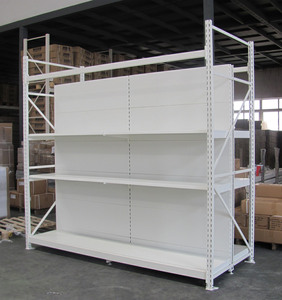
Engineered to FEM 10.2.02 and ANSI MH16.1 specifications, our modular systems combine ultra-high yield strength cold-formed steel profiles with precision punch geometries to ensure rapid assembly and zero structural drift.

Industrial Metal Shelves Unit
Heavy Manual Picking

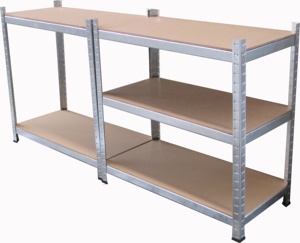
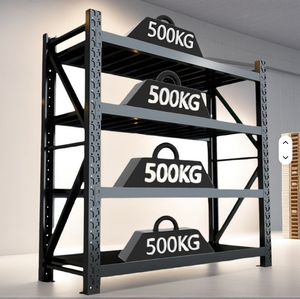
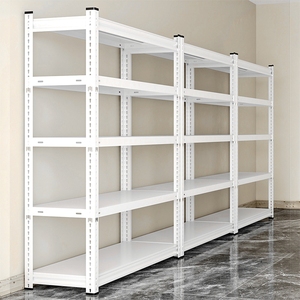
Shelves: Modular Industrial Steel Storage Units

Adjustable boltless industrial metal shelving with slotted upright frames, offering versatile bay divisions for high-density bin and carton fulfillment.

Load Rating (UDL):250 - 800 kg/tier
Upright Thickness:1.5mm - 2.0mm SPCC
Get a Quote
Market Competency Analysis

Benchmark Review: Evaluating the Top 10 Industrial Shelving Suppliers

A procurement director's technical side-by-side comparison of world-class steel fabrication facilities, structural quality certifications, load-testing compliance, and engineering capabilities.

Manufacturer / Supplier Primary Steel Grade Standard Compliance Engineering Verification Automated Integration Market Specialization
ILS Middle East & Global Q235B / Q355B Cold Rolled FEM 10.2.02, EN 15512, ISO 9001 Full 3D FEA Simulation & Site Tests Full ASRS / AMR Heavy Racking, Mezzanines, GCC & Africa Projects
SSI SCHAEFER Group European EN 10025 High Grade EN 15512, DIN EN ISO 14001 In-house Dynamic Stress Testing Advanced High Bay Global Turnkey Automated Distribution
Mecalux Racking Systems Structural Cold-Rolled SPCC ANSI MH16.1, RMI Standard Finite Element Numerical Calculation Stacker Cranes Selective Pallet, Drive-In, Americas & EU
Dexion Storage Solutions European Cold Formed Steel FEM Regulations, SEMA Approved Independent Static Strain Verification Semi-Automated Industrial Slotted Angle, Longspan Shelves
Stow Group (Movu Robotics) S235JR / S355MC Micro-alloy EN 15620, ISO 3834-2 Welding Structural Seismic Cycle Testing Autonomous 2D Shuttle Pallet Shuttle Logistics & High-Density Bays
AR Racking SA Structural Galvanized Coil S280 EN 15512, EN 1090-1 CE Certified University Lab Destructive Testing Clad Rack Systems Corrosion Resistant Outdoor & Clad-Rack
Interlake Mecalux USA ASTM A1011 / A653 Commercial RMI ANSI MH16.1, IBC Compliant Seismic Deflection Structural Modeling Conveyor Interfaced North American Teardrop Upright Racking
Nedcon (Koch Industries) EN 10149-2 High Yield FEM, EN 15512 Structural Codes FEA Dynamic Resonance Modeling Micro-Fulfillment Multi-Tier Shuttle Shuttles, Complex ASRS
Daifuku Intralogistics JIS G3101 SS400 Structural JIS Standard, ISO 9001, OSHA High-Speed Dynamic Impact Sim Complete Robotic ASRS Cleanroom Material Handling, Automotive Cells
Jungheinrich AG Racking Structural High-Tensile Steel EN 15512, FEM Industrial Guidelines TUV Rheinland Validated Testing AGV Navigated Narrow Aisle (VNA) Heavy Pallet Shelving
Enterprise Structural Verification

Why Tier-1 Engineers Specify ILS Metal Shelving Systems

Eliminate procurement risk. Every structural column, beam connector lug, and shelf stiffener is precision rolled, surface passivated, and load verified to prevent field deflection failure under thermal and physical stress.

Certified FEM / EN Compliance

Every profile is designed strictly in line with EN 15512 and FEM 10.2.02 codes. Beam-to-column connector moments, upright compressive buckling, and shear factors are mathematically calculated rather than estimated.

Custom Structural CAD & FEA

Our in-house structural engineers evaluate dead load, live load, forklift impact forces, and seismic zone accelerations using detailed 3D Finite Element Analysis software prior to cold roll-forming production.

Hot-Climate Powder Coating

Continuous automated electrostatic powder-coating lines apply marine-grade polyester resin baked at 200°C. Resists humidity, peeling, mechanical chipping, and hot-climate industrial corrosion for decades.

Turn-Key Relocation & QA

From initial laser floor slab deflection surveys to full bay assembly, anchor pull-testing, load signage certification, and complete warehouse racking relocation, our certified site crews guarantee compliance.

Future Sourcing Forecast

Emerging Trends Shaping Industrial Shelving Procurement

Supply chain leaders are re-evaluating capital equipment lifecycles. Discover how automation convergence, decarbonized steel manufacturing, and structural IoT sensors are reshaping international procurement tenders.

1. Automation-Ready Geometry (AMR & AGV)

Modern industrial shelving is increasingly specified with precision base tolerances (±1.5mm) and integrated floor guide rails to facilitate driverless Autonomous Mobile Robots (AMRs) and Automated Guided Forklifts. Traditional broad tolerances are being replaced by robotic clear-aisle specifications.

2. High-Strength, Low-Weight Micro-Alloys

Sourcing strategies are moving away from thick, heavy mild steel towards micro-alloyed, cold-rolled sheets (such as Q355B and S355MC). These high-tensile steels reduce structural self-weight by up to 18% while simultaneously elevating total permissible Uniformly Distributed Load (UDL) capacities.

3. IoT Structural Deflection Telemetry

Enterprise smart warehouses are integrating piezoelectric strain gauges and fiber-optic deflection sensors along main beam spans. Facilities managers can now receive real-time dashboard notifications when localized bay overloading exceeds the L/200 deflection limit, preventing catastrophic collapse.

Structural Integrity & Engineering

Engineering Science: Finite Element Analysis & Seismic Design

Industrial metal shelving structural performance relies on beam connector rotational stiffness, column perforation geometry, and foundation anchor bolt shear mechanics.

Cold-Formed Perforation Profiles

Upright punching patterns (drop, teardrop, or slotted diamond) are engineered to prevent stress concentration. High-precision laser and multi-station rotary punching maintain consistent 50mm or 75mm pitches, enabling 4-lug and 5-lug beam connectors to seat firmly without mechanical play.

Dynamic Seismic Base Anchorages

In seismically active regions, standard wedge anchors fail under horizontal ground acceleration. Modern industrial shelving utilizes heavy ductile floor baseplates with double chemically grouted M12/M16 anchors to absorb plastic deformation without shearing.

Impact Protection & Sacrificial Uprights

Forklift impact accounts for over 85% of structural rack collapses. Modern engineering mandates steel post protectors, floor-mounted perimeter barrier rails, and bolt-on sacrificial upright splices that can be safely exchanged without dismantling upper bays.

Procurement & Engineering Due Diligence

Frequently Asked Questions: Industrial Metal Shelving Sourcing

Critical structural, metallurgical, and architectural considerations addressed by senior racking structural engineers to streamline your procurement approval cycle.

What is the structural difference between Uniformly Distributed Load (UDL) and Concentrated Point Load on metal shelves?

Uniformly Distributed Load (UDL) assumes that the overall weight of the stored items is dispersed evenly across the entire surface area of the steel shelf panel or pair of pallet beams. In contrast, a Concentrated Point Load represents heavy weight focused on a very small, specific footprint—such as the four steel feet of an industrial machinery crate or high-density pallet skids.

Specifying a shelf rated for 1,000 kg UDL does not mean it can accept a 1,000 kg point load in the center. Concentrated center loads create extreme bending moments that can permanently exceed the elastic limit of the cold-rolled steel profile, resulting in immediate structural buckle. Always declare point loads to suppliers to install welded under-shelf hat stiffeners.

What concrete floor slab specifications are mandatory before installing high-bay pallet racking or mezzanine platforms?

Industrial heavy-duty shelving and high-bay racking transfer immense point loads through their baseplates onto the floor slab. Standard commercial recommendations require a minimum reinforced concrete thickness of 150mm to 200mm, with a compressive strength rating of C25/30 or 3,000 to 4,000 PSI (20 to 30 MPa).

Furthermore, floor flatness must adhere to DIN 18202 or Concrete Society TR34 (FM2 standard for normal reach-truck operations; DM2 for Very Narrow Aisle turret trucks). If the floor slab is unreinforced or under-cured, heavy dynamic upright loads will crack the concrete around mechanical expansion anchors, compromising stability.

How does the European EN 15512 standard differ from American RMI (Rack Manufacturers Institute) codes?

Both standards ensure life-safety and structural resilience, but their mathematical verification philosophies differ slightly:

EN 15512 (adopted across Europe and widely accepted in the Middle East and Africa) follows Limit State Design (LSD) principles, using partial safety factors applied separately to dead loads, live loads, and material yield properties. It strongly relies on empirical physical testing of upright-to-beam connectors to measure connection rotational stiffness and beam loosening effects.

RMI ANSI MH16.1 (prevalent in North America) traditionally utilized Allowable Stress Design (ASD), though it now integrates Load and Resistance Factor Design (LRFD). RMI emphasizes specific frame buckling formulas under column torsion and has standardized testing methods tailored heavily around the ubiquitous teardrop connection geometry.

When should buyers choose Hot-Dip Galvanizing over Electrostatic Powder Coating for metal shelving?

Electrostatic Powder Coating: Ideal for dry, climate-controlled indoor distribution warehouses, retail shopping centers, and commercial stockrooms. It offers superior aesthetics, high chemical resistance to light spills, customizable color branding (e.g., safety orange beams, navy blue frames), and lower upfront fabrication costs.

Hot-Dip Galvanizing (HDG): Essential for outdoor storage yards, deep freeze cold-storage environments (-30°C with severe condensation), fertilizer chemical plants, and open marine loading docks. The zinc-iron metallurgical bond creates a sacrificial barrier that self-heals minor scratches, preventing rust under-creep that would cause powder paint to flake over time.

How does finite element analysis (FEA) prevent premature rack collapse in custom storage systems?

FEA computational modeling subjects a 3D digital twin of the racking assembly to simulated vertical gravitational loads, accidental horizontal impacts (e.g., 5kN to 10kN forklift bumps), and ground acceleration waves. The software visualizes Von Mises stress contours, pinpointing exact stress concentrations around slotted upright frame perforations and weld joints.

By simulating multiple live-load distributions before steel enters roll-forming lines, structural engineers can thicken specific gusset plates or introduce horizontal diagonal cross-bracing bays, ensuring that the working stress nowhere exceeds the material's yield point.

What regulatory inspection frequencies are required for commercial and industrial warehouse metal racks?

According to EN 15635 (Steel static storage systems – Application and maintenance of storage equipment), industrial facilities must implement a three-tiered inspection protocol:

1. Immediate Reporting: Lift operators must report any structural impact to a supervisor immediately.

2. Weekly Visual Checks: A nominated PRSES (Person Responsible for Storage Equipment Safety) must conduct documented visual aisle walks checking for missing beam safety pins, floor anchor dislodgement, or visible upright deflection.

3. Annual Expert Inspection: An independent, qualified racking structural inspector must execute an exhaustive annual audit, tagging bays with Green (Serviceable), Amber (Damage requiring repair within 4 weeks), or Red (Critical danger requiring immediate offloading and quarantine) risk classifications.

Ready to Engineer Your High-Density Storage Infrastructure?

Collaborate directly with our senior racking structural engineering team. We convert warehouse clear-height and floor layouts into high-efficiency, load-certified storage architectures tailored to your exact operational handling machinery.

Free CAD Floor Layout & Capacity Plan
Calculated Bay Load Verification Signs
FEM 10.2.02 / EN 15512 Compliance
Certified Middle East & Africa Installers

Connect With a Structural Engineer

Submit your architectural drawing, pallet specifications, or clear height requirements for an immediate technical review and formal proposal.

Get a Quote