Cantilever Rack
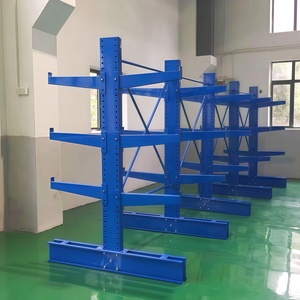
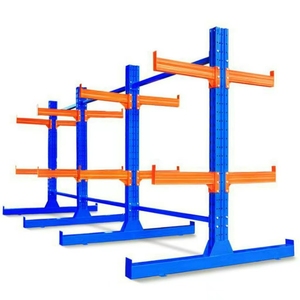
Cantilever Double-Sided Rack for Warehouse High Density Pipe Storage Industrial Heavy Duty Cantilever Racks
Unobstructed front arm clearance for extrusions, long timber & steel pipes.
Engineered for extreme structural integrity, high spatial density, and seamless material handling across modern multi-echelon supply chains.
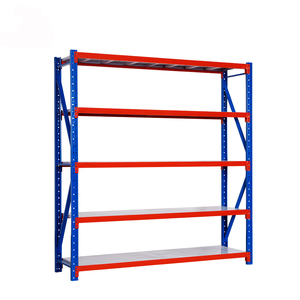
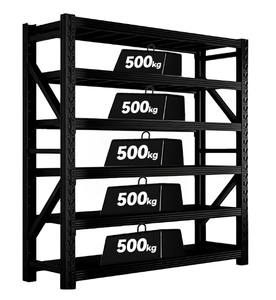
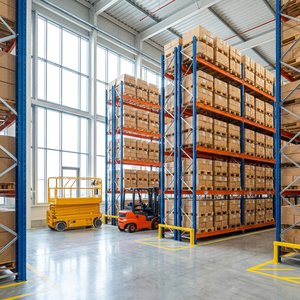
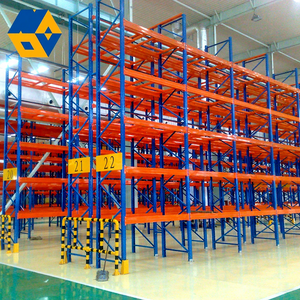
Push back racking bridges the structural gap between pure selective pallet racking and high-density drive-in systems. By employing a calibrated geometric inclination gradient of 2.5% to 3.5%, pallets are loaded on a nested trolley assembly that travels along heavy-gauge structural steel inclined rails.
When the initial pallet is placed on the uppermost cart via forklift, the subsequent pallet gently pushes the primary carriage rearward, exposing the nested secondary cart underneath. This mechanical nesting cascade continues up to 6 pallets deep. Upon product retrieval, the stored goods automatically glide forward via gravity to the front aisle face at a controlled terminal velocity, governed by low-friction flanged ball bearings and structural anti-tilt stops.
Unlike traditional drive-in racking where forklifts must enter deep storage bays—increasing cycle times and upright column collision hazards—push back racking confines all forklift activity strictly to the perimeter picking aisle. This cuts transit travel distances by up to 40% while preserving independent lane selectivity for intermediate inventory SKU management under Last-In, First-Out (LIFO) protocol.
Each push back racking system manufactured in our ISO-certified facilities is load-calculated from high-tensile structural steel profiles to match custom pallet types (Euro, GMA, ISO 1200x1000) and slab capacities.
| System Attribute | Push Back Racking (Nested Cart) | Drive-In Racking System | Pallet Flow (Roller Gravity) | Standard Selective Racking |
|---|---|---|---|---|
| Inventory Flow Logic | LIFO (Last-In, First-Out) | LIFO / Strict Bulk Run | FIFO (First-In, First-Out) | 100% Random Selective Access |
| Aisle Density Factor | High (75%–85% footprint utilization) | Very High (85% footprint utilization) | Maximum (85%–90% footprint) | Low to Medium (40%–50% utilization) |
| Forklift Penetration | Zero (Loads/unloads at aisle face) | Deep (Drives into rack structure) | Zero (Dedicated pick & feed faces) | Zero (Direct bay access) |
| Upright Impact Vulnerability | Extremely Low (Shielded perimeter) | High (Continuous mast collision risk) | Low (Protected pick faces) | Moderate (Frequent bay maneuvers) |
| SKU Selectivity per Bay | Multi-SKU (1 SKU per lane) | Single SKU per overall channel | Single SKU per lane depth | Every single pallet accessible |
| Storage Depth Range | 2 to 6 Pallets Deep | Up to 10 Pallets Deep | Up to 20 Pallets Deep | 1 to 2 Pallets Deep (Double Deep) |
| Capital Maintenance Overhead | Minimal (Passive mechanical gravity) | High (Frequent beam/frame repair) | Moderate (Roller brake calibration) | Low (Static structural beams) |
Fabricated using robotic GMAW welding on cold-formed ASTM A572 or Q355B structural steel chassis. Wheels are heavy-duty precision CNC-machined alloy with dual-shielded deep-groove ball bearings, filled with synthetic wide-temperature lubricant (-40°C to +80°C) to prevent cart freeze-up in harsh cold chain applications.
Engineered with integrated mechanical anti-derailment interlocks and low-profile pallet catch bumpers. Secondary retention catches prevent cart over-travel during erratic forklift insertions, while positive carriage stops hold pallets flush at the picking interface under full load conditions.
Exposed components undergo an automated 7-stage zinc-phosphate chemical pre-wash followed by high-adhesion electrostatic thermosetting epoxy-polyester powder coating (80–120 microns DFT). Hot-dip galvanized zinc baths (ASTM A123) are available for blast freezers and aggressive coastal humidity.
Industrial racking is a mission-critical structural asset. Catastrophic rack collapse stems from sub-gauge materials, miscalculated seismic shear forces, or flawed beam connectors. Our OEM/ODM engineering protocol strictly mitigates these failure modes.
Every custom frame profile, beam joint, and rail carriage undergoes 3D simulation analysis under static, dynamic, and seismic lateral acceleration loads (P-Delta effects).
Engineered in compliance with American RMI ANSI MH16.1-2021, European Standard EN 15512 / FEM 10.2.02, and Australian Standard AS 4084-2023 for steel storage racks.
Automated continuous roll-forming lines maintain rigorous tolerances. Upright column piercing and interlocking beam connectors lock rigid under heavy repetitive cycling.
Export-optimized flat packaging, protective steel crating for cart wheelsets, and moisture-vapor barrier wrapping ensure flawless container transit to any major sea port worldwide.
Driven by surging real estate lease rates, explosive growth in cold-chain logistics, and modern automation initiatives, international procurement directors are redefining their storage infrastructure strategies.
Refrigerated and frozen distribution centers incur electrical cooling costs up to 400% higher per cubic meter than ambient facilities. Push back racking is rapidly replacing selective layouts in cold stores because it boosts volumetric cube density up to 80% without requiring the heavy capital expense and software overhead of automated AS/RS shuttle systems.
Modern push back channels are now designed to interface with Automated Guided Vehicles (AGVs) and Autonomous Mobile Robots (AMRs). Push back channels handle the physical gravity accumulation buffer, allowing automated lift vehicles to cycle in and out of pickup bays without entering structural aisles, eliminating dead time.
Supply chain vulnerabilities have driven tier-1 logistics operators to procure directly from primary OEM/ODM manufacturers rather than domestic middlemen. Direct procurement allows complete customization of beam gauge, cart wheelbase track width, and finish specifications, achieving 18% to 27% landed CapEx reductions.
We combine factory-direct manufacturing precision with extensive turnkey contracting experience across the UAE, GCC, Africa, Europe, and the Americas.
Racking failure is never an accident—it is the direct consequence of under-specified upright profiles, poor steel metallurgy, incorrect slab anchoring, or unchecked impact damage. Our fully integrated engineering model eradicates these vulnerabilities from the ground up.
Floor slab core drilling review, clear height constraints, and fire sprinkler clearance checks.
Finite element modeling of frame deflections, rail tolerances, and nested cart kinematics.
Automated precision punching, continuous roll-forming, and thermal powder curing.
Seaworthy containerization, port customs handling, and certified on-site rigging & anchoring.
In-depth answers from our chief structural racking engineers to help supply chain directors evaluate push back systems against their warehouse operational requirements.