Engineered Steel Shelving & Industrial Racking Systems
From modular hypermarket merchandising fixtures to 2,000lb dynamic pallet flow tracks and structural coil racks, our production lines fabricate compliant, high-tolerance components engineered for rigorous duty cycles.
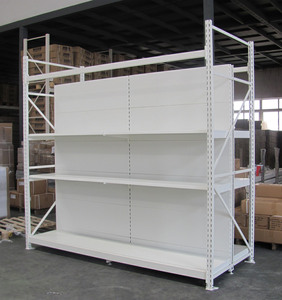
Integrated Hypermarket Display Shelving and Racking to Fit Heavy Duty Products in Shopping Mall Modular System
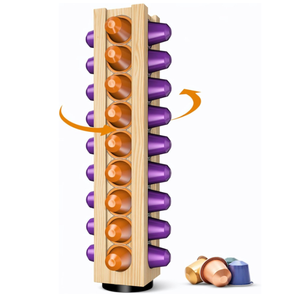
High Quality Rotating Vertical Carousel Pod Holder Coffee Station Countertop Organizer Storage Rack for 36 Pods
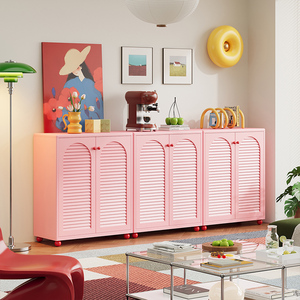
Steel Storage Cabinet Pink Modern Style Locker Louver Doors Waterproof Kitchen Home Furniture for Living Room
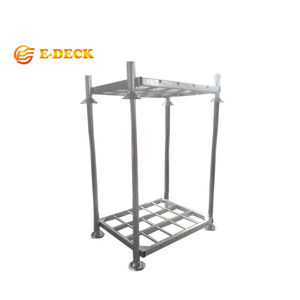
Heavy-Duty Warehouse 2000lb Capacity Single Pallet Mobile Rack
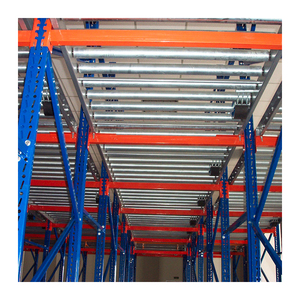
Pallet Flow Rack High Quality Fifo Warehouse Storage Racks Gravity Pallet Flow Racking First In First Out Rack System
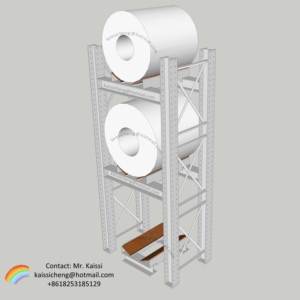
Standard and Custom Heavy-Duty Steel Coil Racks
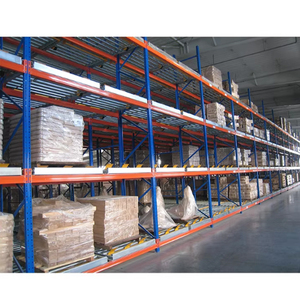
Warehouse FIFO Storage Racking System Flow Through Pallet Roller Racking
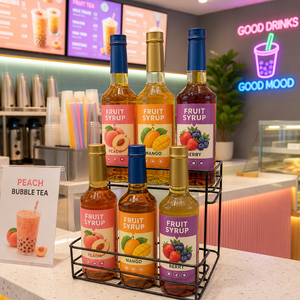
Portable Eco-Friendly for Water Resistant Modern Metal Bottle Display Racks Bar Organizer Liquor Coffee Syrup Rack
Industrial Steel Shelving & Racking: The Engineering Whitepaper for Global B2B Buyers
In modern high-throughput logistics, hypermarket retail infrastructure, and dense warehousing environments, steel shelving units serve as the structural backbone of modern material handling. Sourcing industrial steel shelving from premier Chinese manufacturing hubs is no longer merely a low-cost procurement decision; it is a calculated, strategic collaboration focused on advanced cold-roll engineering, high-tensile metallurgy, automated production economics, and international structural code compliance.
This technical whitepaper provides international supply chain directors, industrial architects, logistics engineers, and retail procurement teams with an exhaustive structural, metallurgical, and economic breakdown of modern steel storage solutions manufactured in China. By systematically analyzing raw material grading (Q235B vs. Q355B), finite element analysis (FEA) testing methodologies, continuous roll-forming lines, automated electrostatic surface treatments, and international safety certifications—including FEM 10.2.02, EN 15512, RMI MH16.1, and AS 4084-2023—this document establishes the quality criteria required to specify safe, durable, and cost-optimized shelving assets.
Metallurgical Foundations: Steel Grades, Yield Strengths, and Forming Dynamics
The structural reliability of any industrial shelving system relies directly on the chemical composition and mechanical properties of the primary coil stock. Chinese manufacturing excellence in steel fabrication is anchored by direct integration with tier-one blast furnace steel mills (such as Baosteel, Shougang, and Ansteel), ensuring tight metallurgical control over hot-rolled and cold-rolled carbon steel coils.
1. Carbon Steel Selection: Q235B vs. Q355B
Structural shelving components—such as upright vertical frames, horizontal load beams, shelf panels, cantilever arms, and diagonal bracing—are subjected to varied tension, compression, and torsional stresses. Two primary steel grades dominate international manufacturing contracts:
- Q235B (Yield Strength $f_y \ge 235 \text{ MPa}$, Tensile Strength $f_u = 370\text{–}500 \text{ MPa}$): The industry standard for medium-duty shelving, modular retail supermarket gondolas, light boltless angle shelving, and commercial office cabinetry. Q235B offers excellent ductility (elongation $\delta_5 \ge 26\%$), making it exceptionally well-suited for high-precision cold-roll profiling and multi-stage stamping without micro-fracturing along the bends.
- Q355B (Yield Strength $f_y \ge 355 \text{ MPa}$, Tensile Strength $f_u = 470\text{–}630 \text{ MPa}$): Specified for heavy-duty selective pallet racks, drive-in systems, gravity pallet flow channels, cantilever arms, and multi-tier rack-supported mezzanine floors. The higher yield limit allows cold-formed upright profiles to withstand severe vertical axial loads and dynamic forklift impacts while preserving an optimal factor of safety ($S_f \ge 1.65$).
2. Cold-Formed Steel Profiling and Work-Hardening Effects
Industrial steel shelving components do not use hot-rolled structural I-beams. Instead, they are engineered from cold-formed thin-walled steel profiles produced on continuous computer-controlled roll-forming mills featuring 16 to 28 sequential roller stations. Cold-working induces a plastic deformation process that produces localized strain hardening, increasing yield strength ($f_y$) along the cold-worked corners of upright columns and step-beam edges by as much as 18% to 25%. This engineered geometry maximizes the second moment of area ($I_x, I_y$) and section modulus ($Z$), resisting lateral-torsional buckling and column crippling under peak load states.
Technical Specification Matrix: Industrial Steel Shelving & Storage Classes
Below is a comparative technical specification matrix detailing structural thresholds across primary steel shelving and racking systems manufactured for global export:
| System Classification | Standard Steel Grade | Profile Thickness (mm) | Rated Capacity (Per Level/Bay) | Deflection Limit ($\delta$) | Governing Compliance |
|---|---|---|---|---|---|
| Selective Pallet Racking | Q355B / Q235B | 1.8 mm – 2.5 mm Uprights | 1,000 kg – 4,500 kg / level | $L/200$ (FEM 10.2.02) | EN 15512, RMI MH16.1, AS 4084 |
| Drive-In Racking | Q355B High-Tensile | 2.0 mm – 3.0 mm Rails | 1,200 kg / pallet space | $L/250$ (Lateral Stability) | ISO 9001, FEM 10.2.07 |
| Gravity Pallet Flow (FIFO) | Q235B / Q355B + Galv | 2.0 mm Frame, 1.5mm Rollers | 1,000 kg – 1,500 kg / pallet | $L/300$ across dynamic bed | EN 15512, CE Certified |
| Modular Hypermarket Shelving | SPCC / Q235B | 1.0 mm – 1.8 mm Shelves | 200 kg – 650 kg / tier | $L/150$ Uniform Load | TUV Rheinland, ISO 14001 |
| Industrial Longspan Shelving | Q235B Cold-Rolled | 1.2 mm – 1.8 mm Beams | 300 kg – 1,000 kg / level | $L/200$ Uniform Load | EN 15629, FEM 10.2.06 |
| Rack-Supported Mezzanine | Q355B Primary Columns | 2.5 mm – 3.5 mm Columns | 350 kg – 1,200 kg / m² | $L/300$ Floor Joist | AISC 360, EN 1993-1-3 |
Surface Engineering: Electrostatic Powder Coating & Environmental Resilience
A primary differentiator among Chinese steel shelving exporters is the chemical pre-treatment and electrostatic powder finishing line. Unprotected carbon steel oxidizes rapidly when exposed to humidity, atmospheric sulfur dioxide, and temperature fluctuations common in maritime cargo containers and tropical warehouses.
1. Multi-Stage Automated Pre-Treatment
Leading Chinese exporters utilize a fully enclosed, 7-to-9-stage automated spray pre-treatment tunnel that prepares the raw cold-rolled steel surface prior to powder application:
- Hot Alkaline Degreasing: Removes residual rolling oils, mill drawing lubricants, and particulate shop grime at 55°C–65°C.
- Dual Reverse-Osmosis Water Rinsing: Strips lingering surfactants and chemical residues to prevent bath cross-contamination.
- Zirconium Nano-Ceramic Passivation (Eco-Friendly Conversion): Replaces traditional heavy-metal iron-phosphating with zirconium silane films. This produces a microscopic conversion layer (30–80 nm thick) that boosts mechanical paint adhesion and inhibits sub-film corrosion creep.
- Deionized Pure Water Seal: Ensures the metal substrate enters the continuous drying oven free of mineral salts.
2. Electrostatic Powder Deposition & Thermal Polymerization
Following convective moisture flash-off, profiles pass through automated powder application booths equipped with multi-axis reciprocator spray guns. Thermosetting powder formulations (typically TGIC-free epoxy-polyester hybrids for interior storage, or 100% architectural-grade pure polyester for outdoor or high-UV settings) are charged at 60–90 kV. The electrostatic potential creates an even 60 to 90 micron ($\mu\text{m}$) cured film thickness.
Components undergo thermal curing in gas-fired convection ovens at 180°C to 200°C for 20 minutes. This promotes complete cross-linking of the polymer chains, yielding surface properties with cross-hatch adhesion reaching Grade 0 (ISO 2409), pencil hardness exceeding 2H, and corrosion resistance surpassing 500 to 1,000 hours of continuous neutral salt spray testing (ASTM B117).
Global Structural Compliance: FEM, EN, RMI, and AS Standards
A frequent pain point for Western and Middle Eastern engineering procurement managers is verifying whether Asian-manufactured shelving complies with national building codes and occupational workplace safety mandates. Premier Chinese manufacturers operate dedicated physical testing laboratories equipped with servo-hydraulic loading rigs, stub-column test frames, and digital laser displacement sensors to validate designs against international standards:
- European Standards (EN 15512 / EN 15620 / FEM 10.2.02): Requires limit state design verification incorporating partial safety factors for actions ($\gamma_F$) and materials ($\gamma_M$). Tests include upright stub compression, beam end-connector loosening stiffness ($c_d$), and floor plate anchor pull-out capacity.
- American RMI (ANSI MH16.1): The benchmark across North American logistics hubs. Focuses heavily on impact load accommodation, torsional stiffness of open upright columns, and beam-to-column locking pin shear resistance (requiring positive mechanical retention capable of resisting at least 1,000 lbs of accidental upward dislodgement).
- Australian Standard (AS 4084-2023): One of the world's strictest codes for steel storage racking, mandating advanced non-linear structural analysis (second-order $P$-$\Delta$ and $P$-$\delta$ effects) and documented destructive physical testing of all connection components.
Why Global Tier-1 Contractors Source From Our Facility
Combining advanced metallurgical processing with rigorous structural engineering, our manufacturing ecosystem delivers turn-key execution for mission-critical storage installations worldwide.
Calculated FEA Engineering
Upright and beam structural dimensions are verified through 3D Finite Element Analysis (FEA) and static load tests, eliminating structural guesswork and ensuring rated capacities.
Continuous Roll-Forming Lines
Operating 18+ high-speed automatic cold roll-forming lines with inline hydraulic punching machines, maintaining punch-pitch tolerances within $\pm 0.1\text{mm}$ across a 12-meter upright.
Hot Climate Powder Coating
Formulated specifically for tropical, high-humidity, and Gulf coast conditions, our architectural powder finishes withstand intense heat, condensation, and chemical salt spray.
CKD Export Logistics
Optimized Complete Knock-Down (CKD) packaging routines maximize ocean container cubic utilization up to 92%, protecting pre-finished steel components with custom wood dunnage.
Future Trends in Steel Shelving Design & Global Procurement
The industrial storage manufacturing landscape is evolving rapidly. International EPC buyers must anticipate technological shifts, warehouse automation interfaces, and decarbonization mandates.
ASRS & Shuttle-Ready Engineering
Traditional static shelving is transitioning toward high-bay automated storage and retrieval systems (ASRS) and four-way radio shuttle lanes. Chinese roll-forming lines now produce high-precision racking components with deflection profiles under $L/400$, catering to autonomous mobile robots (AMRs) and automated high-bay crane tolerances.
Ultra-High-Strength Thin-Walled Steels
By adopting micro-alloyed, thermomechanically rolled steels (such as Q420MC and high-grade HSLA variants), factories can produce structural components that achieve higher load ratings with thinner walls. This lightweights total racking assemblies by 15-20%, cutting global maritime shipping costs and carbon tariffs.
IoT Structural Health Monitoring
Smart warehouses are incorporating embedded strain sensors and optical deflection monitors inside upright columns. These IoT devices deliver real-time data regarding forklift collisions, structural overloading, and seismic settlement, transforming conventional static steel frames into active monitoring systems.
Zero-VOC & Eco-Passivation Pre-Treatment
As the European Carbon Border Adjustment Mechanism (CBAM) and corporate ESG policies reshape procurement criteria, Chinese factories are eliminating heavy-metal phosphating in favor of low-temperature zirconium silane chemistry, combined with 100% reclaimable powder coatings and low-emission gas curing ovens.
Hybrid Commercial Display & Micro-Fulfillment
Modern hypermarkets and regional distribution centers demand hybrid shelving solutions: aesthetic front-end display gondolas that integrate seamlessly into back-room heavy-duty storage racks. This modular convergence supports fast omni-channel retail fulfillment without requiring secondary off-site staging depots.
Modular Standardized Knock-Down (SKD) Kits
To hedge against volatile container freight rates, leading exporters are redesigning upright frames with bolt-together modular joints rather than fully welded trusses. This increases pallet packaging density inside 40ft High Cube containers by 35% to 45%, while reducing on-site replacement costs.
Frequently Asked Questions on Sourcing Steel Shelving from China
Authoritative answers to technical, commercial, and quality assurance queries commonly raised by international logistics engineers and B2B procurement managers.
What are the metallurgical differences between Q235B and Q355B steel in shelving applications?
Q235B and Q355B represent standard Chinese structural carbon steel grades defined under GB/T 700 and GB/T 1591. The primary distinction lies in yield strength ($f_y$) and alloy chemistry:
- Q235B delivers a minimum yield strength of $235\text{ MPa}$ and tensile strength between $370\text{--}500\text{ MPa}$. Its low carbon equivalent ($C \le 0.20\%$) provides high ductility, making it ideal for standard commercial shelving, modular store gondolas, and light storage where bending elasticity is favored.
- Q355B (comparable to European S355 and American ASTM A572 Grade 50) delivers a minimum yield point of $355\text{ MPa}$ ($f_u = 470\text{--}630\text{ MPa}$) through micro-alloying with manganese, silicon, and trace vanadium. It is chosen for heavy industrial pallet racking, drive-in uprights, and mezzanine support columns where high axial load capacity and buckling resistance are required without increasing profile wall thickness.
How do you calculate and verify beam deflection limits under international standards like FEM and RMI?
Beam deflection under uniform distributed loads (UDL) is governed by the structural stiffness of the beam profile ($E \cdot I$, Young's modulus multiplied by the moment of inertia) and the rotational restraint provided by the end connector hooks. Under European code FEM 10.2.02 and EN 15512, the maximum allowable vertical deflection ($\delta$) for pallet racking beams must not exceed $L/200$, where $L$ represents the clear span length between upright columns (e.g., for a 2,700mm beam, maximum allowable deflection is $13.5\text{mm}$). Under ANSI MH16.1 (RMI), standard deflection is similarly capped at $L/180$. Our engineering department calculates beam performance using finite element modeling (FEA) and validates designs on physical dual-hydraulic beam test rigs equipped with linear variable differential transformers (LVDTs) to record load-versus-deflection curves.
What parameters are required to generate an optimized warehouse layout and CAD capacity proposal?
To produce an accurate 2D/3D CAD design proposal, finite element structural calculations, and a comprehensive Bill of Materials (BOM), our engineering team requires the following architectural parameters:
- Architectural Floor Plan: Exact building dimensions, column grid spacing, building expansion joint locations, overhead roof beam clearance, low-point utility drops, and fire suppression sprinkler clearance heights.
- Load Profile: Unit dimensions ($W \times D \times H$ including pallet overhang), maximum pallet payload, pallet entry type (two-way or four-way entry), and bottom skid configuration.
- Material Handling Equipment (MHE): Specific forklift or reach-truck make and model, minimum aisle turning radius (AST), maximum mast extension height, and top-rail guide clearance.
- Environmental Conditions: Seismic zone rating ($S_s, S_1$), ambient temperature ranges (ambient vs. blast-freezer cold-chain environments), and floor concrete slab thickness and rebar specifications.
How does the factory prevent corrosion and physical damage during maritime container shipping?
Ocean freight exposes steel cargo to corrosive salt atmospheres, fluctuating temperatures, condensation cycles, and intense dynamic shifting. Our export packing regime uses an engineered, multi-layer preservation protocol:
1. Desiccant Integration & Barrier Wrapping: Uprights and beams are bundled using non-abrasive closed-cell polyethylene foam interleaving, wrapped in heavy-gauge VCI (Vapor Corrosion Inhibitor) stretch films, and packed with high-capacity silica gel bags to absorb interior condensation.
2. Structural Steel Strapping & Dunnage: Components are banded with high-tensile polyester or zinc-coated steel straps onto custom-fabricated structural steel or fumigated pine dunnage runners. This allows 3-ton forklift side-loading without structural scraping, and secures components to container floor tie-down eyes to prevent in-transit shifting.
Can your manufacturing facility handle bespoke OEM dimensions, custom connector punchings, and proprietary colors?
Yes. OEM and ODM contracts represent over 65% of our global export volume. We operate in-house tooling and CNC tool-and-die workshops capable of custom-machining proprietary punch patterns (such as teardrop, keyhole, diamond, hexagonal, or slotted pitch arrangements) to ensure mechanical compatibility with existing customer installations. Our automated powder coating line uses quick-change color hoppers, allowing custom RAL, Pantone, or corporate branding color matching with high batch-to-batch consistency ($\Delta E \le 0.5$).
What are the standard factory lead times, minimum order quantities (MOQ), and sample delivery terms?
Standard lead time for full container load (FCL) orders typically spans 18 to 25 business days from technical drawing sign-off and receipt of deposit. For fast-track emergency expansion projects, common upright and beam profiles can be dispatched within 10 to 14 days. Minimum Order Quantity (MOQ) is generally evaluated based on container efficiency (one 20ft GP container or approximately 15 to 18 metric tons of steel cargo). Custom fabrication prototypes and full-scale connector samples can be air-freighted via DHL/FedEx within 5 to 7 working days for site verification.