Precision Steel Storage Bins & Industrial Systems
Explore our certified structural sheet metal storage containers, heavy-duty racking modules, and custom warehouse bins engineered with structural Q235B/Q355B cold-rolled steel and advanced electrostatic thermoset anti-corrosion finishes.
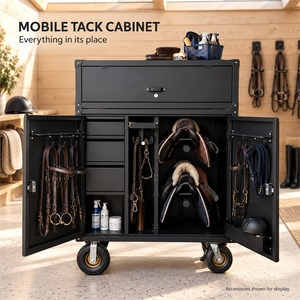
Factory Heavy Duty Mobile Stainless Steel Horse Tack Locker Wheels Detachable Top Lockable Saddle Storage Cabinet Equestrian
Heavy-gauge marine stainless steel locker engineered with 360-degree swiveling industrial casters, reinforced internal saddle brackets, and ventilated anti-theft locking architecture.
- Grade 304/316 Stainless Structural Steel
- Smooth-Rolling 350kg Load Rated Casters
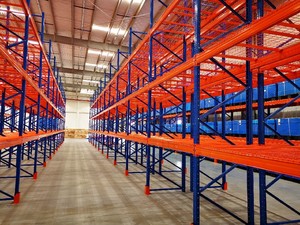
Adjustable Heavy Duty Steel Cantilever Bracket Stable Pipe Rack for Industrial Storage New for Manufacturing Plant Restaurant
Unobstructed linear column and arm layout providing up to 5,000kg load capacity per arm level. Optimized for structural profiles, long extruded tubing, and oversized bar stock.
- Cold-Rolled C-Profile Uprights Q355B
- 100mm Vertical Adjustment Pitch
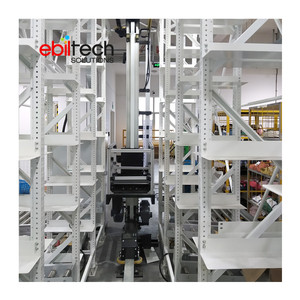
Automated Storage And Retrieval Racking System Miniload Asrs Storage
Ultra-precision mill-tolerance rack structures and matching steel totes engineered for high-acceleration automated crane extractors, shuttle carts, and conveyor interfacing.
- Mill-Tolerance Fabrication ±0.5mm
- Full Integration with WMS/WCS APIs
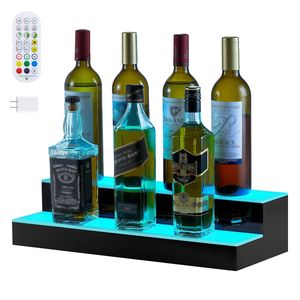
2-Tier 20-Inch LED Lighted Whiskey Rack USB Supported Home Bar Shelf with RF Remote Illuminated Wine Rack
Architectural powder-coated metal framing with precision integrated acrylic diffusion strips, high-efficiency low-voltage LED drivers, and remote ambient luminescence controls.
- Multi-Color RF Controlled Illumination
- Scratch-Resistant Electrostatic Coat
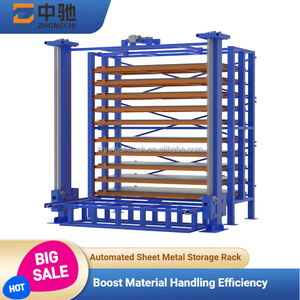
Intelligent Automated Warehouse System Steel Sheet Metal Storage Rack 8-Layer Heavy Duty Corrosion Protection High Load Capacity
Heavy-capacity automated multi-tier sheet metal cartridge tower. Engineered with motorized draw-out cassettes capable of bearing up to 3,000kg per shelf for continuous laser feeding.
- 3,000 kg Payload per Drawer Cassette
- Laser-Cut Automation Feeding Ready
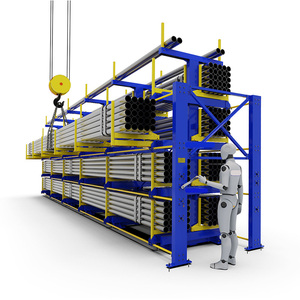
Adjustable Cantilever Storage System, Single Arm Cantilever Rack for Lumber & Aluminum Profiles
High-strength unilateral cantilever racking engineered with wedge-lock pins and rigid column-to-base anchoring. Ideal for architectural extrusions, PVC conduit, and timber inventory.
- Engineered Deflection Limit 1/200
- Heavy Bolt Anchoring Base Shoe
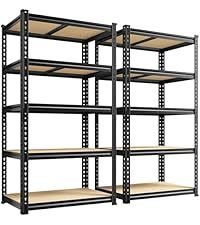
5 Layer Industrial Storage Shelving Racks Heavy Duty Adjustable Boltless Rivet Rack Corrosion Protection Warehouse Powder Coated
Cold-stamped rivet interlocking storage shelving requiring zero bolts or welding for assembly. Equipped with reinforced structural steel decking beams supporting 500kg per tier.
- 500kg Uniform Distributed Load (UDL)
- Tool-Free Interlocking Rivet Joints
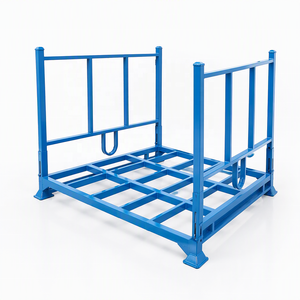
Heavy Duty Steel Warehouse Stacking Rack Mezzanine Shelves For Warehouse Storage
Multi-tier rack-supported mezzanine flooring turning vertical clear height into functional picking zones. Built with cold-formed steel purlins, galvanized decking, and safety stairways.
- Doubles Floor Area Without Relocation
- Integrated Pallet Drop Safety Gates
Why Tier-1 Importers Partner with Our China Factory
From mill-certified prime raw materials to robotics-automated cold-roll forming and finite element structural modeling, our engineering workflows mitigate supply-chain failure risks before production starts.
Prime Grade Steel Procurement
We source certified hot-rolled and cold-rolled coil directly from top-tier Chinese domestic mills (Baosteel, Ansteel). Every batch arrives with verified Mill Test Certificates (MTC) proving mechanical yield strength ≥ 235MPa (Q235B) or ≥ 355MPa (Q355B) and chemical traceability.
- Strict chemical composition analysis
- Impact Charpy notch compliance
FEM & EN 15512 Load Calculation
We never approximate bin walls or beam dimensions. Our in-house structural engineers execute finite element analysis (FEA) evaluating static elasticity, seismic moments, column buckling ratios, and cyclic fatigue under extreme dynamic loading states.
- Deflection ratios capped at L/200 or L/300
- Seismic and dynamic live-load verified
Automated Dual-Powder Coating
Substrates pass through automated 7-stage pre-treatment, continuous shot-blasting (Sa 2.5), alkaline degreasing, silane film bonding, and electrostatic thermoset polyester powder spraying cured at 200°C for exceptional weather and chemical resilience.
- ASTM B117 Salt Spray test > 1,000 hours
- Dry Film Thickness (DFT) 70–90µm
End-to-End Lifecycle Handover
From CAD layout modeling, pallet-to-truck spatial optimization, export flat-pack logistics, through to on-site assembly guidance, as-built technical signoffs, and safety capacity labeling, we operate as your integrated technical back-office.
- 3D SolidWorks and BIM / Revit outputs
- Container stowage optimization > 92%
Future Procurement Trends in Metal Storage Bins (2025–2030)
Global warehouse real estate costs, carbon mandates, and warehouse automation are fundamentally shifting how procurement directors specify industrial metal bins, stacking tubs, and storage racks.
The Shift Toward Automated Material Handling (AMH) Compatibility
Traditionally, industrial metal bins were designed solely for static forklift transfer. Today, global supply chain facilities are transitioning to Autonomous Mobile Robots (AMRs), Automated Guided Vehicles (AGVs), and high-velocity shuttle systems. This evolution demands millimeter-level dimensional consistency across metal bin perimeters.
In automated retrieval systems, a flange deflection of merely 2.5mm can induce optical sensor misalignment, triggering catastrophic high-bay conveyor jams. Forward-thinking procurement managers are replacing legacy corrugated bins with precision laser-notched, robot-welded metal containers with integrated optical datum points and hardened bottom runners.
Procurement Metric: Dimensional tolerance requirements for AS/RS metal bins have tightened from ±3.0mm in 2018 to ±0.8mm in 2024, mandating robotic laser stamping lines and automated optical coordinate inspection during factory release.
Our manufacturing plant has addressed this requirement by integrating closed-loop CNC punching and automated robotic spot-welding jigs, ensuring that every container manufactured in our factory adheres to ISO 2768-m general tolerances.
Procurement Trend Radar (2025–2030)
Key procurement vectors currently driving commercial requests for quotation (RFQs) across North America, Europe, and GCC markets:
- High CBM Reduction Ratios: Foldable/collapsible steel storage bins achieving a 1:4 or 1:5 reverse logistics return ratio to slash ocean freight and deadhead costs.
- Decarbonized Metallurgy: Verifiable Environmental Product Declarations (EPDs) demonstrating low-carbon steel production and circular recycled content.
- Severe-Environment Finishes: Hybrid hot-dip galvanizing + top-coat powder systems to prevent electrolytic rust in cold-chain and coastal fertilizer operations.
1. Modular Collapsible Geometries
Rising maritime container shipping rates have transformed freight efficiency from an afterthought into a primary procurement driver. Conventional rigid welded bins consume prohibitive cubic volume in 40ft High Cube containers. Advanced collapsible wire-mesh and sheet-metal bins engineered with drop-hinges allow up to 280 collapsed units per container compared to 54 rigid units, dropping unit freight costs by over 75%.
2. RFID & Optical Sensor Enclosures
Metal bins naturally pose RF attenuation hurdles. The latest generation of smart industrial bins integrates recessed polymer transmission windows, allowing UHF RFID tags and Bluetooth Low Energy (BLE) asset beacons to communicate real-time inventory levels to warehouse cloud systems without sustaining impact damage from forklift tines.
3. High-Strength Thin-Gauge Optimization
By transitioning from standard commercial Q195 carbon steel to high-strength cold-rolled micro-alloyed sheets (Q355B or DP600), engineers can reduce wall gauge thickness by 18–25% while maintaining identical structural stack ratings. This yields lighter tare weight, reduces operator strain, and lowers shipping tonnage tariffs.
Comparative Specification Matrix for Industrial Bins & Racks
A technical guide to matching bin geometry, base construction, and metallurgical finish with specific operational environments.
| Storage System Type | Primary Material | Rated Payload (UDL) | Stacking Limit | Corrosion Shielding | Primary Industrial Use-Case |
|---|---|---|---|---|---|
| Heavy Corrugated Stacking Bins | 1.8–3.0mm Q235B Sheet Steel | 1,500 – 2,500 kg | 1+4 Dynamic Tiers | Thermoset Polyester Powder (80µm) | Automotive stampings, forged castings, heavy hardware parts |
| Collapsible Wire Mesh Containers | 4.8–6.4mm Drawn Steel Wire | 800 – 1,500 kg | 1+3 Loaded Tiers | Electro-Zinc or Hot-Dip Galvanized | Logistics centers, retail break-bulk sorting, air freight |
| Miniload AS/RS Steel Totes | 1.0–1.5mm Cold-Rolled DC01 | 50 – 250 kg | Racking Compartments | Anti-Static (ESD) Conductive Powder | Micro-fulfillment, pharmaceutical picking, electronics |
| Drop-Bottom Scrap Metal Bins | 3.0–4.5mm Reinforced Steel Plate | 2,000 – 4,000 kg | Floor Standing / Stackable | High-Durability Industrial Enamel | CNC swarf collection, metal stamping scrap, foundry waste |
| Cantilever Profile Racks | Heavy I-Beam / C-Channel Q355B | Up to 5,000 kg / Arm | Continuous Run | Exterior Grade UV-Resistant Polyurethane | Extruded aluminum, PVC pipes, lumber, structural rebar |
Frequently Asked Questions by Industrial Sourcing Teams
Direct answers from our senior plant engineers regarding tolerances, load ratings, ocean logistics, and international safety compliance.
What is the fundamental difference between Q235B and Q355B steel in bin manufacturing?
Q235B possesses a nominal yield strength of 235 MPa and an ultimate tensile strength of 370–500 MPa, making it the most cost-effective and ductile choice for deep drawing, corrugated side walls, and general warehouse storage bins. Q355B is a low-alloy high-strength structural steel with a yield strength of 355 MPa and tensile strength of 470–630 MPa.
We specify Q355B specifically for high-stress structural members such as upright columns in high-bay cantilever racks, base skids for heavy drop-bottom bins, and primary floor purlins in multi-tier mezzanines where higher load-to-weight efficiency is mandatory to prevent plastic deformation.
How does your factory test and certify safe stackability (dynamic vs. static ratings)?
We test stackability in accordance with EN 15512 and ANSI MH26.2 standards using calibrated hydraulic load frames. Static load ratings reflect a safety factor of 2.0: a bin rated for 2,000 kg static capacity can sustain 4,000 kg in laboratory compression without permanent weld fracture or wall buckling exceeding L/250.
Dynamic load ratings evaluate handling via forklift transport over simulated dock leveler bumps, factoring in a 1.25x to 1.4x acceleration vector. Every custom bin design undergoes physical cycle testing before tooling sign-off, with stamped load plates installed indicating approved stack configurations (e.g., 1+4 when stationary, 1+1 when moved by truck).
What powder coating formulation should be specified for hot, humid, or coastal export markets?
For high-humidity or coastal environments (such as the GCC, Southeast Asia, or maritime logistics terminals), standard interior epoxy powder coat is insufficient because it degrades under UV exposure and micro-cracks under thermal cycling.
We engineer a dual-barrier system: an initial micro-crystalline zirconium or zinc-phosphate conversion wash followed by architectural-grade TGIC-free polyester thermosetting powder applied at 80–110 µm dry film thickness (DFT). For extreme corrosive environments, we supply hot-dip galvanized steel components conforming to ASTM A123 / ISO 1461, yielding over 30 years of maintenance-free service life.
How do you prevent shipping damage and optimize container stuffing (CBM) for global exports?
Damaged goods during ocean transit are usually caused by internal movement inside containers. We eliminate internal play using custom timber dunnage, high-tension poly-woven air cushions, and heavy-gauge steel strapping.
For rigid stacking bins, our engineering team designs nesting foot profiles that interlock securely during transit. For collapsible units, we package components in engineered steel skids wrapped in VCI (Vapor Corrosion Inhibitor) film, ensuring zero oxidation even during extended 45-day sea crossings with high humidity shifts.
Can your engineering department supply custom CAD/BIM models for turnkey warehouse integration?
Yes. We provide complete layout engineering services using AutoCAD, SolidWorks, and Autodesk Revit. When configuring mezzanine systems or automated miniload racking, we integrate floor slab specs, sprinkler head drops, building column offsets, and forklift turning radii directly into the model.
Our engineering documentation includes detailed bay load diagrams, anchor shear and pullout calculations, baseplate sizing for concrete slabs, and comprehensive parts lists for local civil and fire authority approvals.
Request an Engineered Layout & Factory Quote
Consult directly with our structural storage specialists. We deliver custom 3D CAD drawings, finite element load validation, and transparent FOB/CIF pricing within 24–48 hours for plant fit-outs and OEM bin procurement.