Engineered Inventory Infrastructure & Specialized Racking Portfolios
Certified industrial storage frameworks precision-manufactured with high-tensile European standard steel, tailored to integrate seamlessly with Narrow Aisle turret trucks and automated material handling equipment.
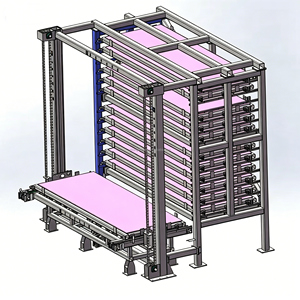
Automated Sheet Metal Drawer Retrieval Warehouse Shelving
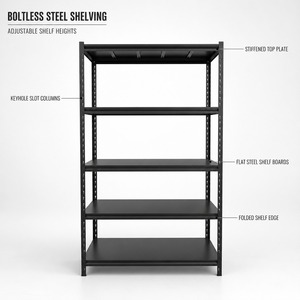
Boltless Adjustable Industrial Steel Shelving Rack
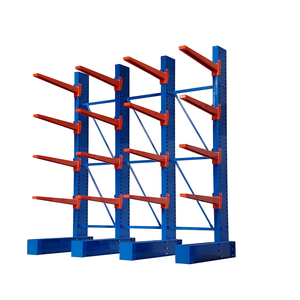
Structural Steel Cantilever Rack for Pipe & Timber
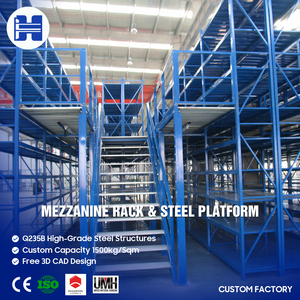
Q235 Structural Steel Multi-Tier Loft Mezzanine System
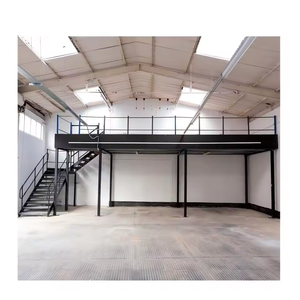
Heavy-Duty Structural Steel Free-Standing Platform
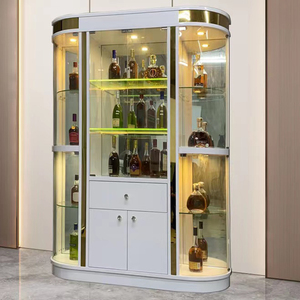
Precision Modular Cellar & Specialized Bottle Rack System
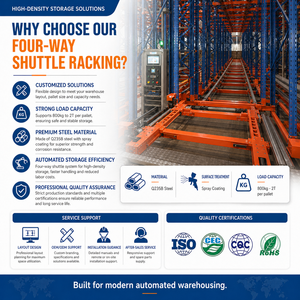
Automated 4-Way Radio Shuttle High-Density ASRS System
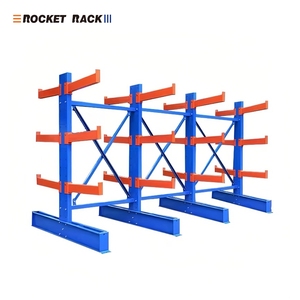
Stackable Heavy-Duty Steel Coil & Reel Storage Cradle
High-Density Warehousing in the Greater Moscow Region (Podmoskovye)
Overcoming unprecedented Class A industrial footprint shortages and maximizing cubic volume across the Central Federal District logistics belt.
The industrial warehouse landscape across the Moscow Metropolitan Area—particularly along critical arterial routes including the MKAD (Moscow Ring Road), Central Ring Road (CKAD), M-11 Neva, and M-4 Don corridors—is confronting record low vacancy rates dipping below 0.5% alongside historic peaks in lease tariffs per square meter. Third-Party Logistics (3PL) conglomerates, pharmaceutical distributors, e-commerce giants (Wildberries, Ozon, Yandex Market), and federal food retail chains can no longer afford wide, inefficient operational aisles that consume upwards of 60% of total slab area simply for forklift maneuvers.
As a seasoned, high-precision racking manufacturer, our engineering team supplies customized Very Narrow Aisle (VNA) racking systems specifically formulated to convert dead lateral space into dynamic pallet capacity. By collapsing transfer aisles from standard widths of 3,200–3,800 mm down to a hyper-dense 1,600–1,850 mm, Moscow logistics directors recover up to 45–65% more SKU positions within the exact same structural footprint, bypassing the exorbitant financial overhead and multi-year delays associated with new greenfield construction.
Structural Deflection Limits, Superflat Floors & Engineering Disciplines
Operating turret trucks (Man-Up or Man-Down) at heights exceeding 14 to 17 meters introduces severe dynamic mechanical stresses. Even an imperceptible millimeter deviation at slab level multiplies exponentially along the mast of a turret truck, heightening the catastrophic danger of rack collision. Our structural calculation engineers design every VNA framework in strict alignment with EN 15512:2020, FEM 10.2.02, and local Russian GOST R 55525-2017 safety norms.
| Parametric Attribute | Standard Wide Aisle (APR) | Double-Deep System | Precision VNA Racking System |
|---|---|---|---|
| Operating Aisle Width | 3,200 mm – 3,800 mm | 2,800 mm – 3,100 mm | 1,600 mm – 1,850 mm |
| Volumetric Utilization | 35% – 42% | 50% – 58% | 65% – 78% |
| Direct SKU Selectivity | 100% Direct Access | 50% Direct (LIFO per 2 slots) | 100% Direct Instant Pick |
| Maximum Structural Height | Up to 11.5 Meters | Up to 11.5 Meters | 12.0 to 18.0+ Meters |
| Floor Tolerance Standard | DIN 18202 Table 3, Line 3 | DIN 18202 Table 3, Line 3 | DIN 15185 / VDMA 10256 (Superflat) |
| Guidance System | Free Wheel Steering | Free Wheel Steering | Inductive Wire (RFID) / Mechanical C-Rails |
Localized Applications Across the Moscow Regional Belt
Purpose-engineered structural storage configurations designed for the severe thermal conditions, seismic load factors, and rapid throughput needs of Russian commerce.
E-Commerce Mega-Fulfillment Hubs
Deployed widely across Moscow industrial hubs such as Chekhov, Podolsk, and Noginsk. VNA arrays are integrated with man-up turret picking order pickers, providing high-frequency picking faces across thousands of high-velocity fast-moving consumer goods (FMCG) SKUs with immediate carton-level access.
Sub-Zero Cold Chain & Cryogenic Facilities
In facilities operating between -25°C to -30°C in food safety clusters like Food City and Radumlya, refrigeration electricity represents the bulk of facility costs. VNA architectures condense cubic chilled volume, reducing cooling footprint per stored pallet, using certified low-temperature Q355B steel that prevents cold embrittlement.
High-Throughput Pharmaceutical Reserves
Russian GDP (Good Distribution Practice) medicine transit distribution points demand strict batch segregation, FIFO rotation, and anti-static coatings. Our VNA frameworks integrate drop-in wire mesh decks, heavy-duty drop stops, and dynamic sprinkler conduits directly through structural portal ties.
Moscow Intralogistics Trends & Engineering Drivers
Analyzing key structural shifts shaping industrial material handling across Eastern Europe's largest metropolitan economic zone.
The operational landscape for distribution centers across the Central Federal District is governed by three fundamental factors: escalating floor construction costs, structural adoption of semi-automation, and rigorous regulatory updates under the GOST R standardizations.
1. The Migration Toward Structural Height Maximization (Up to 18 Meters): With commercial plots inside the Moscow Ring Road (MKAD) virtually non-existent, developers of Class A complexes (such as PNK Group, Orientir, and Raven Russia) are designing clear ceiling heights reaching 14 to 17.5 meters. Standard reach trucks fail to maintain stability or capacity beyond 11.5 meters. Consequently, VNA installations matched with articulated or turret cranes have evolved into the default structural choice for high-bay capacity maximization.
2. Wire Guidance vs. Low-Profile Mechanical Rail Guidance: In modern Moscow warehouses, floor cutting for induction wire guidance systems has grown rapidly. Wire systems remove physical tripping hazards and lower mechanical impact damage. However, in heavy bulk distribution, low-profile 100x50x6 mm structural C-channel steel guidance rails remain critical for providing instant stabilization, enabling turret operators to traverse lanes at horizontal velocities exceeding 12 km/h.
3. Compliance with GOST R 55525-2017 & Fire Safety SP 485: Racking safety inspections across Moscow are strictly monitored. Regulations require certified load capacity signage on each bay, double-anchor footplates with dynamic shims, and high-energy steel column corner protectors rated for ≥ 400 J kinetic impact. Furthermore, in-rack fire suppression sprinkler frameworks must be precision-engineered with structural flue clear spaces (minimum 100 mm between back-to-back pallets) to ensure full conformance with Russian EMERCOM emergency mandates.
Engineering Discipline & Industrial Production Advantages
Comprehensive manufacturing control, structural FEA stress-testing, and certified global distribution workflows backed by decades of industrial racking experience.
Load Calculations, Not Estimates
Every upright, beam, and connection clip is calculated against specific unit loads, seismic zone 1-3 conditions, dynamic mast stresses, and floor slab tolerances. Each bay is handed over with rated load safety plaques.
Precision Aisle & Flue Modeling
Our engineers draft complete 3D CAD and Revit models, calculating clear height limits, sprinkler pass-through clearances, guide-rail interfaces, and turret truck cycle turn-around radius parameters.
High-Yield Certified Steel
Constructed utilizing certified prime Q235B and high-yield Q355B structural steel rolled on continuous precision cold-roll mills. Finished with scratch-resistant, electrostatic dry powder coating tested to ASTM B117 salt-spray standards.
Inspection & Turnkey Execution
From factory production, multi-modal container freight shipping, and on-site assembly by certified technicians, to annual safety inspections and component replacement—we deliver unbroken lifecycle support.
Frequently Asked Questions for Moscow Logistics Engineers & Buyers
Clarifying technical inquiries regarding sub-floor tolerances, frost conditions, certification, and lead-time execution.
What specific floor slab tolerances are mandatory for a 14-meter VNA installation in Moscow?
How do our steel alloys and protective coatings perform in unheated or sub-zero Russian distribution terminals?
Can the racking system accommodate both European (1200x800mm) and Standard Industrial (1200x1200mm) pallets?
What is the standard manufacturing and delivery timeline to Moscow logistics sites?
Does the racking design meet local GOST R 55525-2017 load testing and inspection mandates?
Plan Your High-Density VNA Warehouse Transformation
Connect with our technical design team for an immediate volumetric analysis. Provide your warehouse dimensions, forklift specifications, and throughput targets to receive an engineered layout drawing and structural quotation.
- Full CAD layout & pallet density modeling
- FEM 10.2.02 & GOST R compliant designs
- Turnkey manufacturing & multimodal freight
- Installation guidance & capacity certification
Request Project Consultation
Fast-track engineering calculations and quotation within 24 operational hours.
Inquire Now