Engineering Integrity of Heavy-Duty Racking Uprights in Victoria's Logistics Corridor
Melbourne has officially emerged as Australia's central logistics capital, with major industrial master-planned precincts expanding rapidly through Truganina, Ravenhall, Derrimut, Dandenong South, and Somerton. As modern distribution hubs scale ceiling heights beyond 11.5 meters to 14.8 meters, the structural performance demands placed upon pallet rack upright columns (frames) have intensified significantly.
The Mechanics of Load Bearing: Why Uprights Dictate Warehouse Safety
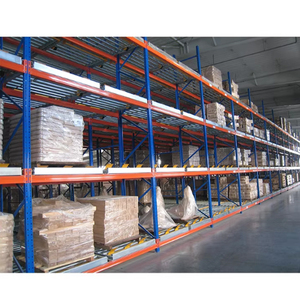
The vertical upright frame represents the ultimate load-bearing backbone of any pallet racking structure. In high-density selective, double-deep, or drive-in configurations, each pair of upright columns must simultaneously counteract pure axial compression loads, combined flexural moments induced by beam deflections, and second-order lateral sway stresses ($P-\Delta$ effects).
Under the newly ratified Australian Standard AS 4084:2023 (Steel Storage Racking), static approximations are no longer sufficient. Upright engineering requires rigorous finite element analysis (FEA), stub column compression testing, and seismic hazard coefficients ($k_p Z$) tailored directly to Melbourne's intra-plate fault geology under AS 1170.4. When importing uprights from China, tier-one logistics operators and structural consultants require absolute proof of steel chemistry, consistent section modulus geometry, and third-party certified mechanical properties.
- Omega Multi-Bend Cold-Formed Profiles
- AS/NZS 4600 & AS 4084:2023 Validation
- Continuous CNC 76.2mm Pitch Punching
- Traceable Mill Test Certs (MTC 3.1)
Our manufacturing facilities in China bridge the gap between high-volume, cost-optimized manufacturing and strict Australian structural compliance. We export precision-engineered upright frames directly through the Port of Melbourne, serving storage integrators, forklift dealerships, and automated logistics developers across Victoria.
Engineering Parameter Thresholds
Omega Profile Geometry, Cold Work Hardening, and Limit State Performance
Unlike basic channel or box sections, roll-formed rack uprights feature intricate geometry designed to maximize the torsional-flexural buckling threshold without adding dead steel weight.
| Profile Specification | Width × Depth (mm) | Gauge (mm) | Gross Area $A_g$ (mm²) | Moment of Inertia $I_x$ ($10^4$ mm⁴) | Moment of Inertia $I_y$ ($10^4$ mm⁴) | Torsional Constant $J$ (mm⁴) | Max Rated Bay Load (kg)* |
|---|---|---|---|---|---|---|---|
| Omega UP-80/20 | 80 × 60 | 2.0 | 384.2 | 22.4 | 38.1 | 512 | 9,500 kg |
| Omega UP-90/20 | 90 × 70 | 2.0 | 452.8 | 34.8 | 58.9 | 603 | 12,500 kg |
| Omega UP-90/25 | 90 × 70 | 2.5 | 558.1 | 42.1 | 71.4 | 1,162 | 15,800 kg |
| Omega UP-100/20 | 100 × 70 | 2.0 | 478.4 | 41.2 | 69.8 | 637 | 14,200 kg |
| Omega UP-100/25 | 100 × 70 | 2.5 | 590.2 | 49.6 | 84.5 | 1,228 | 18,000 kg |
| Omega UP-120/25 | 120 × 95 | 2.5 | 748.5 | 88.6 | 148.2 | 1,559 | 22,500 kg |
| Omega UP-120/30 | 120 × 95 | 3.0 | 886.0 | 104.2 | 174.6 | 2,658 | 26,800 kg |
*Note: Maximum rated bay load is calculated based on a typical first beam level at 1,800mm elevation, incorporating global stability factors under AS 4084:2023. Specific bay limits must be re-verified against project-specific seismic ground accelerations ($Z=0.08$ to $0.10$ for Melbourne metro) and floor slab thickness.
Cold-Form Work Hardening
During our 18-to-22 stage progressive roll-forming sequence, the steel sheet undergoes localized plastic deformation at each of the 8 to 12 longitudinal bends. Under AS/NZS 4600 section 1.5.1.5, this cold work increases the effective yield stress in the corners by up to 25%, significantly improving local buckling resistance.
Net Section Perforation Ratio
Perforating steel removes material, creating potential fracture lines. Our precision tooling maintains an optimal net-to-gross cross-sectional area ratio ($A_{net} / A_{gross} \ge 0.78$), preserving extreme vertical axial capacity while ensuring universal engagement with Australian teardrop and slotted hooks.
Torsional-Flexural Rigidity
Open cold-formed sections are inherently susceptible to twist-buckling under eccentric loads. The engineered return lips and stiffening ribs of our Omega geometry shift the shear center closer to the centroid, reducing warping stresses ($I_w$) when forklifts impact lower upright sections.
Ductility & Seismic Energy
AS 1170.4 requires structural components in Melbourne logistics warehouses to exhibit high plastic ductility. Our Q355B low-carbon micro-alloyed manganese steel maintains elongation above 21%, preventing sudden brittle fractures during seismic events or accidental handling impact.
Localized Application Scenarios in Melbourne's Industrial Precincts
Different industrial sub-markets throughout Victoria encounter unique operational demands, slab engineering constraints, and handling patterns. We engineer upright columns matched specifically to each sector.
Truganina & Ravenhall 3PL Megasites
Western Melbourne's vast flat industrial plains host major 3PL distribution centers requiring clear heights up to 14.8m. We supply ultra-tall, single-length upright columns up to 11.85m (and spliced designs beyond) with 120mm profiles to handle heavy selective and double-deep racking with reach-truck reach elevations exceeding 11 meters.
Dandenong South Heavy Manufacturing
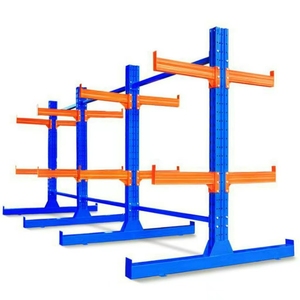
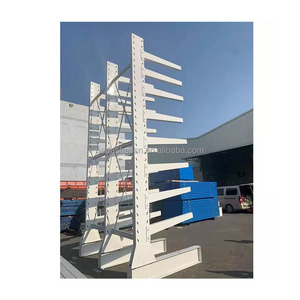
Victoria's south-eastern manufacturing heartland handles oversized, dense items including timber trusses, steel pipes, automotive assemblies, and heavy tooling. Our structural uprights and heavy cantilever columns feature 3.0mm steel walls and reinforced arm-locking plates built to withstand rugged forklift loading cycles.
Brooklyn & Laverton Cold Storage
Controlled-atmosphere cold stores operating at -25°C to -30°C in Melbourne's western meat and dairy corridor face severe steel embrittlement risks. We supply Q355D impact-tested steel uprights that undergo Charpy V-notch impact testing at -20°C, paired with hot-dip galvanized or high-adhesion powder finishes to eliminate condensation corrosion.
Campbellfield & Epping Retail Fulfillment
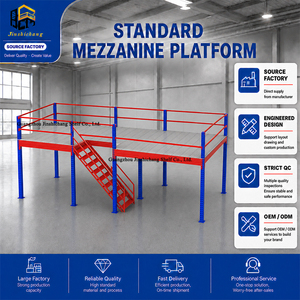
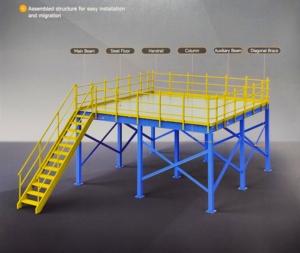
Urban infill and parcel hubs in northern Melbourne demand multi-tier pick modules and rack-supported mezzanine floors to handle high-velocity e-commerce picking. Our uprights are punched with precision multi-tier splice patterns that integrate smoothly with staircases, structural handrails, steel grating, and conveyor chutes.
Key Victorian Racking Trends Reshaping Melbourne Procurement
Procurement managers and logistics operations teams in Victoria are moving rapidly toward engineered transparency, strict liability mitigation, and automated warehouse integration.
Stricter WorkSafe Victoria Audits
WorkSafe Victoria has increased operational crackdowns on warehouse rack safety under the Victorian Occupational Health and Safety Act 2004. Facilities must maintain up-to-date load capacity plaques and documented annual inspections. Importing uprights with certified load-table documentation guarantees seamless engineering sign-off.
Rise of Automated AMR & AS/RS Systems
With rising labor costs in Victoria, automated guided vehicles (AGVs) and autonomous mobile robots (AMRs) are replacing standard counter-balance trucks. Automated handling demands upright straightness tolerances within $\pm 1.0\text{mm}$ across a 10-meter span to ensure sensor-guided laser scanners clear frame faces safely.
Total Landed Cost vs Local Stock Lead Times
Local Australian distributors charge premiums of 40% to 75% for warehouse upright stock, often sourced from the very same Chinese roll-forming mills. Direct procurement through our factory enables Melbourne fit-out contractors to bypass multi-layer markups and schedule container drops synchronized directly to their installation Gantt charts.
Factory-to-Melbourne Production Edge
End-to-End Manufacturing Rigor Behind Every Frame
Structural reliability in steel racking is achieved long before uprights reach Victorian warehouse floors. Our production framework relies on fully automated, continuous roll-forming mills equipped with in-line rotary servo-punching systems that guarantee non-cumulative pitch tolerances across 12-meter lengths.
Every coil of hot-rolled steel entering our factory is sampled and verified via optical emission spectrometers to guarantee low sulfur ($S \le 0.035\%$) and phosphorus ($P \le 0.035\%$), eliminating hot cracking and ensuring optimal ductility. Our robotic welding cells affix heavy baseplates with continuous penetration fillets, engineered specifically to accommodate Hilti or Ramset concrete anchor bolts into Victorian post-tensioned slabs.
- Direct Factory OEM/ODM Sizing
- Complete Container Packing Plans
- Custom Powder Color Matching
- Heavy-Gauge Splice Connection Kits
We provide full export documentation including Certified Mill Test Reports (EN 10204 Type 3.1), finite element capacity tables, and comprehensive packaging bundles configured for rapid side-loader container de-vanning at Melbourne freight terminals.
Calculated Structural Layouts
We provide complete AutoCAD warehouse layouts, sectional load elevation drawings, and structural capacity certificates verified under AS 4084 limit state formulas for every project.
Optimized Container Stuffing
Our 40-foot High Cube (40' HC) shipping bundles are arranged using custom steel cradles and nylon corner protectors, maximizing weight utilization up to 26.5 tonnes without transit distortion.
Thermoset Powder Coating
Automated electrostatic spray booths apply high-durability epoxy-polyester powder coats cured at 200°C, offering superior scuff resistance against forklift mast rubbing in high-cycle lanes.
Full Lifecycle Engineering
Beyond primary uprights, we produce matching heavy-duty wrap-around column guards, aisle-end barriers, frame row spacers, and replacement splice sections to support ongoing site maintenance.
Frequently Asked Questions by Melbourne Racking Buyers
Addressing the most critical structural, regulatory, and logistics inquiries from Victorian warehouse operators, engineers, and procurement directors.
Optimize Your Warehouse Upright Engineering with Factory-Direct Confidence
Whether you are outfitting a new 20,000 m² distribution center in Truganina, upgrading a manufacturing warehouse in Dandenong South, or seeking a certified OEM manufacturing partner for ongoing Australian supply, our structural engineering team is ready to analyze your load requirements, clear heights, and slab configurations.