Factory-Engineered Racking Systems Configured for High-Throughput Hubs
Direct manufacturer export supply of standard and custom structural pallet racks, longspan shelving, and specialized handling cradles optimized for ISO and JIS standard footprints.
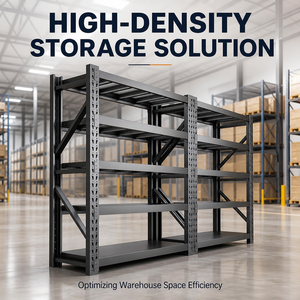
Medium Duty Longspan Shelving Unit
Modular starter and add-on storage units designed with adjustable step-beams and steel decking for parts picking and assembly fulfillment.
View Specifications →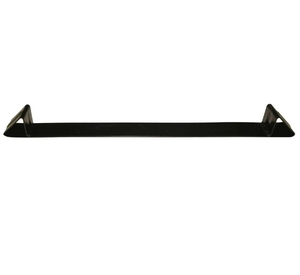
33" Heavy-Duty Flatbed Coil Cradle
Engineered structural steel transport and staging cradle built for road trailers, flatbed transport, and intermediate steel plant buffering.
View Specifications →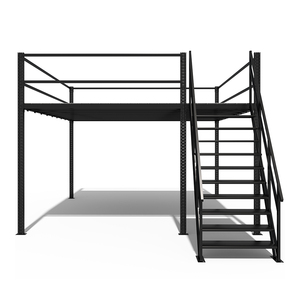
Rack-Supported Mezzanine Platform
Interlocking structural steel floor panels mounted on heavy upright frames to multiply vertical floor utility across distribution centers.
View Specifications →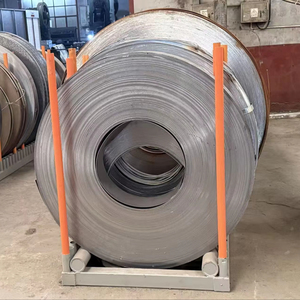
Industrial Coil Cradle Storage System
High-capacity cold-rolled coil saddles and heavy framework calculated to handle high concentrated loads safely in metal-processing bays.
View Specifications →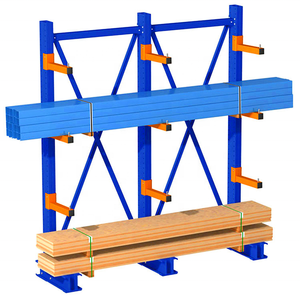
Custom Heavy Cantilever Racking (500kg/arm)
Unobstructed column-and-arm architecture intended for structural tubing, long steel extrusions, bars, timber, and irregular raw profiles.
View Specifications →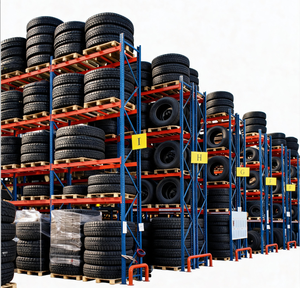
Heavy Duty Q235B Pallet Racking
Adjustable box-beam selective racking system with 75mm/50mm pitch punchings, reinforced baseplates, and high moment connector lock clips.
View Specifications →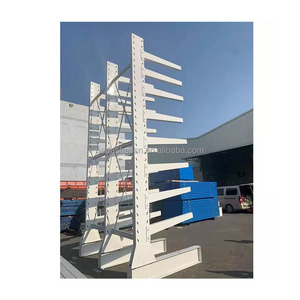
Single-Sided Perimeter Cantilever
Optimized wall-perimeter cantilever configurations engineered with heavy gusset base anchors to stabilize high-tonnage cantilevered loads.
View Specifications →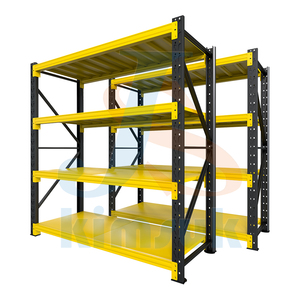
2000×600×2000mm Longspan Storage Rack
Multipurpose medium-duty beam racking equipped with powder-coated steel shelf decks, engineered for tool staging and auxiliary spares buffering.
View Specifications →Nagoya: The Epicenter of Japanese Advanced Industrial Logistics
A strategic overview of storage footprint challenges in the Chūkyō Industrial Region, the Port of Nagoya, and the Greater Aichi automotive manufacturing corridor.
Chūkyō Automotive Nexus
Aichi Prefecture commands the highest manufacturing shipment value in Japan, driven by Toyota Motor Corporation and thousands of Tier-1/Tier-2 suppliers in Toyota City, Kariya, and Komaki. Warehouses must integrate dense, zero-defect Just-In-Time (JIT) storage racks built to withstand continuous multi-shift forklift cycles and heavy component loads.
- Standard T11 pallet format (1100×1100mm) alignment
- Zero-sway rigidity under rapid reach-truck cycles
- Integrated line-side replenishment racks
Port of Nagoya Throughput
Handling the largest maritime cargo volume among all Japanese ports, Nagoya’s coastal hubs (Tobishima, Meiko, and Minato Ward) manage massive volumes of breakbulk, steel coil export stock, heavy equipment, and cross-dock container transfers requiring corrosion-resistant high-tonnage storage racks.
- Marine-grade thermoset powder coatings
- Certified coil cradles for flatbed and yard staging
- DDP direct container discharge to Port of Nagoya
The "2024 Logistics Problem"
With Japan's statutory limit on truck driver overtime hours now enforced, distribution hubs across Komaki, Ichinomiya, and Kasugai along the Tomei/Meishin Expressways face an urgent mandate: maximize internal warehouse cube efficiency to minimize truck dwell time through high-density racking.
- High-bay selective systems to eliminate floor staging bottlenecks
- Multi-tier mezzanine platforms to avoid facility relocation
- Fast-retrieval aisle profiles configured for reach trucks
Seismic Structural Engineering for the Nankai Trough & Tōkai Fault Zones
Aichi Prefecture is located directly within Japan's designated high-risk seismic impact area. Static gravity loading is wholly insufficient for warehouse permitting in Nagoya. Storage racks manufactured for this market must incorporate rigorous dynamic seismic resistance calculations based on the Japanese Building Standard Law (Kenki-hou) and JIS Z 0620 (Industrial Racks Standards).
Structural Pallet Rack Systems: Comparative Engineering Data
Match your warehouse operational velocity, ceiling clear height, and forklift configuration to the appropriate structural system.
| System Architecture | Primary Application Profile | Max Unit Capacity | Pallet Selectivity | Seismic Resistance Class | Structural Standard |
|---|---|---|---|---|---|
| Heavy Duty Selective Racking | Automotive tier parts distribution, FMCG, cold storage buffers | 1,000 – 4,500 kg / level | 100% Direct Access | High (with portal/spine bracing) | JIS Z 0620 / FEM 10.2.02 |
| Drive-In / Drive-Through Rack | Bulk single-SKU reserves, seasonal tires, beverage warehousing | 1,000 – 2,000 kg / pallet | Low (LIFO / FIFO Lanes) | Medium-High (Top-tied frames) | EN 15512 / RMI MH16.1 |
| Heavy Cantilever Racking | Steel tubing, bar stock, timber, automotive stamped extrusions | 300 – 1,800 kg / arm | 100% Unrestricted Front | High (Heavy spine cross-bracing) | AISC / JIS G 3101 SS400 |
| Rack-Supported Mezzanine | Small parts e-commerce picking, manual assembly, inspection floors | 300 – 1,000 kg / m² | Multi-Level Manual Access | Certified Rigid Moment Frame | JIS G 3131 / SPHC / BS 5950 |
| Industrial Steel Coil Cradle Rack | Automotive sheet coils, steel coil processing, slitters | 5,000 – 25,000 kg / cradle | High Specialized Handling | Engineered Solid Base Cradles | Heavy Welded Structural Plate |
Engineered Rigor: Why Japanese Buyers Partner with Our Manufacturing Export Hub
Delivering uncompromised structural steel integrity, precision manufacturing, and comprehensive export logistics to Nagoya and Greater Chūkyō.
Prime Certified Steel Substrates
We source certified Q235B and high-strength Q355B low-alloy carbon structural coils with verifiable mill test certificates (MTC). Profiles are continuous roll-formed with precise punching accuracy, ensuring upright column web and flange uniformity without residual stress micro-fractures.
Automated Robotic Finishing
All beams, uprights, and braces undergo 4-stage alkaline pre-treatment, iron phosphating, and electrostatically applied thermo-curing epoxy powder coating (60–90µm). This creates superior resistance against salt-air oxidation prevalent in Nagoya Port and Ise Bay maritime zones.
Full CAD/BIM Layout Engineering
Our structural engineers produce customized AutoCAD, Tekla, and BIM drawings showing clear flue dimensions, NFPA/Japanese Fire Service Law sprinkler clearance, reach-truck turning radius compatibility, and stamped load sign charts for immediate operational signoff.
Survey & Calculation
Review warehouse architectural blueprints, slab thickness/compressive strength, handling forklift profiles, and target pallet dimensions (T11 or Euro).
Structural Optimization
Finite element analysis (FEA) modeling of beam deflection limits (L/200 standard or L/300 for sensitive automated systems) under static and seismic loads.
Direct Export Fabrication
Continuous line punching, automated welding of beam connector brackets, multi-stage coating, export bundling, and containerization for Port of Nagoya.
Turnkey Handover
Complete assembly drawings, certified hardware (Grade 8.8 bolts, safety locking pins, anchor studs), and certified load rating documentation provided.
High-Density Storage Deployment Across Greater Aichi Industrial Sectors
Engineering customized racking configurations to solve specific material handling bottlenecks throughout the region.
Automotive Parts Staging (Toyota / Kariya)
Heavy duty selective pallet racks designed with galvanized drop-in mesh decking and divider plates to accommodate irregular steel returnable containers, metal bins, and heavy transmission assemblies. Beams engineered with heavy-gauge safety pins prevent accidental dislodgement from high-speed reach trucks operating within narrow aisles.
- Custom beam lengths to hold two 1100×1100mm T11 cages
- Reinforced column post protectors for high-impact corners
- Line-side cantilever buffers for exhaust pipes and bumpers
Refrigerated Food Logistics (Nagoya Port / Minato)
Drive-in and high-bay selective pallet racks deployed in -25°C blast-freeze and cold storage distribution facilities near the Tobishima container terminals. Special low-temperature ductile powder coats and cold-formed structural steels eliminate low-temperature embrittlement risks, maximizing storage density for imported seafood and frozen foods.
- High cubic volume utilization in high-cost refrigerated facilities
- Corrosion-resistant galvanized baseplates and anchors
- Optimized airflow clearances around condenser heads
Steel Processing & Coil Service (Tokai / Chita)
Custom-engineered heavy steel coil racks and extra heavy-duty structural cantilever systems tailored for flat rolled sheet metal processors and coil slitting service centers. Eliminates haphazard ground-level coil stacking, mitigating coil edge damage, optimizing overhead crane access, and ensuring workplace safety for crane riggers.
- Modular coil saddles with polyurethane protective lining
- Floor-anchored cradle bases certified for extreme point loads
- High vertical clear space optimization for coil cranes
Nagoya Industrial Warehousing: 2025–2030 Transformation Trends
The warehousing landscape across Aichi Prefecture and the Tokai region is experiencing unprecedented structural shifts driven by demographic contraction, automated logistics, and stringent decarbonization mandates.
Frequently Asked Questions by Industrial Buyers in Nagoya & Japan
Clear, technical, and commercial guidance addressing import logistics, structural compliance, and seismic certification.
How do your manufactured racking systems adapt to the Japanese T11 standard pallet?
In Japan, the standard pallet footprint is the T11 (1,100 mm × 1,100 mm), which differs significantly from the European EUR-pallet (800 mm × 1,200 mm) and the American standard (40 × 48 inches). We manufacture custom beam lengths—typically 2,300 mm clear opening for two T11 pallets or 3,400 mm for three T11 pallets—allowing a safe 75–100 mm lateral clearance between pallets and upright columns. The frame depths are customized to 1,000 mm or 1,050 mm, ensuring optimal 50 mm front and rear pallet overhang according to standard Japanese forklift handling safety protocols.
Can you supply structural calculation sheets verifying compliance with JIS Z 0620 seismic requirements?
Yes. For every engineering proposal deployed in seismic zones such as Aichi Prefecture, our structural design department can provide comprehensive structural engineering calculation sheets based on JIS Z 0620 (Industrial Racks) and FEM/RMI methodologies. These calculations verify the horizontal seismic coefficient ($K_h$), baseplate anchor bolt pull-out shear stress against specified concrete slab compressive strength (typically 21–24 N/mm² in Japanese facilities), and dynamic moment resistance of the beam end connector clips with safety pins.
What are the shipping, customs clearance, and lead times to the Port of Nagoya?
Our production facilities regularly export 20GP and 40HQ container shipments directly to the Port of Nagoya (Tobishima/Meiko terminals). Manufacturing lead time for customized heavy-duty systems typically ranges from 3 to 4 weeks depending on order volume. Maritime transit from our export ports to Nagoya Port takes approximately 4 to 8 days. We supply full export documentation sets, including bill of lading, commercial invoice, packing list with color-coded component tagging, and mill test certificates (MTC) for customs clearance.
What warehouse floor slab specifications are required for heavy-duty pallet and mezzanine racks?
For standard heavy-duty selective racking holding 1,000 kg to 1,500 kg per pallet position (up to 4–5 levels high), the warehouse concrete slab should have a minimum thickness of 150 mm to 200 mm with double-mat reinforcement and a minimum compressive strength of 21 N/mm² (FC21) to 24 N/mm² (FC24). For heavy cantilever systems or high-capacity mezzanine structures, we engineer widened spread baseplates to disperse point loads and ensure slab surface bearing limits are not exceeded.
How are surface coatings protected against maritime corrosion in facilities near Ise Bay?
Warehouses located near coastal zones such as Nagoya Port, Chita, and Yokkaichi face airborne coastal salinity. Our structural steel members undergo thorough surface pre-treatment (degreasing, acid pickling, and micro-crystallization phosphating) followed by an automated electrostatic application of heavy-duty epoxy-polyester powder coat, cured at 180°C to 200°C to a thickness of 70–90 microns. For harsh exterior or cold-chain wet environments, hot-dip galvanized finishes (HDG) to ASTM A123 or JIS H 8641 standards are available.
Can existing systems be reconfigured or expanded as our inventory profiles change?
Absolutely. Our selective upright frames feature continuous teardrop or omega pitch punchings (standard 50 mm or 75 mm adjustments), allowing beam levels to be easily raised, lowered, or added as SKU heights evolve. Starter and add-on bay architecture enables ongoing expansion along the aisle runs without dismantling primary structural frames, ensuring long-term investment protection for expanding logistics hubs.
Request an Engineered Racking Proposal for Your Nagoya Facility
Submit your warehouse CAD floor plan, ceiling clear height, pallet dimensions, and target storage capacities. Our engineering team will deliver a comprehensive layout optimization drawing, bill of materials, and direct export quotation.