Industrial Metal Shelving Factories & Suppliers for the Spain Market
Precision Load Engineering, UNE-EN Norm Compliance & Scalable Intralogistics Storage Architectures Engineered for Madrid, Barcelona, Valencia and Pan-Iberian Supply Chains
UNE-EN
15512 & 16681 Seismic Certified
5,000+ kg
Heavy-Duty Max Bay Capacity
100% CAD
Custom Layout & FEA Calculations
Direct OEM
Factory Direct to Spanish Docks
Engineered Systems
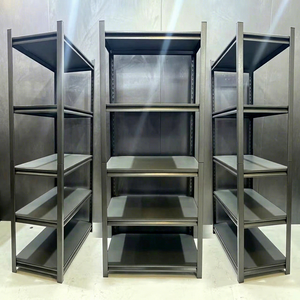
Industrial Metal Racking & Modular Shelving Systems
Engineered specifically to accommodate Euro-pallets (EPAL 1-3), heavy industrial dies, raw profiles, and high-velocity picking corridors across the Spanish manufacturing and logistics infrastructure.
Strategic Intralogistics Deployments Across Spain's Core Industrial Corridors
The industrial geography of Spain features distinct microclimates of logistics density, handling equipment regulations, and building configurations. Modern warehousing facilities situated in the Iberian Peninsula demand structural storage solutions calibrated for heavy duty cycles, integration with automated material handling equipment (MHE), and compliance with the Código Técnico de la Edificación (CTE) alongside European storage norms UNE-EN 15512 and UNE-EN 15620.
Whether navigating the spatial constraints of older urban peripheries or outfitting Grade-A cross-dock distribution centers, storage rack procurement requires rigorous engineering alignment with local site conditions, handling velocities, and inventory turnover models.
Corredor del Henares & Central Spain (Madrid Hub)
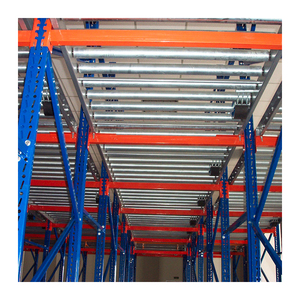
The epicentre of national 3PL logistics, e-commerce fulfillment, and FMCG dispatch (Coslada, San Fernando de Henares, Illescas). Facilities require ultra-high vertical selective pallet racking systems reaching 12 to 15 meters, optimized for narrow aisle (VNA) reach trucks, and high-density dynamic FIFO gravity tracks to service rapid order consolidation for the Iberian interior.
Catalonia Logistics Arc & Zona Franca (Barcelona)
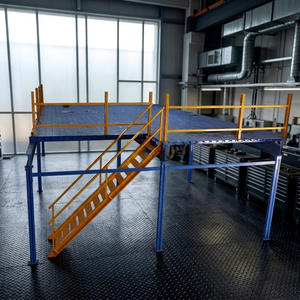
Constrained land footprints and high industrial land lease rates across El Prat, Sant Boi, and the Vallès corridor necessitate maximum vertical utilization. Here, multi-tier industrial mezzanine platforms and rack-supported floor systems double or triple usable floor areas for apparel, textile distribution, pharmaceutical staging, and retail parcel sorting hubs without structural building alterations.
PLAZA Zaragoza & Ebro Multimodal Corridor
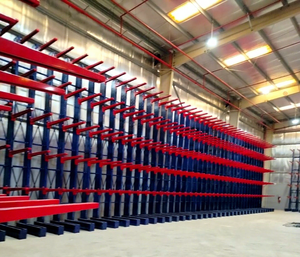
Functioning as southern Europe's premier rail, air, and road freight transfer dry-port, facilities in Zaragoza manage extensive overland cargo. Racking installations must sustain heavy-load tolerances with custom drive-in and heavy-duty cantilever racking engineered to store bulky industrial goods, machine components, and palletized air-cargo containers with immediate crane or forklift access.
Handling massive import-export volume through the Port of Valencia, the agrifood, tile manufacturing, and export cold-chain sectors require hot-dip galvanized or specialized epoxy powder-coated racking capable of resisting maritime humidity and saline atmospheric corrosion. Gravity pallet flow lanes ensure pristine FIFO stock rotation for temperature-controlled cold rooms (-25°C to +4°C).
Basque Country & Valladolid Automotive Hubs
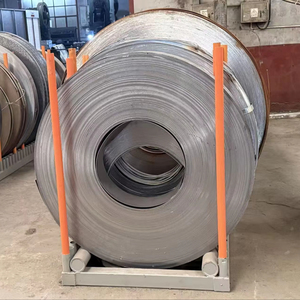
Serving automotive Tier-1/Tier-2 supply chains and heavy manufacturing clusters across Bilbao, Vitoria, and Valladolid. Warehouses rely on heavy coil cradle systems, structural profile cantilever racks, and heavy-duty die-storage steel shelves capable of withstanding concentrated dynamic impact loads and point weights exceeding 10,000 kg per cradle cell.
Industry Evolution
Emerging Trends Shaping Storage Racking Procurement in Spain
The Spanish logistics real estate and manufacturing sector is undergoing an unprecedented modernization cycle. Factors such as re-shoring industrial initiatives funded by the European NextGenerationEU framework (PERTE programs), explosive growth in e-grocery networks, and escalating land acquisition premiums have radically altered warehouse design priorities. Facility engineers are transitioning away from static, low-density storage toward high-density, dynamically accessible, and seismically verified structural systems.
Seismic Engineering Standards (UNE-EN 16681)
With southern and eastern regions (Andalusia, Murcia, Alicante, Pyrenees) classified as active seismic risk zones, structural steel racking must incorporate calculated ductile energy dissipation nodes, upgraded baseplates, and dynamic seismic bracing compliant with national norm NCSE-02 and Eurocode 8.
Integration with Semi-Automation
Spanish supply chain operators are rapidly pairing traditional industrial racking with semi-automated 2D radio shuttles, AGV reach trucks, and pick-to-light roller rails to alleviate manual labor scarcity and compress pallet cycle times in cold storage and high-throughput beverage distribution.
Circular Steel & ESG Procurement
Corporate sustainability mandates across major Spanish blue-chip retailers demand verified Environmental Product Declarations (EPD), low-emission steel smelting processes, non-toxic powder coating pigments, and ISO 14001 certified manufacturing cycles that bolster corporate BREEAM and LEED facility ratings.
Urban Consolidation & Micro-Hubs
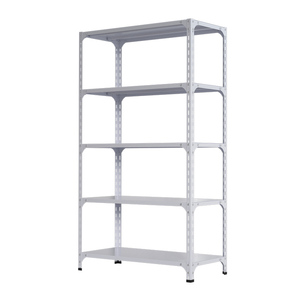
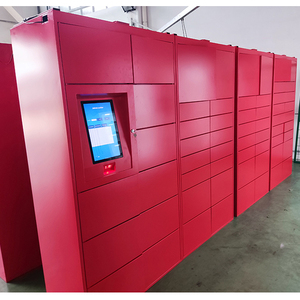
Municipal low-emission zones (ZBE - Zonas de Bajas Emisiones) across Madrid, Barcelona, and Valencia are forcing logistics players to deploy compact multi-tier boltless rivet shelving and smart steel electronic parcel lockers within micro-fulfillment depots to streamline final-kilometer parcel drops.
Engineering Benchmark Insight: Structural rack failure in high-bay logistics centers is overwhelmingly traceable to uncalibrated forklift impacts, unverified floor slab deflection, and improper beam connector engagement. Designing storage according to UNE-EN 15512 standards mitigates continuous structural fatigue and prevents catastrophic progressive collapse.
Engineering Matrix
System Performance & Operational Comparison
Selecting the optimal industrial metal shelving configuration requires balancing floor area density, direct pallet accessibility, capital expenditure (CapEx), and material handling equipment (MHE) compatibility.
Storage System Type
Direct Selectivity
Floor Space Utilization
Target Pallet / Cargo Profile
Handling Equipment Compatibility
European Norm (UNE-EN)
Heavy Duty Pallet Racking
100% Immediate
40% - 55% Floor Coverage
Mixed SKU Euro-Pallets (EPAL 1-3)
Counterbalance, Reach Truck, VNA
UNE-EN 15512 / 15620
FIFO Gravity Flow Racking
Per Lane Access
Up to 80% Dense Storage
Fast-moving perishables, batch FMCG
Standard Counterbalance, Reach Forklifts
UNE-EN 15512 / 15629
Industrial Cantilever System
100% Unobstructed
60% - 70% Linear Storage
Pipes, extrusions, timber, steel coils
Side loaders, 4-Way Reach Trucks, Cranes
UNE-EN 15629 / Eurocode 3
Multi-Tier Mezzanine Platform
100% Manual Floor Area
Multiplies Footprint by 200% - 400%
Cartons, bins, garments, assembly work
Hand pallet trucks, conveyors, goods lifts
CTE DB-SE / Eurocode 3
Boltless Rivet Cargo Shelving
100% Manual Direct
High modular aisle density
Loose components, spare parts, MRO
Manual manual pickers, order carts
UNE-EN 15635 / DIN EN 15512
Manufacturing Rigor
Engineering Discipline Behind Every Production Run
Procuring metal shelving and heavy industrial racking directly from an engineered manufacturing facility eliminates middleman markups while ensuring direct control over metallurgic quality, roll-forming tolerances, and certified structural capacities. Incorporating proven industrial racking engineering discipline ensures that every installation conforms to the strict criteria defined by European Federation of Materials Handling (FEM) and Spanish safety ordinances.
01 / STRUCTURAL METALLURGY
Certified High-Tensile Steel
Components are cold-rolled exclusively from certified prime Q235B and Q355B (equivalent to EN 10025 S235JR and S355JR) steel strip, delivering superior yield strength, elastic deformation resilience, and fatigue endurance under continuous heavy load cycles.
02 / CONTINUOUS ROLL-FORMING
Precision CNC Punching & Profiling
Continuous automatic roll-forming lines with multi-stage roller tooling form upright columns with rigid closed omega profiles. Punching hole pitches maintain an exact +/- 0.1 mm tolerance, ensuring seamless beam connector seating and eliminating lateral play.
03 / SURFACE TREATMENT
Thermosetting Epoxy-Polyester Coating
Automated pre-treatment involves multi-stage immersion degreasing, zinc phosphating, and deionized water rinsing followed by electrostatic powder deposition cured at 200°C, producing an abrasion-resistant, chip-proof finish with salt-spray resistance exceeding 500 hours.
04 / STRUCTURAL VERIFICATION
CAD Modeling & Finite Element Analysis
Every bay configuration undergoes structural stress modeling utilizing FEA software to verify bending moments, upright buckling resistance, baseplate point-load transfer to the concrete slab, and safety factors compliant with UNE-EN 15512 design codes.
Beyond baseline metal fabrication, factory direct partnerships provide end-to-end containerized export packing, numbered component labelling for streamlined jobsite assembly, certified bilingual load distribution signage (Placas de Características de Carga), and direct access to structural replacement components to guarantee lifelong operational compliance.
Procurement Knowledge Base
Frequently Asked Questions for Industrial Shelving Buyers in Spain
Essential technical and statutory answers to assist facility directors, logistics engineers, and purchasing teams in specifying and importing industrial metal storage systems.
What specific UNE-EN and European norms must metal shelving comply with in Spain?
In Spain, industrial steel storage racking installations are governed under European standards ratified by UNE (Asociación Española de Normalización). Crucial standards include:
• UNE-EN 15512: Structural design principles and structural calculations for adjustable pallet racking.
• UNE-EN 15620: Tolerances, deformations, and operational clearances for automated and manual handling.
• UNE-EN 15629: Specification of storage equipment and technical tender layout definition.
• UNE-EN 15635: Operational use and structural maintenance, mandating documented annual safety inspections.
• UNE-EN 16681: Racking design requirements in seismic regions.
• Real Decreto 1215/1997: Spanish occupational health law outlining mandatory minimum safety provisions for the use of work equipment.
How do seismic calculations (UNE-EN 16681) impact racking design in southern and eastern Spain?
Spain’s National Seismic Hazard Map (Norma de Construcción Sismorresistente NCSE-02) identifies significant ground acceleration risks across Granada, Málaga, Almería, Murcia, Alicante, and portions of the Pyrenean border. In these zones, standard static racking design is insufficient. Compliant engineering requires seismic calculations based on UNE-EN 16681, taking into account soil categorization, building response factors, and pallet-to-beam friction coefficients. Structurally, this entails wider anchor footprints, thickened cold-formed steel upright gauges, top-tie bracing trusses, and energy-dissipating beam connectors to prevent dynamic harmonic resonance and joint shearing during seismic events.
How do I determine whether my warehouse floor slab can support heavy-duty pallet or mezzanine racking?
Industrial concrete floor slabs are rated for uniform distributed loads (e.g., 3,000 - 5,000 kg/m²) and concentrated point loads (punching shear resistance). During initial layout engineering, our team calculates the exact point load exerted by each upright footplate onto the concrete slab. If the point load exceeds the slab's allowable bearing capacity, we engineer oversized, laser-cut distribution baseplates (e.g., 200x200x10 mm or custom spreader plates) anchored with high-tensile chemical or mechanical wedge anchors to safely dissipate concentrated compression across a broader floor area without risking slab punching failure or sub-base cracking.
What are the clearance specifications for handling standard Euro-pallets (EPAL 1)?
The prevailing pallet unit in Spain is the EPAL 1 (800 mm width x 1,200 mm depth). When positioning pallets across a standard beam bay, UNE-EN 15620 dictates strict horizontal and vertical safety clearances to prevent impact accidents during high-lift handling:
• Clearance between pallets: Minimum 75 mm to 100 mm between neighboring pallets.
• Clearance to upright columns: Minimum 75 mm from pallet edge to the vertical upright face.
• Vertical lift clearance: Minimum 75 mm to 100 mm vertical lift clearance between the top of the palletized load and the underside of the subsequent load beam level.
For a common 3-pallet bay storing 800x1200 mm pallets sideways (1,200 mm depth on a 1,100 mm deep rack frame), a standard clear beam span of 2,700 mm provides compliant clearances.
What documentation and load signage are legally required upon handover in Spain?
To satisfy workplace safety inspectors (Inspección de Trabajo y Seguridad Social) and meet UNE-EN 15635 protocols, every completed racking installation must feature highly visible, permanent load warning notices (Placas de Características) positioned at the entrance of each aisle. These plaques must clearly state: maximum uniform load per beam level, maximum bay load capacity, maximum and minimum vertical clearance distances between beam levels, manufacturer identification, project drawing references, and the date of installation commissioning. We supply certified aluminum-composite or rigid PVC bilingual load plates for every project shipment.
What are the typical lead times, shipping routes, and customs processes for deliveries to Spain?
Production lead times for custom-engineered industrial racking typically range from 20 to 30 working days depending on bay volume and specialized finishes. Sea freight transit times from our automated production facilities to primary Spanish container ports (Valencia, Barcelona, Algeciras, or Bilbao) average 24 to 32 days. All shipments are accompanied by complete commercial invoices, packing lists with detailed bay bundle diagrams, Mill Test Certificates (MTC) certifying steel grades, and Certificates of Origin (CO) to facilitate rapid customs clearance under TARIC code 7308.90 (structures and parts of structures of iron or steel).
Accelerate Your Facility's Storage Capacity
Planning a Greenfield distribution center fit-out in Guadalajara, expanding mezzanine floor space in Barcelona, or modernizing heavy manufacturing storage in the Basque Country? Our structural engineers analyze your AutoCAD warehouse layouts, pallet SKU weight matrices, and forklift clearance curves to deliver a structurally verified, cost-optimized bill of materials.