Dynamic FIFO
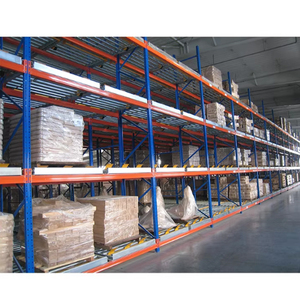
Direct from our manufacturing facility to Puerto Manzanillo and Puerto Balboa. Built with certified Q235B/Q355B structural steel, high-endurance dynamic roller beds, and corrosion-resistant coatings optimized for Panama's maritime climate.
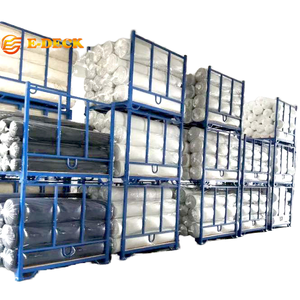
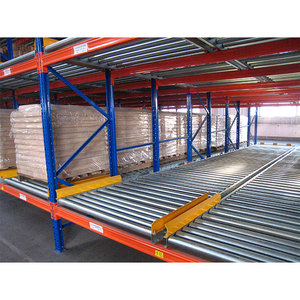
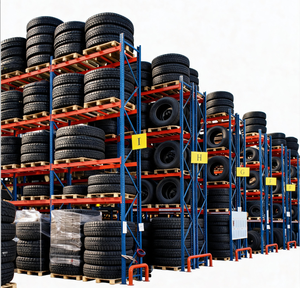
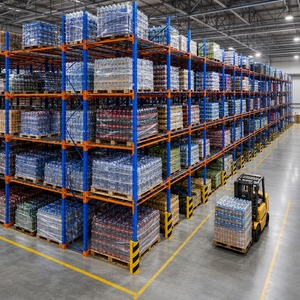
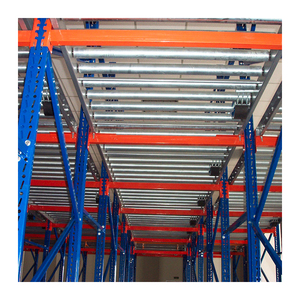
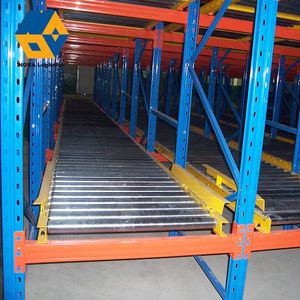
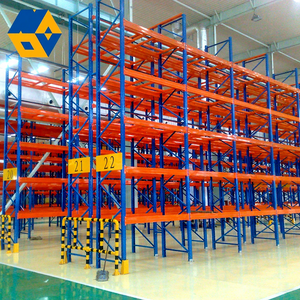
Analyzing the intersection of rising industrial real estate costs, trade velocity across the Panama Canal corridor, and FIFO inventory governance in Central America.
Panama occupies an unrivaled geographic position as the logistics epicenter of Latin America. Anchored by the Panama Canal, the Pacific-Atlantic multimodal railway, and premier maritime terminals such as Manzanillo International Terminal (MIT), Colón Container Terminal (CCT), and Puerto Balboa, the country serves as the primary gateway for global cargo entering the Americas. However, this high strategic value has triggered severe industrial footprint constraints. In logistics centers like the Colón Free Trade Zone (Zona Libre de Colón - ZLC) and Panama Pacífico, warehouse rental rates and development land costs have risen exponentially over the past five years.
For third-party logistics operators (3PLs), multinational pharmaceutical distributors, and food exporters, conventional selective pallet racking creates unacceptable commercial friction. Selective racking dedicates upwards of 60% of warehouse floor space solely to forklift operating aisles. When handling high-velocity consumer goods (FMCG) or perishable products, selective layouts generate chronic floor congestion, elevated collision risks, and extensive cycle travel times. Pallet flow racking (also known as gravity flow racking) delivers the mathematical solution to this bottleneck: compacting storage footprints by eliminating intermediate aisles and organizing inventory into dense, self-feeding FIFO (First-In, First-Out) lanes powered solely by gravity.
Over 2,500 active commercial entities in the ZLC require ultra-fast turnover and precise batch-lot control. Pallet flow systems provide dedicated loading and unloading faces, preventing cross-aisle traffic and ensuring strict customs traceability for duty-free re-exports into Central and South America.
Refrigerated energy expenses in tropical climates are directly tied to refrigerated air volume. By maximizing storage density, gravity flow racks dramatically minimize the chilled cubic volume per pallet position, slashing electricity overhead in seafood, beef, and frozen poultry facilities around Tocumen and Balboa.
As global supply chains shift toward nearshoring, multinational firms utilize Panama as a dynamic buffer hub. Pallet flow lines act as physical accumulator lanes between container de-stuffing docks and outbound regional shipping bays, streamlining cross-docking operations without floor clutter.
Uncompromising structural calculation from China's leading automated racking factory. How we balance gravitational forces, friction coefficients, and pallet structural integrity.
Gravity flow storage is not merely a static steel rack; it is an active mechanical conveyance system governed by Newtonian physics. The fundamental engineering challenge in deep-lane pallet flow (lanes ranging from 4 to 25 pallets deep) is controlled deceleration. An unbraked 1,200 kg wooden or plastic pallet moving down an incline can quickly achieve destructive kinetic momentum, risking catastrophic impact against the discharge face, structural dislodgment, and severe operator hazards.
As an advanced Chinese manufacturer exporting to Panama, our engineering department applies rigorous calculation parameters following European FEM 10.2.02 and American RMI MH16.1 specifications:
The inclination angle is precisely calculated based on the bottom deck board configuration of the customer's pallets (e.g., GMA 48x40-inch pallets, Euro 800x1200mm, or custom industrial skids). A standard 3.0% to 3.3% slope ensures reliable self-starting of stationary pallets even after prolonged storage dwell times, overcoming static inertia without exceeding safe terminal velocities.
To maintain a smooth, uniform descent velocity of approximately 0.25 to 0.30 meters per second, our systems integrate internal centrifugal brake rollers spaced at calculated pallet intervals along the lane. Unlike passive friction rollers that degrade unpredictably under temperature swings, our sealed centrifugal governor rollers automatically increase braking torque in direct proportion to pallet speed and weight, ensuring identical controlled descent whether handling a 400 kg light load or an 1,800 kg industrial die.
In deep lanes, accumulated back pressure from multiple queued pallets creates massive hydraulic-like forward force against the front pallet at the pick face. A 15-pallet lane with 1,000 kg pallets can generate over 1,500 kg of lateral thrust, jamming forklift extraction forks and endangering operators. Our factory incorporates proprietary mechanical separator latches that hold back the secondary pallets until the lead pallet is completely lifted and cleared, allowing effortless and safe extraction.
Precision-drawn carbon steel tubing with full-width spring-loaded steel axles and double-shielded, maintenance-free precision ball bearings rated for millions of revolutions.
Direct mechanical internal flyweights that regulate pallet flow speeds to under 0.3 m/s without requiring external electrical wiring, batteries, or hydraulic fluid lines.
Heavy-duty steel trip-lock catches that isolate the foremost pallet from lane back-pressure, ensuring zero friction during forklift pick cycles.
Flared, heavy-duty structural steel entry funnels protect upright columns and align misaligned pallets before they enter the roller conveyor bed.
Panama's high annual rainfall (up to 3,000 mm) and sustained 80% to 95% relative humidity accelerate metal oxidation. Here is how our coating systems guarantee a 15+ year operational lifespan.
Industrial racking imported into Panama without specialized surface treatment often exhibits surface rust, pitting, and bearing seizure within 18 to 24 months—particularly in coastal zones surrounding Colón, Balboa, and Panama City. High ambient temperatures combined with airborne oceanic salt aerosol from both the Pacific and Atlantic oceans create an aggressive C4/C5 atmospheric corrosivity environment according to ISO 12944 standards.
Our manufacturing facility applies a multi-stage pretreatment and coating protocol specifically designed for tropical deployment:
| Performance Parameter | Standard Commercial Racks | Our China Factory Export Specification | Operational Impact for Panama Buyers |
|---|---|---|---|
| Steel Alloy & Grade | Commercial Scrap Mix (Q195 / Non-cert) | Prime Q235B / Q355B (Baosteel/Shougang) | Certified yield strength; prevents lane sag under max load |
| Corrosion Resistance Standard | Single-coat manual spray (35-45μm) | 7-Stage Zinc-Phosphate + Electrostatic Powder (80-95μm) | Resists 500+ hrs ISO 9227 Salt Spray; no rust in ZLC humidity |
| Roller Track Construction | Stamped sheet clips & plastic wheels | Full-width welded structural steel channel + steel rollers | Supports up to 2,000kg/pallet without wheel flattening |
| Speed Braking Mechanism | Unregulated gravity (risky impact) | Sealed Centrifugal Internal Planetary Governors | Zero terminal velocity; guarantees pallet arrival under 0.3 m/s |
| Design Compliance | Generic unrated sizing | FEM 10.2.02, EN 15512, RMI ANSI MH16.1 | Full engineering approval for Panamanian building permits |
Evaluating space utilization, throughput efficiency, labor overhead, and capital expenditure payback for distribution operators in Panama.
Density: Low (~40% floor utilization)
Aisle Requirement: Requires an aisle for every row (3.2m - 3.8m)
Selectivity: 100% immediate SKU access
Best Fit: Facilities with hundreds of low-volume SKUs where warehouse floor rent is low and picking density is secondary.
Density: High (~70% floor utilization)
Aisle Requirement: Minimal aisles, but forklifts enter structure
Selectivity: LIFO (Last-In, First-Out) only
Limitation: High collision damage to uprights; slow loading cycles; trapped inventory risks expiration in food & pharma.
Density: Ultra-High (~85% floor utilization)
Aisle Requirement: Only two aisles needed (Loading & Picking)
Selectivity: Pure FIFO automatic stock rotation
Advantage: Eliminates forklift entry into rack bays; cuts handling cycles by 40%; ideal for high-rent Panama logistics nodes.
In a standard 3,000 m² warehouse facility in Parque Industrial de las Américas or Colón, switching from conventional selective pallet racking to a 6-deep pallet flow system yields an average increase of 1,800 additional pallet positions without acquiring extra land. Given prime industrial lease rates in Panama averaging $7.50 to $11.00 USD per m² per month, the real estate cost savings alone frequently recoup the incremental capital expenditure within 14 to 22 months of operation.
Direct technical and commercial answers regarding customs, shipping logistics, seismic compliance, and local warehouse regulations.
Direct-from-manufacturer pricing, end-to-end CAD engineering, ISO-certified fabrication, and full international logistics project management.
100% prime structural steel coil sourced exclusively from tier-1 mills (Baosteel, Shougang). Mill test certificates provided with every production heat number.
Complimentary warehouse layout planning, 3D modeling, and static/dynamic load analysis tailored around your exact building columns, dock bays, and forklift specs.
Complete export coordination with direct carrier bookings to Manzanillo or Balboa, seaworthy container packing diagrams, and zero-damage delivery guarantee.
Every racking system is backed by our comprehensive 10-year structural warranty, certified load capacity plaques, and ongoing spare parts support.
Connect directly with our senior racking applications engineers. Request detailed engineering drawings, weight capacity calculations, and a factory-direct container FOB/CIF Panama quotation within 24 hours.