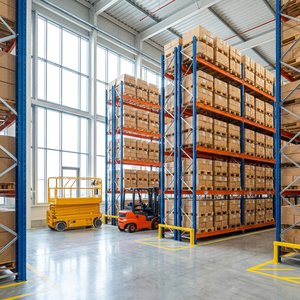
Palletized Storage
Warehouse Equipment Heavy Duty Pallet Rack Steel Storage Racking System Supplier
Capacity: Up to 4,500 kg / level
Direct from certified manufacturing facilities: optimized racking profiles built to handle flexible carpet rolls, high-density fabric coils, long industrial pipes, and palletized retail inventories.
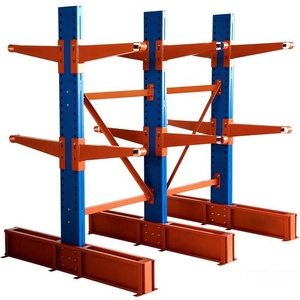
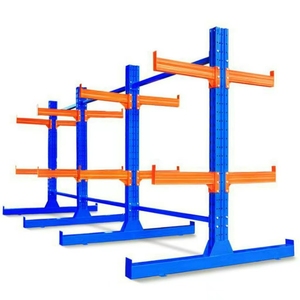
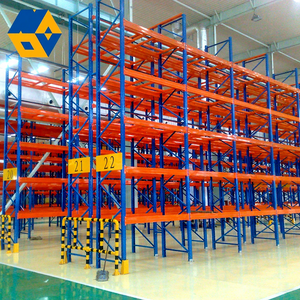
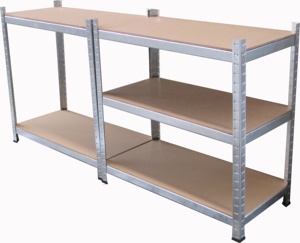
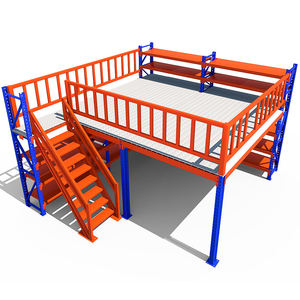
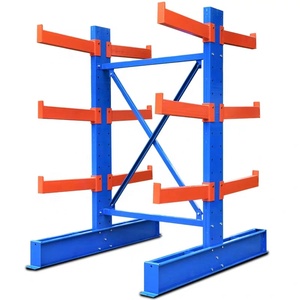
Storing rolled floor coverings, broadloom carpets, synthetic turf, non-woven geo-textiles, and vinyl rolls presents a distinctly difficult structural challenge compared to conventional unitized pallet logistics. While regular selective pallet systems assume uniform, rigid loads, carpet rolls are inherently long (ranging from 2.0 meters up to 5.0 meters in continuous width), flexible, heavy (often 150 kg to 850 kg per roll), and prone to permanent core deformation if stored with insufficient contact-area support.
Across Brazil—from the manufacturing centers of Santa Catarina and the industrial hubs in Americana and Campinas (SP) to high-throughput third-party logistics (3PL) operations around Cajamar, Louveira, and Barueri—warehouse managers are moving away from traditional block-stacking (armazenamento em pilhas livres). Ground stacking carpet rolls causes severe internal pressure, crushing the cardboard cores (tubetes), creasing deep pile fabrics, creating fire safety code violations under local fire department directives (Instruções Técnicas do Corpo de Bombeiros), and rendering individual SKU retrieval slow and labor-intensive.
As qualified industrial storage manufacturers, our engineering group designs specialized structural steel carpet storage racking configurations specifically built for Brazilian industrial facilities. By harmonizing global manufacturing standards with strict local building codes—including ABNT NBR 15524 (Steel Storage Systems), NR-11 (Material Transport and Handling Safety), and NR-12 (Machinery Safety)—we deliver systems engineered to maximize vertical warehouse clearances, preserve roll integrity, and accelerate handling speeds using standard forklift booms (mandril / lança para empilhadeira).
Continuous radius saddle beams, solid particleboard decks, and roll-cradle dividers distribute the load along the entire roll axis, preventing core-sag and pile flattening.
From single-SKU pigeon-hole cellular modules to multi-tier cantilever bays, every roll can be selected without having to de-stack or shift adjacent stock.
Designed around forklift boom prong access, turret mast dimensions, and required aisle turning radii to reduce the risk of impact to upright posts.
Selecting the optimal carpet storage racking framework requires matching product geometry, SKU velocity, and handling equipment. Below are the three primary configurations engineered and fabricated in our industrial facilities for deployment across Brazilian operations:
Pigeon-hole racking uses a modified heavy-duty pallet racking chassis fitted with full-depth intermediate steel or engineered timber dividers. Each discrete cell or "alveolus" holds one individual carpet roll. This framework provides 100% SKU selectivity, eliminates vertical stacking pressure entirely, and provides clear visibility for order pickers. Operators can utilize carpet pole attachments mounted to counterbalanced forklifts or reach trucks to spear the core tube directly, extracting the roll without friction against adjacent merchandise.
For operations handling irregular roll lengths (from 2m cuts to 5m rolls), cantilever systems provide a continuous horizontal shelf without front column obstructions. Fabricated from heavy hot-rolled steel profiles (ASTM A572 Grade 50 or SAE 1045 equivalent) or high-yield cold-formed sections, cantilever arms can be fitted with curved pipe supports, inclined end-stops, or continuous timber/wire decking. This design accommodates mixed-length rolls, vinyl remnants, and geotextile coils that exceed typical pallet bay widths.
When high cubic warehouse space is available (clear heights exceeding 8 to 11 meters), rack-supported mezzanines integrate carpet storage bays directly into structural access floors. The lower tiers provide heavy roll staging accessed by forklifts, while upper levels feature lighter textile roll storage, cutting tables, edging machinery, and packaging zones. This system effectively doubles or triples usable floor plate area without expanding the building footprint or incurring municipal commercial construction taxes (IPTU).
| System Typology | Typical Roll Lengths | Bay Capacity Range | Handling Equipment | Selectivity Rate | Recommended Use Case |
|---|---|---|---|---|---|
| Pigeon-Hole (Alveolar) | 2,000mm – 4,500mm | 800 – 2,400 kg / level | Forklift Carpet Pole / Reach Truck | 100% Direct Access | High SKU variety, luxury carpets, cut-order fulfillment |
| Heavy Cantilever | 1,500mm – 6,000mm+ | 500 – 1,800 kg / arm | Sideloader, VNA, Counterbalanced | 90% Direct Access | Broadloom rolls, synthetic turf, geotextile coils |
| Cradle Pallet Racking | 1,200mm – 2,800mm | 1,500 – 4,200 kg / bay | Standard Pallet Fork / Stacker | High (per bundle) | Packaged roll cartons, pre-bundled residential carpets |
| Rack-Supported Mezzanine | Custom engineered | 350 – 1,000 kg / m² | Goods lift, vertical conveyor, manual | 100% Individual | Integrated distribution, cutting, sample processing |
Logistics requirements in Brazil are heavily shaped by regional geography, highway freight networks, and localized industrial clusters. Our storage designs account for specific conditions across the country's primary economic zones:
Home to the textile centers of Blumenau, Brusque, and Gaspar. Storage systems here must withstand high relative humidity without surface corrosion while managing bulk rolls from spinning and tufting mills.
The Cajamar, Guarulhos, and Louveira corridors demand high-bay, very narrow aisle (VNA) carpet racking that can handle thousands of home-decor SKUs for e-commerce and retail fulfillment.
The technical fabrics hub in the interior of São Paulo requires heavy cantilever systems capable of handling both heavy non-woven textiles and delicate automotive interior carpets.
Facilities across ABC Paulista, Paraná, and Rio Grande do Sul supply automotive floor mats and insulation, requiring Just-In-Time (JIT) roll cradle systems with automated replenishment.
Because Brazilian cross-state transit (operações interestaduais) involves long distances over varied road conditions, rolls often arrive at distribution centers tightly wrapped in protective film or woven polypropylene bags. Our storage bays are manufactured with deburred profiles, chamfered arm edges, and recessed beam connectors to prevent tears and damage to outer wrapping during loading and unloading.
Brazilian warehousing is experiencing significant structural modernization, driven by increasing industrial real estate costs, tighter workplace safety regulations, and the expansion of omnichannel home furnishing retail:
Brazilian operations are converting standard 3.8-meter aisles into 2.2-meter Very Narrow Aisles (VNA). Guided reach trucks with dedicated carpet boom attachments increase overall cubic capacity by up to 45%.
Audits by the Ministry of Labor (MTE) prioritize operator safety around suspended loads. Racks must now include certified capacity signs, anti-unseating beam locks, and heavy-duty corner post guards (protetores de montante).
The sports and landscaping industries in Brazil have seen rapid growth in artificial grass installations. These heavier, wider rolls require structural cantilever systems engineered for high point-loads and dynamic boom extraction.
Racking failures, beam deflections, and structural accidents stem from three recurring issues: underspecified steel grades, substandard anchorages, and lack of certified engineering oversight. As an established manufacturing partner for global and South American logistics operations, our processes eliminate these risks from the initial design stage:
Every bay profile, upright gauge, and baseplate is calculated based on exact roll weights, flue clearances, and local concrete slab load-bearing capacities.
Our electrostatic epoxy-polyester coatings cure at 200°C to build a high-adhesion protective barrier rated against moisture and humidity in coastal Brazilian climates.
We generate 3D CAD aisle layouts modeling boom tilt angles, mast deflections, and turning radiuses to ensure snag-free daily forklift operations.
From precision anchor bolting to certified load capacity signage (placas de capacidade de carga) and maintenance audits, we deliver end-to-end reliability.
Our manufacturing facilities utilize high-tensile cold-rolled steel coils with consistent yield strengths (compliant with EN 10025 S355 and ASTM A572 specifications). Upright frames feature continuous multi-bend omega profiles for maximum torsional resistance, while beams utilize robotic seam-welding with multi-claw connector plates to lock securely into place under dynamic boom loading cycles.
Clear engineering and commercial answers to help procurement managers, logistics heads, and warehouse planners evaluate storage systems and balance budget against long-term operational performance.
Planning a new carpet distribution center in Brazil or upgrading your current roll handling system? Submit your warehouse floor plan and inventory profile to receive a custom CAD layout, weight capacity verification, and a competitive manufacturing proposal.