ISO 9001 / BIFMA / CE Certified Industrial Manufacturing
Top Trusted Steel Storage Lockers Manufacturer & Exporters
Precision-Engineered SPCC Heavy-Gauge Cold-Rolled Steel Lockers, Automated Smart Locker Stations, and Severe-Duty Changing Systems for Global Commercial and Industrial Infrastructure.
Enterprise Solutions Portfolio
Heavy-Duty & Intelligent Steel Locker Systems
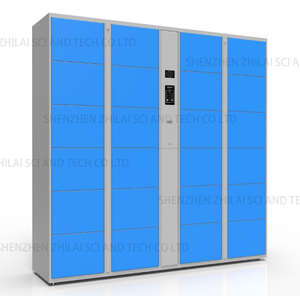
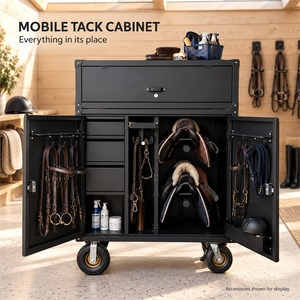
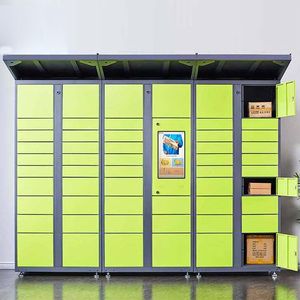
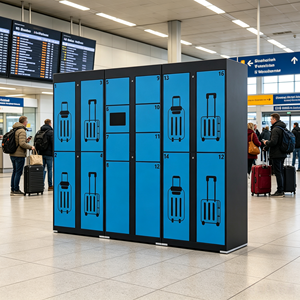
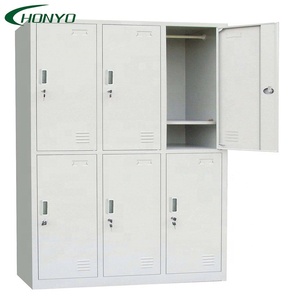
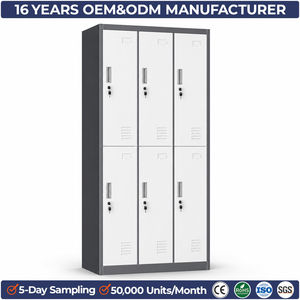
Engineered for high-traffic public institutions, equestrian stables, automated postal hubs, hospitality resorts, and manufacturing plants. Built from premium cold-rolled steel with electrostatic thermoset powder coatings.
Unlike light-gauge retail fixtures that warp and degrade under heavy operational strain, our heavy-duty steel storage lockers are developed with structural integrity as the primary metric. From metallurgical sourcing to robotic electrostatic powder coating, every stage is audited against international safety standards.
Prime Grade SPCC Cold-Rolled Steel
We mandate mill-certified high-tensile SPCC cold-rolled carbon steel ranging from 0.7mm to 1.5mm nominal thickness. Cold rolling compresses the crystalline structure, increasing yield strength, door torsional resistance, and pry-barrier ratings while maintaining a flawless glass-smooth surface for powder adhesion.
Multi-Stage Chemical Pre-Treatment
Prior to coating, steel components pass through an automated 9-stage hot degreasing, pickling, and zirconium-silane phosphating bath. This converts the microscopic substrate into a non-conductive crystalline barrier that locks out ambient humidity and guarantees zero blistering, flaking, or sub-surface oxidation under ASTM B117 testing.
KD Flat-Pack Freight Optimization
Our patented Knock-Down (KD) structural architecture cuts ocean shipping cubage by up to 75% compared to pre-welded lockers. Built with tool-less precision slide-lock tabs and interlocking stiffener channels, four staff members can assemble a 10-tier locker bay in under 8 minutes with zero loss of structural rigidity.
Global Compliance & Testing Protocols
Certified to BIFMA X5.9, EN 14073, and ISO 14001 guidelines. Locker doors undergo continuous 50,000-cycle slam fatigue evaluations, concentrated vertical point loading on all shelf tiers exceeding 100kg without deflection, and dynamic impact drop tests on lock cam connection brackets.
Strategic Sourcing Whitepaper
Future Global Procurement Trends (2025–2030)
Enterprise buyers and facility procurement managers are reevaluating locker asset life cycles. Procurement decisions have transitioned from looking purely at unit purchase pricing to evaluating Total Cost of Ownership (TCO), supply chain transparency, and smart building integration.
1. Total Cost of Ownership vs. Initial Unit Capex
Facility directors are abandoning flimsy entry-level steel cabinets. While 0.4mm sheet metal saves upfront costs, field failure rates—including hinge snapping, latch distortion, and finish peeling—lead to high maintenance and replacement costs within 18 months. Leading institutions now mandate heavy 0.8mm–1.2mm cold-rolled profiles with thermoset epoxy-polyester powder coats that provide 15+ years of operational lifecycle.
Life-cycle costing matrices demonstrate that heavy-duty lockers reduce annualized facility expenditure by 43%, delivering substantial ROI over decade-long building operating horizons.
With volatile trans-oceanic freight container tariffs, multinational developers and procurement consortia prioritize manufacturers with Semi-Knocked-Down (SKD) and Completely-Knocked-Down (CKD) custom crating capabilities. Shipping flat-packed high-density pallet modules allows 650 to 900 individual locker compartments to fit into a single 40ft HQ shipping container, compared to only 180 welded assemblies.
Our localized containerization staging minimizes landed cost-per-compartment, lowers port drayage carbon footprints, and prevents transit denting via reinforced five-layer honeycomb corner protectors.
3. Architectural Customization at Industrial Scale
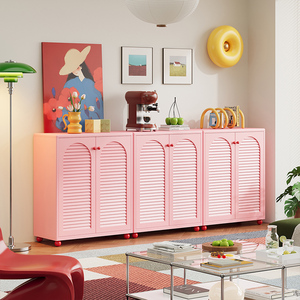
Modern interior planning requires lockers that match specific branding and architectural finishes. Generic industrial olive and gray cabinets have been replaced by architectural color palettes (such as RAL-specified fine-texture powders), laser-cut ventilation patterns (including honeycomb, slotted, or acoustic louvers), and mixed-material cladding like real wood laminate or antibacterial phenolic doors mounted on heavy steel carcasses.
Our automated flexible manufacturing cells handle bespoke dimensional adjustments, custom lock prep configurations, and branded master numbering systems without extending standard factory lead times.
Innovation Trajectory
Technological & Industry Development Trends
The steel locker sector is undergoing a rapid evolution, driven by connected IoT networks, automated contactless parcel handling, circular green metallurgy, and micro-climate hygienic air kinetics.
Smart IoT Telemetry & Access
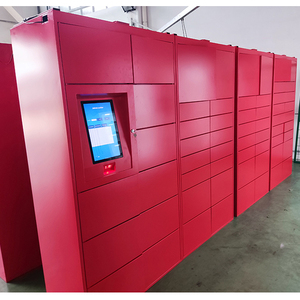
Mechanical keys and simple combination dials are making way for smart IoT locking systems. Modern deployments utilize multi-modal readers: RFID/NFC cards, QR barcodes, capacitive PIN pads, and 3D facial recognition algorithms. Back-end management software lets facility administrators assign dynamic temporary pins, monitor bay occupancy in real time, integrate with LDAP university databases, and trigger automatic UV sanitization cycles after every door access.
RestAPIFacial RecognitionCloud Telemetry
Decarbonized & Circular Green Steel
Global carbon border adjustment mechanisms and LEED/BREEAM green building certifications require verified sustainable materials. We integrate EAF (Electric Arc Furnace) prime carbon steel with up to 40% certified post-consumer scrap content, dramatically reducing embedded carbon. Combined with non-toxic, zero-VOC solvent-free thermosetting powder coatings that reclaim 98% of overspray, our locker systems contribute directly to our clients' ESG and net-zero targets.
LEED CompliantZero VOC PowderRecycled Content
Antimicrobial Surface Chemistries
In fitness centers, healthcare facilities, and food-processing locker rooms, cross-contamination is a primary concern. The latest industry developments integrate active silver-ion (Ag+) and zinc pyrithione additives into the electrostatic polyester powder matrix. This active formulation prevents microbial biofilm formation, suppresses 99.9% of bacteria, mold, and fungi on contact, and maintains its efficacy throughout the 20-year structural lifespan of the locker.
Silver Ion Ag+ISO 22196Hygienic Grade
Aerodynamic Louver & Thermal Engineering
Moisture accumulation inside changing room lockers causes oxidation of damp personal gear and breeds unpleasant odors. Advanced fluid-dynamic ventilation modeling has replaced haphazard punch holes with stamped aerodynamic directional louvers, bottom convection inlet registers, and optional integrated ducted mechanical exhaust fan connections. This constant airflow design keeps locker interiors dry, well-ventilated, and fresh.
Louver KineticsConvection FlowAcoustic Dampening
Procurement Clarity
Frequently Asked Sourcing & Technical Questions
Essential guidance prepared by our international export engineering team to assist supply chain managers, architects, and institutional contractors with their technical submittals.
What steel thickness (SPCC) is recommended for commercial versus heavy industrial facilities?
For standard corporate offices, schools, and commercial gyms, a nominal gauge thickness of 0.7mm to 0.9mm (post-coating) provides an ideal balance between weight, cost, and dent resistance. In heavy manufacturing plants, correctional installations, emergency service stations, or transit depots subject to rough handling, we specify 1.2mm to 1.5mm cold-rolled steel doors backed with longitudinal internal hat-channel stiffeners and tamper-proof multi-point lock bars to guarantee structural integrity.
How does Knocked-Down (KD) compare to fully welded unibody lockers for international shipments?
Fully welded lockers ship ready to install on site, but their volume fills shipping containers with empty air, quadrupling oceanic freight expenses. Our precision-engineered Knock-Down (KD) system utilizes snap-fit interlocking slots and minimal screws, packing flat on specialized pallets to load 3.5 to 4 times more units per container. The assembled rigidity of our interlocking KD design equals welded units, as confirmed by BIFMA diagonal sway tests, delivering substantial freight savings with reliable structural strength.
What surface treatments ensure 500+ hours of ASTM B117 salt-spray corrosion protection?
Corrosion protection depends on the chemical conversion layers underneath the finish coat. We utilize a multi-stage immersion process: solvent ultrasonic cleaning, acid descaling, pickling, and a nano-ceramic zirconium phosphate conversion coating that passivates the cold-rolled substrate. Next, a high-grade thermosetting epoxy-polyester powder coat (60-90 microns thick) is cured at 200°C. This combination delivers exceptional cross-hatch adhesion and resists blistering beyond 500 hours in ASTM B117 salt-spray chambers.
How do smart electronic locker stations integrate with existing building access control software?
Our smart locker controllers run on Linux or Android industrial mainboards equipped with RS485, TCP/IP, Wi-Fi, and 4G communication buses. We provide open RESTful API documentation, webhook triggers, and SDK libraries that allow IT teams to connect locker banks directly to building management systems, university student databases, hotel PMS platforms (like Opera), or corporate Active Directory/RFID credentials without expensive middleware licenses.
What are standard export production lead times, MOQs, and international trade terms?
Standard production runs require 20 to 28 business days from final shop drawing sign-off and color chip approval. Minimum Order Quantities (MOQ) start at 50 compartments for standardized modular colors, and 200 compartments for custom RAL electrostatic powder finishes and specialized dimensions. We regularly handle FOB, CIF, CFR, and DDP shipments, working with major shipping lines to manage sea-freight booking, export customs documentation, and door-to-door delivery.
How are warranty claims, hardware spares, and structural performance backed overseas?
All commercial steel locker bodies carry a 10-year comprehensive structural warranty against weld fractures, frame distortion, and sub-surface rust through. Electronic solenoid locks, biometric cameras, and touch control interfaces carry a 3-year commercial warranty. To ensure hassle-free ongoing maintenance, we include an extra 2% to 3% buffer stock of mechanical cam locks, master keys, electronic solenoids, and hinge hardware with every full container shipment at zero extra charge.
Consult with our Storage Engineering Team
Planning a custom changing locker layout, automated parcel station, or high-density institutional storage project? Provide your site floor plan, target compartment counts, and preferred access requirements for a complimentary CAD elevation plan, capacity analysis, and direct factory export quote.
Complimentary CAD Layouts
Complete Bill of Materials
Direct Factory Pricing
Connect Directly with Factory Engineers
Immediate engineering support for volume tenders, custom OEM designs, and wholesale pricing submittals.