High-Payload Commercial Fixtures & Heavy-Duty Warehouse Equipment
From customer-facing front-of-house modular retail merchandisers to high-density back-of-store inventory replenishment systems, explore our certified storage engineering range built for global export.
The Engineering Imperative in Modern Supermarket & Grocery Store Fixture Procurement
In high-velocity fast-moving consumer goods (FMCG) retailing, commercial store shelving is not merely display furniture—it is the direct structural nexus connecting retail supply chains to consumer conversion. International supermarket conglomerates, hypermarket operators, and regional grocery store chains operate in an economic environment characterized by compressed operational margins, stringent floor space costs, and extreme weight payload demands. A standard four-foot grocery gondola shelf may carry several hundred kilograms of dense liquid inventory, canned goods, or bulk dry provisions 24 hours a day, 365 days a year. Selecting an under-engineered shelving system risks catastrophic structural sagging, premature surface degradation from commercial sanitation protocols, and severe public safety liabilities.
As a premier certified grocery store shelving supplier and global exporter, our manufacturing methodology addresses the dual challenges of structural resilience and merchandising ergonomics. The integration of high-grade cold-rolled Q235B and SPCC carbon steel profiles, precision cold-roll-formed upright columns, and automated multi-stage powder coat finishes guarantees structural integrity across diverse climatic zones—from coastal humidity to harsh, arid hypermarket environments. Achieving peak store monetization requires an engineering approach that calculates unit load distributions, optimizes eye-level planogram visibility, and simplifies back-of-house to sales-floor inventory transfer.
Modular Island & Wall Gondolas
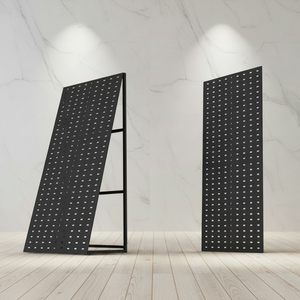
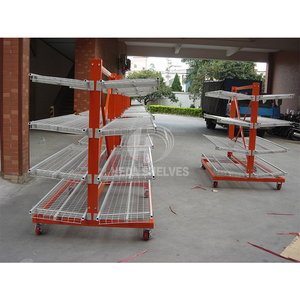
The standard baseline for customer-facing grocery aisles. Featuring double-slotted cold-rolled steel uprights (25mm or 50mm pitch adjustment), perforated or solid back panels, and multi-tier reinforced cantilever shelf brackets. Engineered for rapid planogram reconfigurations without specialized fasteners or disruption to retail floor traffic.
Cash & Carry Hybrid Racking
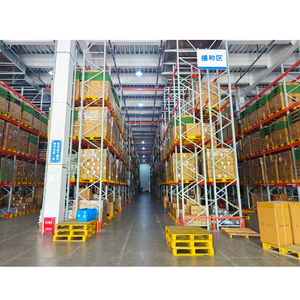
Combines heavy-duty industrial pallet racking at upper levels with customer-accessible retail shelving tiers at eye level. This eliminates intermediate warehouse handling by allowing overhead pallet storage for high-turnover bulk SKUs while presenting clean, illuminated display faces for self-service retail shoppers below.
Cold-Chain & Fresh Produce Display
Specialized fixtures engineered for high-humidity, temperature-controlled environments. Manufactured with anti-corrosion zinc-rich primer treatments and antimicrobial epoxy-polyester electrostatic powder coating. Built with ventilated, easy-drain shelves tailored for fruits, vegetables, dairy, and artisanal baked goods.
Strategic Sourcing Trends: The Evolution of Global Grocery Retail Procurement
Procurement directors and commercial store fit-out directors must navigate a transforming retail landscape. Over the past five years, the global grocery and hypermarket sector has undergone seismic operational shifts driven by omnichannel shopping, click-and-collect fulfillment, and automated supply chains. International buyers no longer purchase retail fixtures strictly on purchase price; procurement evaluation now centers on Total Cost of Ownership (TCO), adaptive modularity, circular material sustainability, and digital store integration.
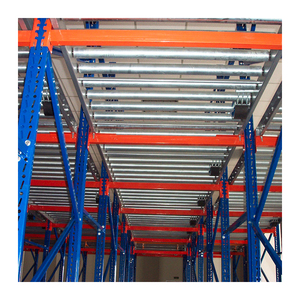
1. Omnichannel Micro-Fulfillment Centers (MFCs) Embedded in Supermarkets: As dark-store replenishment and on-demand delivery apps (instore picking) surge, the physical layout of modern supermarkets is bifurcating. Front-of-house aisles require aesthetic warmth, high-contrast matte finishes, and customer-friendly sightlines, while back-of-house buffer zones require high-density gravity flow racks, pallet racking, and mezzanine picking systems to compress replenishment cycle times. Modern procurement tenders increasingly specify integrated suppliers capable of delivering both aesthetic gondolas and heavy-duty logistics systems from a single manufacturing source.
2. Tool-Free Modular Standardization: Store labor costs have emerged as the fastest-growing operational expenditure for global retailers. Fixture designs that require complex bolted assemblies or specialized tradespeople during remodeling are being phased out. Next-generation grocery shelving utilizes quick-snap, tool-free bracket systems with integrated wire cable management channels. Retail staff can reconfigure a 20-meter aisle bay from dry goods to bulk seasonal promotions within hours rather than days.
3. Circular Carbon Auditing and Traceable Materials: Leading global grocery retailers (such as Carrefour, Tesco, and Walmart) enforce stringent environmental, social, and governance (ESG) procurement quotas. Procurement teams are requiring verified steel scrap percentages, low-carbon electric arc furnace (EAF) steel certifications, and zero-VOC powder coating declarations. Packaging specifications now mandate heavy-gauge, 100% recyclable knock-down (KD) wood-free palletizing to eliminate single-use plastic wrap during international container shipping.
Engineering Comparison: Legacy Commercial Fixtures vs. Next-Generation Engineered Shelving
| Engineering Attribute | Legacy Commercial Shelving | Advanced Engineered Retail Systems | Operational / ROI Impact |
|---|---|---|---|
| Steel Substrate Specification | Commercial Grade Q195 / Scrap Mix (Variable Tensile) | Structural Cold-Rolled Q235B / SPCC Carbon Steel | Eliminates structural fatigue; withstands 35% higher shock loads without bending. |
| Upright Forming Accuracy | Manual Punching, ±1.5mm Tolerance | Continuous Roll-Forming with CNC Multi-Punch (±0.2mm) | Guarantees laser-straight bay runs and effortless shelf bracket engagement across hundreds of linear meters. |
| Surface Pre-Treatment | Basic 3-Stage Dip Cleaning (Solvent Acid) | Automated 7-Stage Zinc-Phosphate & Silane Nanotech Wash | Passed 500-hour ASTM B117 salt spray tests; prevents sub-surface rust crawl in coastal humidity. |
| Coating Finish & Durability | Standard Liquid Paint or Basic Powder (40–60μm) | Thermosetting Electrostatic Epoxy-Polyester (80–110μm) | Resists scratching from metal cart collisions, chemical disinfectants, and heavy abrasive inventory. |
| Digital & Smart Integration | Retrofit Clip-on Plastic Extrusions | Integrated Aluminum ESL Tracks & Concealed LED Ducts | Direct support for Electronic Shelf Labels (Pricer, SES-imagotag) and magnetic 24V LED undershelf lighting. |
The Technological Trajectory of Supermarket Shelving: IoT, ESL, and Automated Replenishment
The boundary between mechanical steel shelving and digital store operational software is rapidly dissolving. As grocery store operators implement dynamic digital pricing algorithms to counter food waste and manage inflation, fixture engineering must accommodate advanced sensor infrastructure directly into the cold-rolled steel profile.
Concealed Low-Voltage Architectural Busways: Modern grocery shelving incorporates factory-embedded 24V DC conductor rails inside the vertical upright tracks. This architecture allows individual shelf tiers to draw electrical power anywhere along the upright height without messy trailing cables. Undershelf LED accent lighting (with precise 3000K–4000K high-CRI color rendering for produce and meat freshness) and active electronic signage snap directly into place, illuminating merchandised inventory and lifting eye-level impulse purchase metrics by up to 22%.
Integrated Electronic Shelf Labeling (ESL) Profiles: Older generation clip-on plastic price tag holders degrade, turn brittle under retail lighting, and frequently dislodge under heavy cart impacts. Next-generation systems feature factory-extruded anodized aluminum front shelf nosings that securely lock electronic ink tags (such as E-ink ESL displays) into a continuous anti-theft and anti-glare channel. This design preserves pristine planogram lines and provides optical scanner clearance for robotic aisle audit units.
Weight-Sensor Integrated Shelving & Smart Endcaps: For high-theft premium retail categories (such as infant formula, baby care, health supplements, and premium spirits), forward-thinking supermarket chains are deploying shelving units fitted with discrete strain-gauge load cells beneath the shelf surface. These load cells detect real-time inventory mass changes, triggering silent inventory replenishment alerts or CCTV verification when unexpected shelf-sweeping activity occurs.
Engineering Discipline & Global Supply Chain Advantages
Racking and fixture failures are caused by under-specified steel thickness, non-uniform powder application, or unverified load calculations. Our fully integrated manufacturing complex removes these structural vulnerabilities.
Calculated Structural Safety
Every shelving and racking profile undergoes finite element analysis (FEA) and physical dead-load testing. Certified load-bearing capacities range from 80 kg to 350 kg per shelf tier, with structural safety factors exceeding 1.65 under uniformly distributed loads (UDL).
Robotic Laser & Roll-Forming
Equipped with continuous automated multi-station cold-roll forming lines, high-speed fiber laser cutting cells, and robotic welding stations. This delivers sub-millimeter manufacturing tolerances across large production runs of 10,000+ bays.
Hot-Climate Electrostatic Coat
Multi-stage chemical pre-treatment with automated dry-off ovens and electrostatic powder spray booths. Tested against extreme abrasion, UV fading, and acidic fruit juice exposure to preserve showroom-grade visual appeal over years of heavy store operation.
KD Export Packing & Support
Engineered Knock-Down (KD) component nesting and heavy-duty steel pallet strapping maximize 40-foot HQ shipping container cube utilization by up to 35%. Complete with BIM/CAD layout planning and on-site engineering supervision.
From CAD Architectural Planogram to Turnkey Container Export
A rigorous, transparent five-stage manufacturing and delivery protocol ensuring seamless execution for supermarket store rollouts, franchise retrofits, and retail distribution centers.
Site & SKU Audit
Detailed evaluation of store CAD drawings, ceiling clearances, fire suppression sprinkler zones, floor slab load specs, and retail product category dimensions.
CAD & Planogram Optimization
3D visualization and bay capacity calculations optimizing linear footfall circulation, customer aisle widths, endcap visibility, and total cubic product density.
Precision Manufacturing
Automated steel perforation, roll-forming, laser mitering, robotic welding, and thermosetting powder coating performed under strict ISO 9001:2015 quality controls.
Batch QA & Load Testing
Batch sampling for tensile strength, coating thickness (μm), cross-hatch adhesion, and physical working-load deflection before release for export packing.
Export Logistics & Handover
Seaworthy container nesting, clear pallet labeling by aisle department, detailed installation manuals, and remote/onsite engineering support.
Frequently Asked Questions on Commercial Grocery Shelving
Expert technical insights addressing payload calculation, corrosion mitigation, custom fabrication, and international freight container optimization.
How do you calculate the required load capacity per shelf tier in a grocery supermarket environment?
What surface finishing technologies are used to prevent rust in humid, tropical, or coastal supermarket locations?
Can your shelving systems be customized to match specific retail brand guidelines (RAL colors, wooden accents, integrated lighting)?
How are components packed for ocean freight to prevent transit damage and optimize container loading?
What is the typical production lead time, and what documentation is provided for customs clearance and engineering approval?
Accelerate Your Supermarket Fit-Out with Certified Manufacturing Excellence
Whether you are procuring commercial gondola fixtures for a nationwide supermarket chain, outfitting a hypermarket cash & carry, or constructing back-of-store warehouse pallet racking, our structural engineering team delivers certified layout plans, precise bill of materials, and direct export factory pricing.