High-Density Storage Systems & Heavy-Duty Beams
Engineered to absorb dynamic forklift impacts and static unit pallet loads. Review our factory-direct rack structures, manufactured with precision continuous seam welding and multi-claw safety beam connectors.
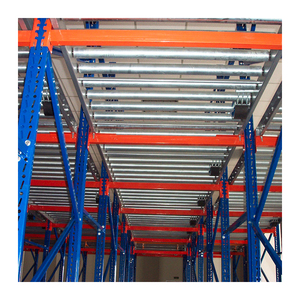
Pallet Flow Rack High Quality FIFO Warehouse Storage Racks Gravity Pallet Flow Racking
- Dynamic Roller Track Lanes
- Auto Speed Controller Brakes
- 1,500 kg/pallet Rating
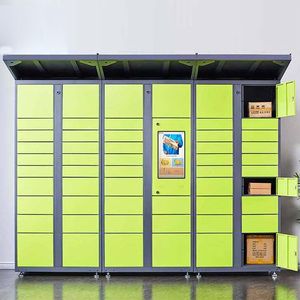
Parcel Delivery Locker Digital Storage Box Steel Automated Locker Face Recognition
- Biometric Facial Auth
- Heavy-Gauge SPCC Steel
- IoT Cloud API Integrated
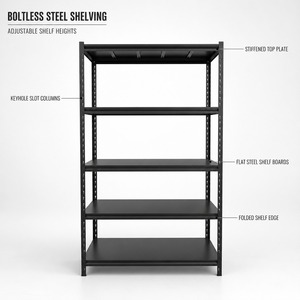
Boltless Steel Shelving Adjustable Warehouse Storage Rack Slotted Angle Stand
- 50mm Pitch Adjustment
- Anti-Corrosion Epoxy Dip
- 150-300 kg/tier Shelf
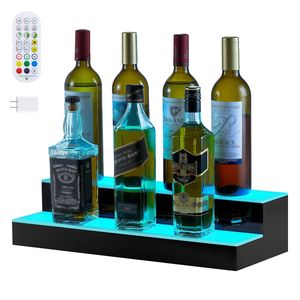
2-Tier LED Lighted Whiskey Display Rack USB Supported Illuminated Storage Shelf
- Integrated Acrylic Diffuser
- RF Remote Color Tuning
- Commercial Retail Grade
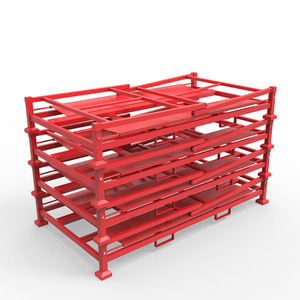
Foldable Stacking Turnover Rack Fabric Metal Steel Pallet Movable Stacking Shelf
- 4-High Nested Stacking
- Collapsible Posts (80% Space)
- 1,200 kg Payload Rating
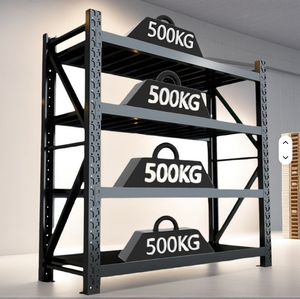
Industrial Adjustable Steel Snap-In Storage Racks Longspan Powder Coated Shelving
- Snap-In Step Beam Profile
- Welded Basefoot Anchors
- 500-800 kg/tier Beam Deflection
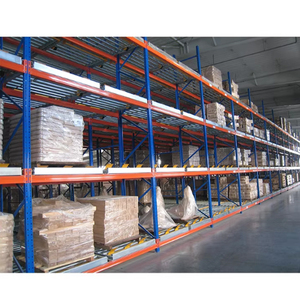
Warehouse FIFO Storage Racking System Flow Through Pallet Roller Heavy Rack
- Full-Width Galvanized Rollers
- Separator Safety Gate System
- High Density Cold-Chain Fit
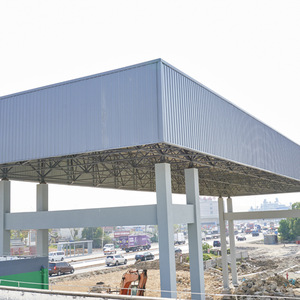
Modern Steel Mezzanine Structure Duplex Office Storage Multi-Tier Workshop Platform
- Structural H-Beam Columns
- Heavy Perforated Steel Deck
- 300 - 1,000 kg/m² Floor Load
Pallet Rack Beam Anatomy: Box Beams vs. Step Beams Engineering
Pallet rack beams are the primary horizontal load-bearing members in selective, double-deep, and automated high-bay racking systems. As international supply chains expand across the GCC, Africa, Europe, and the Americas, evaluating the manufacturing capabilities of China's top pallet rack beam manufacturers requires deep scrutiny into material chemistry, roll-forming geometry, robotic welding tolerances, and connector-to-upright moment rotation.
Interlocking Twin-C Box Beams
Fabricated by cold-roll forming two symmetric 'C'-sections and inter-locking them via continuous high-frequency or robotic CO₂ gas-shielded arc seam welding. Box beams offer superior torsional stiffness, symmetric major-axis moment of inertia ($I_x$), and high resistance to lateral-torsional buckling under concentrated pallet footings.
Roll-Formed Step Beams
Characterized by an integrated inner recessed ledge (typically 20mm to 25mm step depth). Step beams are specifically engineered to support drop-in wire mesh decking, particleboard panels, and steel shelf supports flush with the beam's upper plane. Ideal for hand-stack pick levels and dual-purpose pallet and carton operations.
Multi-Claw Connector Brackets
End connectors are stamped from 3.5mm to 4.5mm heavy-gauge hot-rolled structural steel plates. Featuring 3, 4, or 5 precision cold-formed claws, these connectors transfer beam end reactions into upright columns via semi-rigid moment connections. Automated zinc-coated safety spring pins prevent accidental forklift dislodgement.
Deflection Compliance Standards (EN 15512 vs. RMI MH16.1)
Under maximum uniformly distributed design load (UDL), structural engineering standards dictate that vertical beam deflection ($\delta$) must not exceed $\delta_{max} \le L / 200$ (European FEM/EN standards) or $L / 180$ (American RMI MH16.1). Top tier manufacturers design with finite element modeling (FEA) to verify that residual plastic deformations after load removal remain strictly under 0.2%.
Standard Load Table: China Heavy-Duty Interlocking Box Beams
Calculated based on yield strength $f_y = 235 \text{ N/mm}^2$ (Q235B) and $f_y = 355 \text{ N/mm}^2$ (Q355B) cold-formed steel coils, safety factor $\gamma = 1.65$.
| Beam Section Profile (H × W × t mm) | Clear Span Length (mm) | Steel Grade Specification | Section Modulus $W_x$ (cm³) | Rated Pair Capacity (kg/pair UDL) | Deflection at Design Load (mm) |
|---|---|---|---|---|---|
| 80 × 50 × 1.5 Box Beam | 2,300 (2 Pallets) | Q235B Cold-Rolled | 12.8 | 1,800 kg | < 9.4 mm (within $L/200$) |
| 100 × 50 × 1.5 Box Beam | 2,700 (3 Pallets) | Q235B Cold-Rolled | 18.4 | 2,400 kg | < 11.2 mm (within $L/200$) |
| 120 × 50 × 1.5 Box Beam | 2,700 (3 Pallets) | Q235B Cold-Rolled | 26.2 | 3,200 kg | < 10.1 mm (within $L/200$) |
| 140 × 50 × 1.5 Box Beam | 3,600 (4 Pallets) | Q355B High-Yield Steel | 36.1 | 3,500 kg | < 14.8 mm (within $L/200$) |
| 160 × 50 × 2.0 Structural Step | 3,900 (High-Bay Lane) | Q355B High-Yield Steel | 54.7 | 4,500 kg | < 15.6 mm (within $L/200$) |
Precision Fabrication Workflow: From Hot-Rolled Coils to Finished Beams
A breakdown of the robotic and chemical processes deployed by elite Chinese racking factories to prevent structural fatigue, weld detachment, and accelerated atmospheric corrosion.
1. Continuous Cold Roll-Forming
Strip coils are processed through automated roll-forming machines with 18 to 26 progressive roller tooling passes. Gradual incremental shaping minimizes residual internal stresses and edge waviness, guaranteeing that beam profiles maintain dimensional precision across 4-meter spans within ±0.5mm linear tolerance.
2. Dual Robotic Seam Welding
Six-axis industrial robotic arms utilize Panasonic CO₂/MIG welding power sources to fuse the twin-C box profile along both upper and lower seams. Connector end-plates are welded simultaneously to the beam body using pulsed arc technology, eliminating cold lap defects and maintaining complete throat penetration.
3. 7-Stage Pre-Treatment & Powder Coat
Components pass through automated ultrasonic degreasing, multi-stage rinse, zirconium nano-ceramic conversion coating, and drying ovens. An electrostatic Gema powder system applies 60μm to 90μm of thermosetting polyester resin, cured at 200°C for exceptional resistance to high-humidity and saline atmospheres.
Future Procurement Trends in Pallet Rack Beam Manufacturing
As global distribution centers shift toward warehouse automation, cold-chain resilience, and carbon neutrality, procurement directors must align with the technological transformations defining China's export manufacturing sector.
Micro-Alloyed High-Yield Steels
Transition from standard Q235B to micro-alloyed niobium-vanadium steels (Q355B / Q420B). These alloys reduce beam cross-sectional wall thickness by 14% to 18% without diminishing structural load ratings, cutting raw material consumption and ocean freight container weight limits.
AS/RS Stricter Deflection Limits
Automated Storage and Retrieval Systems (AS/RS) deploying autonomous mobile robots (AMRs) demand rigid beam deflection limits of $L / 300$ or even $L / 400$. China manufacturers are investing in internal longitudinal stiffener ribs to prevent robotic optical sensor misalignments.
Sub-Zero Toughness Coatings
Booming pharmaceutical and frozen food logistics require steel beams certified down to -30°C. Standard steels risk brittle fracture; top suppliers now specify Charpy V-notch impact tested Q355D steel combined with specialized flexible epoxy primers.
Green Steel & CBAM Sourcing
With the European Union's Carbon Border Adjustment Mechanism (CBAM) entering full effect, top Chinese mills are transitioning to electric arc furnace (EAF) production using clean energy scrap steel to provide auditable Scope 1, 2, and 3 emission declarations for overseas EPCs.
Chinese Beam Manufacturer Benchmarking Matrix
When selecting a manufacturing partner in China, international buyers must distinguish between low-cost local job-shops and certified Tier-1 industrial storage engineering exporters. The table below provides an objective evaluation framework across core production metrics.
| Evaluation Parameter | Certified Tier-1 China Manufacturers | Standard Regional Fabricators | Procurement Risk Assessment |
|---|---|---|---|
| Raw Coil Sourcing | Direct procurement from Tier-1 state mills (Baosteel, Shougang, Ansteel) with heat-number MTRs. | Secondary strip steel or re-rolled coils with inconsistent chemical compositions. | Secondary steel risks premature weld cracking and unverified yield strengths ($f_y < 235 \text{ MPa}$). |
| Welding Automation | 100% synchronized multi-axis robotic welding cells with automated wire tracking sensors. | Manual or semi-automated stick/MIG welding by uncertified operators. | Manual welds show frequent porosity, burn-through, and undercut, severely compromising end shear capacity. |
| Structural Verification | Full-scale physical destructive load testing apparatus per EN 15512 and RMI MH16.1. | Theoretical estimation without empirical destructive verification. | Catastrophic structural failure risk when loaded to maximum operational limits. |
| Corrosion Testing | ASTM B117 salt spray testing verified for 500+ hours; ISO 12944 C3/C4 environmental classes. | Single-stage dipping or basic powder coating without chemical phosphating. | Rapid coating flaking, blistering, and rust progression in humid or sub-zero facilities within 12 months. |
| Export Bundling | Automated steel strapping, edge corner guards, wooden dunnage, and moisture-proof plastic wrap. | Loose packing with simple wire ties directly placed into shipping containers. | Severe transit scratching, dented connectors, and twisted beam profiles during sea transit. |
Engineering Discipline Behind Every Manufactured Beam
Racking structural failures are almost always caused by under-specified components, inadequate welding, or inaccurate load calculations. Our factory engineering process is engineered from the ground up to eradicate all three failure modes.
Calculated, Not Estimated
Every beam section profile and connector configuration is computed from exact pallet load profiles, forklift impact dynamics, and regional seismic zone accelerations, complete with stamped load capacity signage for every run.
Full CAD & 3D Modeling
We model aisle clearances, vertical flue spaces, and NFPA 13 sprinkler penetration zones around your forklift operational turning radius, ensuring maximum pallet storage volume with zero operational bottlenecks.
Hot Climate Anti-Corrosion
Our heavy-duty thermosetting polyester powder coating is specifically formulated to withstand the elevated temperatures and high humidity typical of Middle East, African, and tropical port warehouse environments.
Turnkey Global Supply & Delivery
From initial site survey and engineering load sign-offs to optimized shipping container stuffing and certified installation crews, we provide complete lifecycle delivery across the UAE, GCC, Africa, and beyond.
Custom OEM / ODM Roll Tooling
Need exact compatibility with Teardrop, Dexion, Stow, or Redirack upright punch patterns? Our in-house tool and die facility produces custom connector tooling within 15 business days for seamless system extensions.
Lifecycle Inspection & Relocation
We provide long-term aftercare support, including damaged beam replacement, annual rack safety audits, structural capacity recertification, and complete warehouse racking relocation services.
Frequently Asked Questions: Pallet Rack Beam Procurement
In-depth answers to technical questions raised by warehouse operations directors, structural consultants, and procurement managers sourcing beams from China.
How do you calculate the maximum allowable deflection for heavy-duty pallet rack beams?
$$\delta = \frac{5 \cdot w \cdot L^4}{384 \cdot E \cdot I_x}$$
Where $w$ is the load per unit length, $L$ is the clear beam span between upright columns, $E$ is the Young’s modulus of structural steel ($2.05 \times 10^5 \text{ N/mm}^2$ or $29,000 \text{ ksi}$), and $I_x$ is the major-axis moment of inertia. For standard pallet racking, $\delta \le L / 200$. In automated robotic systems (AS/RS), strict optical tolerances require $\delta \le L / 300$ or $L / 400$ to prevent robotic grabber and sensor errors.
What is the practical difference between Q235B and Q355B steel in beam manufacturing?
How do Chinese manufacturers guarantee connector weld integrity under seismic loading?
Can beams manufactured in China mate with existing Western racking systems?
What is the standard powder coating specification for cold storage and corrosive ports?
What documentation should buyers request before releasing final export payment?
Plan Your Storage Infrastructure with Senior Racking Engineers
Whether you require standard selective box beams, custom step sections for wire decking, or full high-density FIFO flow rack engineering, our technical team provides complimentary capacity calculations, CAD layouts, and certified factory quotations.