Commercial Grade
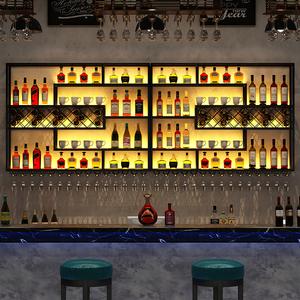
Industrial Bar Furniture Wine Glass Storage Racks Wall-Mounted Display Racks LED Warm Light
- Integrated 12V LED Embedded Track
- Reinforced Q235B Welded Carbon Steel
Direct from Tier-1 Chinese automated roll-forming and metal fabrication lines. Engineered to international FEM 10.2.02, EN 15512, and ANSI MH16.1 structural standards for supermarkets, hypermarkets, and logistics facilities.
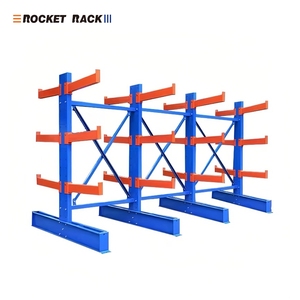
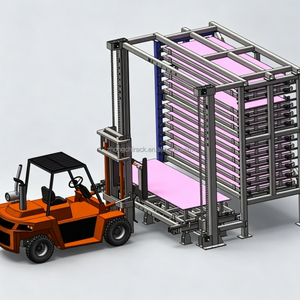
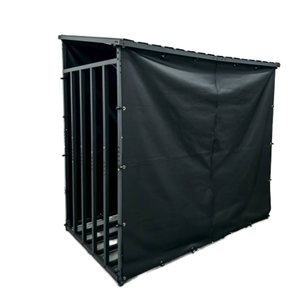
A detailed operational analysis of supply chain integration, raw steel procurement economics, automated cold-roll forming, and total cost of ownership (TCO) benchmarks.
The global retail landscape—encompassing multinational hypermarkets, discounters, convenience stores, and specialized pharmacy chains—relies upon supermarket gondola shelving as the foundational hardware of visual merchandising and floor-space monetization. Over the past two decades, China has evolved from a low-cost contract metal producer into the world’s premier engineering and manufacturing epicenter for modular display shelving systems.
Navigating the Chinese manufacturing ecosystem requires technical discernment. While hundreds of workshops assemble basic angle-iron racks, elite tier-1 Chinese factories operate fully automated roll-forming lines, automated laser-punching systems, and multi-stage pre-treatment powder coating facilities. These advanced plants serve global brands by delivering sub-millimeter upright slot repeatability, guaranteed steel yield strengths (Q235B to Q355B cold-rolled steel), and high-efficiency modular assemblies that dramatically lower in-store installation labor.
China's proximity to premier metallurgical hubs allows direct coil procurement of SPCC (cold-rolled carbon steel sheet) and Q235B structural strip with tightly controlled carbon (≤0.20%) and manganese content. This prevents stress-cracking during 90-degree cold bending of upright columns and ensures predictable deflection curves under continuous retail loads.
International procurement directors evaluating China gondola display shelves factories must move beyond unit price per bay. The holistic evaluation must encompass structural yield strength, deflection ratios under uneven loading, paint film adhesion in high-humidity climates, and shipping volume density (CBM per 40ft HQ container).
Deconstructing the physics of retail display engineering: upright profile moments of inertia, cantilever bracket load distribution, and surface protection chemistry.
The central pillar of any gondola is the upright post (typically 30x60mm, 30x80mm, or 40x80mm with 1.8mm–2.5mm wall thickness). Advanced factories utilize multi-stage progressive cold roll-forming lines that impart work hardening to the steel bends. This increases structural rigidity and resistance to lateral buckling when loaded with high-density goods like canned food, beverages, and laundry detergents.
Shelf brackets bear eccentric bending moments. Premier manufacturers engineer 3-claw or 4-claw cold-stamped brackets using 2.5mm–3.0mm Q235B steel. Under ISO/FEM guidelines, the maximum allowable shelf deflection under uniform distributed load (UDL) is restricted to L/200 (less than 4.5mm on a 900mm shelf span), eliminating unsightly shelf sagging that damages store brand equity.
Corrosion resilience is dictated by automated multi-stage pre-treatment. By transitioning from traditional iron-phosphate to nano-ceramic silane washing, top Chinese factories achieve superior cross-link bonding for thermosetting polyester-epoxy powder. Coatings are cured at 180°C–200°C to achieve 60–90 µm dry film thickness, passing 500-hour ASTM B117 salt spray tests for Middle East, coastal, and high-humidity retail environments.
| System Classification | Typical Post Dimensions | Steel Grade & Gauge | Rated Shelf Capacity (UDL) | Back Panel Configurations | Target Applications |
|---|---|---|---|---|---|
| Light-to-Medium Retail | 30 × 60 × 1.5–1.8 mm | SPCC Cold-Rolled Steel | 50 – 80 kg / Level | Plain Sheet / Pegboard (1.0 mm) | Pharmacies, Convenience, C-Stores |
| Standard Supermarket | 30 × 80 × 2.0 mm | Q235B Structural Strip | 100 – 130 kg / Level | Plain Metal / Punched Pegboard / Slatwall | Supermarkets, Grocery, FMCG |
| Heavy-Duty Hypermarket | 40 × 80 × 2.5 mm | Q235B / Cold-Rolled SPCC | 150 – 220 kg / Level | Reinforced Plain / Heavy Wire Mesh Grid | Hypermarkets, Cash & Carry, Pet Supplies |
| Integrated Rack-Gondola | 50 × 90 × 2.0–3.0 mm | Q355B High-Yield Steel | 500 – 1,200 kg (Upper Pallet) | Wire Mesh / Solid Retaining Cladding | Warehouse Clubs, Hardware, DIY Home Centers |
How smart retail automation, hybrid dark stores, and environmental regulations are reshaping Chinese gondola manufacturing specifications worldwide.
Retailers are abandoning battery-dependent Electronic Shelf Labels (ESL) and standalone LED lighting in favor of gondola posts equipped with integrated 24V low-voltage magnetic busbars. Tier-1 factories now fabricate uprights with hidden electrical raceways, allowing plug-and-play ESL rails, interactive digital toppers, and shelf edge video screens with zero visible wiring.
With the explosion of quick-commerce (Q-commerce) and omnichannel retail, retail fixtures must fulfill dual duties: consumer-facing merchandising below (eye level) and high-density pallet or crate storage above (buffer stock). Modern Chinese manufacturers lead in hybrid designs combining structural warehouse pallet racking frames with retail-grade front aesthetic cladding.
Under European CBAM (Carbon Border Adjustment Mechanism) and global ESG procurement mandates, leading Chinese mills and factories furnish certified recycled scrap content (EAF electric arc furnace steel) along with fully reclaimable TGIC-free powder formulations, offering audited Scope 1 and Scope 2 carbon footprint declarations per bay.
To combat sterile retail aesthetics, modern gondolas blend cold-rolled steel load frames with certified sustainable oak/walnut timber veneers, wire mesh planters, and acoustic felt infills. Chinese OEM factories maintain dedicated CNC wood-and-wire departments to provide integrated multi-material turnkey retail displays from a single shipping source.
Standardize your supplier inspection and mitigate supply chain risk by applying this five-stage technical verification methodology prior to purchase order release.
Verify raw steel Mill Test Certificates (MTC) for chemical yield strength (Q235B ≥235 MPa, elongation ≥25%) to ensure steel will not deform under dynamic live loads.
Audit progressive stamping dies. Punch pitch (e.g., 50mm or 25mm) cumulative tolerance must remain within ±0.5mm across a 3,000mm upright length to prevent shelf tilt.
Ensure the factory uses at least a 7-stage automated degreasing, rinse, and silane or zinc phosphate immersion line rather than manual wipedown before powder coating.
Demand static destructive test reports where bays are loaded to 1.5x to 2.0x safety factor multipliers to record ultimate yield failure points and base-weld fatigue limits.
Inspect palletizing protocol: corner edge protectors, high-density polyethylene wrapping, and customized steel crating to prevent scratch damage during ocean transit.
Combining precision Chinese manufacturing scale with rigorous European FEM / EN design standards and dedicated project management across the Middle East, GCC, Africa, and global markets.
Upright profiles, foot base weldments, and cantilever arm hook geometries are engineered to actual unit loads, seismic conditions, and floor slab specifications—accompanied by documented load charts on every bay.
We model aisle widths, sightlines, customer circulation paths, and local fire sprinkler flue space requirements to maximize visual merchandise exposure without compromising egress safety.
Engineered to withstand the harsh saline, humid, and high-temperature ambient conditions common in coastal and GCC regions. Thermosetting powder formulations prevent premature peeling, chalking, and orange peel defects.
Certified installation crews ensure that every run is leveled, shimmed, and safely anchored. We offer long-term re-configuration, spare components, damage inspection, and complete facility relocation services.
Practical answers addressing technical engineering, minimum order quantities (MOQ), custom tooling, shipping container utilization, and quality certifications for international retail buyers.
Whether you require complete retail CAD store layouts, custom OEM roll-formed profiles, or high-volume sea container tenders, our engineering department delivers load-calculated solutions built for global retail performance.