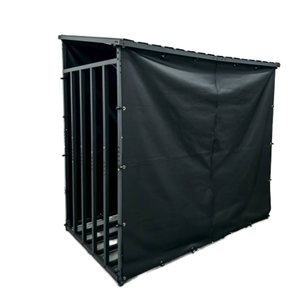
Production Portfolio
Engineered Heavy-Duty Stacking & Warehouse Racking Solutions
Explore our precision-fabricated industrial stacking racks, cantilever arrays, and heavy-duty modular units designed for maximum volumetric cube efficiency and structural durability.
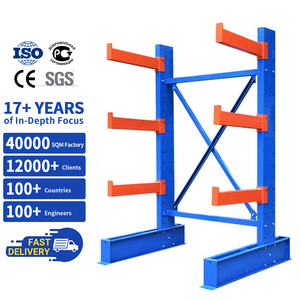
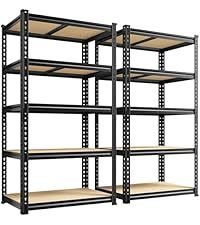
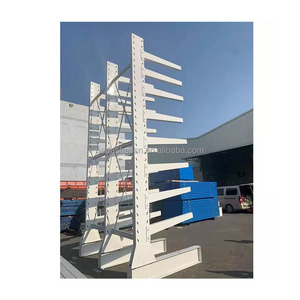
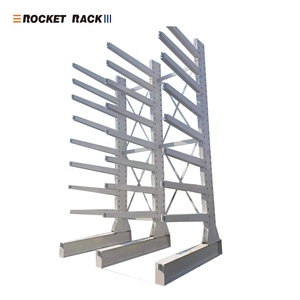
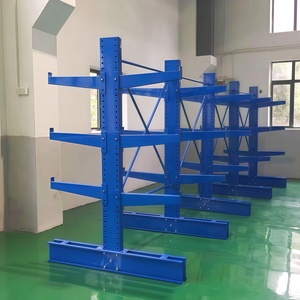
Technical Whitepaper Section 1
Structural Metallurgy and Dynamic Stacking Mechanics in Modern Warehousing
In modern supply chain architecture, modern industrial warehouses, cold-storage distribution hubs, and third-party logistics (3PL) nodes increasingly face severe volumetric cubic restrictions and dynamic seasonal SKU fluctuations. Unlike conventional static teardrop pallet racks permanently anchored into slab concrete, stacking pallet racks (frequently designated as post racks, nestable tier racks, or modular stack frames) deliver instantaneous volumetric adaptability. They effectively bridge the flexibility gap between floor bulk stacking and rigid selective pallet racking frameworks.
From a structural mechanics perspective governed by ANSI/RMI MH16.1 (Specification for the Design, Testing and Utilization of Industrial Steel Storage Racks) and European standard EN 15512 / FEM 10.2.02, stack racks rely on cold-formed hollow structural sections (HSS) or heavy-gauge structural channel steel (ASTM A36 / European S235JR and S355JR; Chinese standard Q235B and Q355B). The integrity of multiple tiers depends entirely on:
1. Euler Buckling and Effective Length Factor (K-Factor)
The vertical tubular upright posts operate as compressive cantilever members. The alignment tolerances of the socket-and-pin or target cup nesting interface determine the rotational restraint coefficient at the node. A precision-engineered nested cup decreases joint rotational eccentricity, mitigating secondary P-Delta (Δ) bending moments when tiers are loaded up to 4-high or 6-high.
2. Dynamic Load Deflection Ratios
Structural compliance requires allowable beam/deck deflection limits of L/200 or L/250 under uniform maximum rated payload. Over-deflection causes point-loading on lower nested legs, precipitating catastrophic cascading stack buckling under seismic excitation or sudden forklift bumper collision.
Material Selection: Q235B vs. Q355B vs. Structural Tube
Procurement engineers must rigorously audit the raw metallurgy specified by industrial rack manufacturers. Lower-grade scrap-fed re-melted steel exhibits inconsistent yield strengths below 215 MPa and internal micro-fissures along longitudinal weld seams. High-integrity manufacturers utilize certified cold-rolled structural sheet steel with certified mill test reports (MTRs), yielding tensile thresholds of ≥ 355 MPa (51,000 PSI) for heavy industrial applications exceeding 2,500 kg per nest bay.
Industry Benchmarks
Top 10 Stacking Pallet Racks Manufacturers & Global Factories
A critical engineering evaluation of the world's premier stack rack manufacturers, comparing production capacity, steel fabrication precision, structural certifications, and regional deployment networks.
01
ILS Middle East
UAE / GCC & Africa
Engineered regional powerhouse supplying turnkey heavy-duty racking, custom modular stacking systems, and cantilever frames built to FEM/EN 15512 specifications with hot-climate coatings.
Turnkey CAD & Install
02
Stow Group
Belgium / Global
European industrial heavyweight recognized for high-tolerance automated stack racking, cold-formed upright profiles, and extreme-density automated warehouse racking installations.
EN 15512 European Leader
03
SSI SCHAEFER
Germany / Global
Pioneer in modular logistics containers, post stacking frames, and automated intralogistics ecosystems featuring robotic handling integration and high-tolerance target cup welding.
Automated Intralogistics
04
Mecalux
Spain / Americas
Global supplier of high-durability pallet racks, drive-in systems, and heavy-capacity stackable steel stillages with integrated warehouse management software (Easy WMS).
ISO 9001 / 14001 Hub
05
Frazier Industrial
United States
North America's prominent structural steel rack manufacturer using hot-rolled structural channel steel (A36), offering supreme torsional rigidity and forklift impact resistance.
Heavy Structural Channel
06
Ridg-U-Rak
United States
Established fabrication leader in R-Mark certified pallet frames, stackable bulk storage racks, and nestable coil/tire storage modules with extreme seismic base design.
R-Mark Certified / RMI
07
AR Racking
Spain / Global
High-tech automated manufacturing facilities utilizing ultra-high-tensile galvanized and powder-coated steel profiles for extreme-durability industrial stack configurations.
Fully Automated Rolling
08
Dexion (Kardex)
Norway / UK
Pioneers of slotted angle and specialized industrial stacking frames, serving European automotive, cold storage, and heavy distribution sectors with rigorous safety margins.
Automotive Logistics
09
Jungheinrich AG
Germany
Integrated material handling and industrial racking specialist, providing seamlessly synchronized stack racks and automated guided vehicle (AGV) high-density storage solutions.
AGV Dynamic Interlock
10
BITO-Lagertechnik
Germany
Precision engineering house specializing in modular stacking container racks, heavy-duty small-parts stack systems, and high-cube dynamic bulk flow steel frames.
Precision Modular Small-Load
Engineering Evaluation
Global Manufacturers Specification & Capability Matrix
Direct comparative benchmarks evaluating steel yield strength, structural certifications, welding compliance, and surface durability across top tier factories.
| Manufacturer | Primary Steel Grade | Weld Certification | Target Interlock Precision | Max Tier Capacity | Surface Treatment | Lead-Time Range |
|---|---|---|---|---|---|---|
| ILS Middle East | Q235B / Q355B / S355JR | AWS D1.1 / ISO 3834 | ± 1.5 mm CNC Pressed | 3,000 kg / bay | Thermal High-Bake Powder Coating | 2–3 Weeks (GCC/MEA) |
| Frazier Industrial | ASTM A36 Structural Channel | AWS Certified | Heavy Pin-and-Socket | 3,500 kg / bay | Industrial Enamel / Hot Galvanized | 6–8 Weeks (Americas) |
| SSI SCHAEFER | S235JR / S355 Cold Formed | EN 1090-2 Execution Cl 2 | Robotic Automated Welded Target | 2,500 kg / bay | Multi-stage Electrophoretic Powder | 8–10 Weeks (Global) |
| Stow Group | High-Tensile Cold-Rolled Steel | EN ISO 15614 | Precision Cone-Loc Pin | 2,800 kg / bay | Eco-Friendly Epoxy Powder Coating | 7–9 Weeks (Europe) |
| Ridg-U-Rak | High-Strength Tube (RMI Rated) | R-Mark / AWS D1.1 | Heavy Flanged Stacking Cup | 3,000 kg / bay | Heavy-Duty Electrostatic Finish | 6–8 Weeks (Americas) |
Enterprise Core Competencies
Engineering Discipline Behind Every Industrial Bay
Catastrophic racking failures occur when suppliers rely on catalog assumptions. Our structural delivery process is mathematically calculated, site-verified, and project-managed from raw billet to commissioned slab.
Calculated, Not Estimated
Every stack configuration undergoes static FEA calculations verified against exact unit load geometries, seismic zone data, and slab point-load tolerances with rated signage stamped on every run.
CAD Layout Planning
Our application engineers optimize aisle clearances, flue spaces, and forklift turning radiuses (counterbalance, reach truck, VNA) to deliver maximum high-density pallet locations safely.
Extreme Climate Coatings
Fabricated specifically for high-humidity, hyper-thermal environments (50°C+ ambient). Our multi-stage degreasing and thermosetting powder coat guarantees zero micro-blistering or corrosion.
Turnkey Relocation & Audit
Certified in-house crews manage initial installation, 12-month documented inspections, damaged upright replacement, and entire facility racking relocations across UAE, GCC, and Africa.
Strategic Market Forecast
Procurement Trends Shaping Stacking Pallet Racks (2025–2030)
Anticipate critical technological shifts in intralogistics, material engineering, and autonomous material handling integration to future-proof warehouse capital expenditures.
Trend 01
AMR & AGV-Interfacing Modular Frames
As facilities transition toward autonomous mobile robots (AMRs) and automated forklifts, manual post placement tolerances are becoming obsolete. The market demands CNC-formed high-taper nesting cones (±1.0mm tolerance) and integrated bottom optical target reflectors, enabling AGV mast sensors to automatically confirm lock-pin engagement without human oversight.
Trend 02
High-Cube Reverse Logistics (Nesting Ratio Optimization)
Surging freight costs have elevated stack rack nesting efficiency into a decisive procurement KPI. Next-generation designs prioritize 4:1 and 6:1 empty return nesting profiles. By collapsing upright posts into the base frame during reverse transit, fleet operators save up to 75% in dead-head line-haul transport expenses compared to non-collapsible welded stillages.
Trend 03
IoT-Coupled Passive Strain & Overload Gauges
Modern ESG and occupational safety directives are driving the adoption of passive RFID-embedded deflection tags on main load beams. These sensors record structural plastic deformation triggered by forklift impact or dynamic payload shifts, instantly flagging compromised bays during routine hand-held RF scanner inventory cycles before buckling occurs.
Quality Assurance Workflow
From Facility Survey to Commissioned Handover
Our engineering protocols guarantee transparent governance, structural compliance, and zero down-time during operational plant fit-outs.
01
Site Survey
Laser measurement of floor slab flatness (FF/FL ratings), overhead clear heights, lighting runs, and fire sprinkler clearance boundaries.
02
Load Analysis
Comprehensive classification of dynamic unit loads, pallet overhang, bottom deck configuration, and forklift mast operational envelope.
03
CAD & Static FEA
Drafting of layout schematics, calculating structural point loads, beam bending moments, and validating FEM 10.2.02 deflection safety margins.
04
Fabrication & QA
CNC cold-roll forming, robotic automated welding with ultrasonic testing, and electrostatic powder coating cured in temperature-controlled ovens.
05
Handover & Signs
Precision plumb erection, laser alignment, certified torque anchoring, and official installation of load rating plaques per OSHA/EN guidelines.
Procurement FAQ
Critical Technical Questions for Procurement Officers
Direct, engineering-backed answers addressing structural safety factors, slab anchoring, fire sprinkler penetration, and dynamic weight capacities.
Q: What is the critical safety factor for stacking pallet racks under dynamic forklift loading?
Under ANSI/RMI MH16.1 and EN 15512, structural rack systems require a minimum safety factor of 1.67:1 to 1.95:1 based on yield strength. In portable stack rack applications where dynamic motion, forklift deceleration, and tier rocking occur, engineering best practice requires designing with an effective static safety multiplier of at least 2.5:1 to 3.0:1 against ultimate yield failure.
Q: How do modular stack racks impact floor slab point-load limits?
Because stack racks concentrate the combined weight of 4 to 6 tiers onto four corner target feet rather than continuous upright baseplates, the punch shear stress on your concrete slab can exceed 5 to 8 MPa. A site engineering review must confirm whether your slab is at least 150mm–200mm thick with adequate rebar mesh to resist localized punching shear.
Q: When should a warehouse select portable stack racks over selective pallet racking?
Stack racks are optimal for seasonal bulk items, high-density bulk storage with identical SKUs (LIFO flow), crushable or unstackable merchandise (such as automotive tires, rolled textiles, and long pipes), and leased warehouses where tenants cannot anchor permanently into the concrete floor slab.
Q: What surface finish is mandatory for cold-storage and freezer operations?
For temperatures down to -30°C, standard enamel paint risks brittleness and flaking. The industry specification is hot-dip galvanization (HDG per ISO 1461) with zinc deposition ≥ 65 microns, or dual-coat zinc-rich epoxy electrostatic powder coating, preventing condensation-driven under-film rust during thermal cycling.
Q: How do stacking racks comply with NFPA 13 in-rack fire sprinkler requirements?
NFPA 13 dictates transverse and longitudinal flue spaces (typically 75mm to 150mm) between stacked bays to allow vertical heat venting to trigger ceiling sprinklers and allow water penetration. Stack racks engineered with welded wire mesh decking maintain open vertical area (≥ 50% open area), frequently bypassing costly in-rack sprinkler retrofits.
Q: How frequently must stacking racks undergo professional engineering inspection?
In adherence to European Standard EN 15635 and local labor safety directives, visual inspections must be conducted weekly by in-house safety teams, complemented by a certified expert structural inspection every 12 months. Any post displaying an out-of-plumb deviation exceeding 3.0mm per 1,000mm length must be immediately decommissioned and quarantined.
Transform Your Warehouse Volumetric Capacity Today
Whether you require heavy-duty post stacking racks, custom cantilever arrays for industrial pipes, or a turn-key high-bay warehouse fit-out across the UAE, GCC, or Africa, our licensed structural engineers deliver complimentary layout planning and load calculations within 24 hours.