Engineered Multi-Tier Racks & Industrial Storage Solutions
Direct from our precision manufacturing facility: heavy-duty structural steel profiles, high-bay automated interfaces, and certified industrial shelving systems engineered to customer CAD specifications.
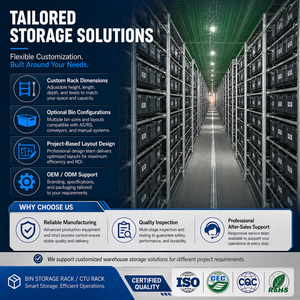
Mini Load ASRS Tote Storage Rack Automated Bin Warehouse Racking System for Small Parts
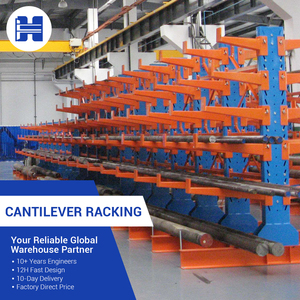
Lumber Storage Cantilever Rack Heavy Duty Steel Timber Wood Racking System Supplier
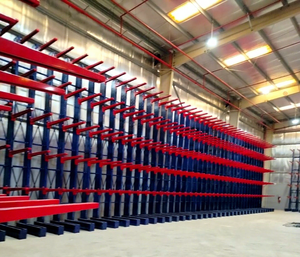
OEM Freight Warehousing Storage Rack Shelving Heavy Duty Cantilever Rack System
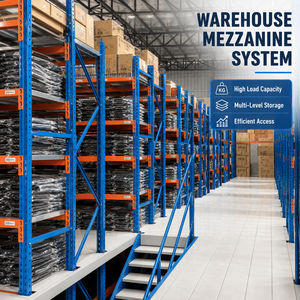
Custom Steel Structure Corrosion-Resistant Hot-Dip Galvanized Heavy Duty Pallet Rack Mezzanine Floor Warehouse Storage Loft
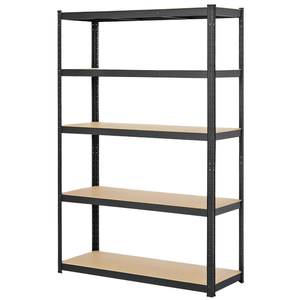
Electronic Commercial 5 Layer Steel Storage Shelving Racks Heavy Duty Warehouse Shelves Boltless Rivet Rack Easy Assemble
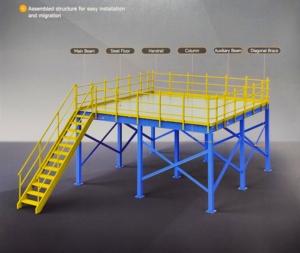
Nova Steel Customized Heavy-Duty Industrial Mezzanine Metal Floor Rack for Warehouse Storage for Manufacturers' Shelves
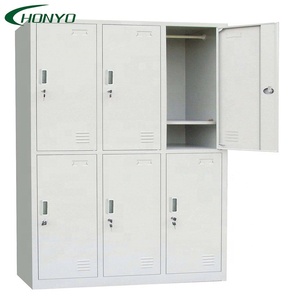
Heavy Duty Stainless Steel Changing Locker with Ventilation Design
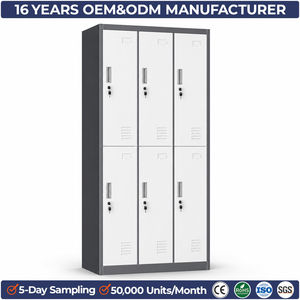
Industrial 6 Unit Steel Storage Locker Heavy Duty Metal Closet with Louvered Vents for Factory Workshop Warehouse Staff Room
Engineering Authority: Structural Principles of Multi-Tier Racking Systems
Modern warehousing economics mandate maximum utilization of volumetric clear height. As global real estate acquisition costs surge, logistics directors, industrial system integrators, and plant engineers are moving away from single-tier floor plans toward high-bay, multi-tier racking systems and rack-supported mezzanines. A multi-tier racking system transforms unused vertical overhead space into multiple functional working, picking, and bulk-storage tiers. However, fabricating and deploying these systems involves complex civil and mechanical engineering challenges, including strict slab punch-through resistance, seismic resistance, sway frame stability, torsional rigidity, and worker life-safety compliance.
As an OEM/ODM direct manufacturing plant, our fabrication framework adheres strictly to international engineering specifications, including FEM 10.2.02 (European Federation of Materials Handling), EN 15512 / EN 15620 for steel static storage systems, RMI (Rack Manufacturers Institute) ANSI MH16.1 in North America, and AS 4084 for Australian logistics infrastructure. Every multi-tier configuration is subjected to Finite Element Analysis (FEA) to verify stress tensors under full dead load (DL), live load (LL), impact load (IL), and seismic kinetic energy dissipation parameters.
Material Metallurgy & Cold-Formed Structural Profiles
Structural reliability starts with raw alloy selection. We build our multi-tier upright columns, primary load bearers, and mezzanine joists using certified structural carbon steel plates: Q235B for moderate-load applications and Q355B (equivalent to ASTM A572 Grade 50 or European S355JR) for heavy industrial applications. Cold roll-forming lines bend uprights with up to 13 separate cold-formed stiffening facets. This multi-rib profile drastically boosts the radius of gyration, increasing resistance to torsional and flexural buckling without adding unnecessary dead weight.
- Continuous Roll-Formed Uprights: Fabricated in widths from 80mm to 120mm with steel gauges ranging from 1.8mm up to 2.5mm and 3.0mm. Profiles feature 50mm, 75mm, or 76.2mm teardrop pitch punchings to support flexible bracket reconfiguration.
- Box & Step Beams: Seam-welded dual C-channel interlocking step beams deliver high section modulus against downward gravitational deflection. Connector brackets feature 3 to 5 welded heavy-duty hook lugs paired with spring safety locks to prevent accidental forklift dislodgement.
- Mezzanine Decking Interfaces: Choices include hot-dip galvanized open-grid steel grating (providing greater than 50% water dispersion for NFPA 13 in-rack fire sprinkler penetration), perforated steel planks with anti-slip embossment, or heavy-duty 38mm high-density tongue-and-groove resin-composite boards mounted over galvanized B-deck corrugated metal subfloors.
| System Architecture | Structural Load Rating | Optimal Handling Unit | Aisle Clearances | Space Efficiency Factor | Steel Grade Baseline |
|---|---|---|---|---|---|
| Multi-Tier Pallet Racking (Catwalk) | 800 – 4,500 kg / Bay | Palletised SKU + Manual Carton Pick | 1,800 – 3,200 mm | +180% Storage Volume | Q355B High-Yield |
| Multi-Tier Longspan Shelving | 200 – 600 kg / Shelf Tier | Loose Parts, Totes, Apparel Bins | 900 – 1,200 mm | +240% Storage Volume | Q235B Cold-Rolled |
| Structural I-Beam Mezzanine | 350 – 1,500 kg / m² UDL | Machinery, Offices, Forklift Transit | Open Span (up to 8m grids) | +100% Floor Area Multiplier | Hot-Rolled Q355B / S355 |
| Automated Bin / Mini-Load ASRS | 50 – 250 kg / Bin Location | Standardized Plastic Bins / Trays | Automated Crane Envelope | +320% Storage Volume | Precision Cold-Drawn |
Structural Deflection, Point Loading & Slab Mechanics
A critical engineering failure mode in under-designed third-party multi-tier installations is localized slab shear punching and secondary walkway deflection. Our engineering teams perform comprehensive point load analysis. Walkway stringers and cross-beams are designed to maintain deflection ratios no greater than L/200 to L/300 under rated uniformly distributed load (UDL) and concentrated dynamic foot traffic or hand truck transit, ensuring that walking surfaces remain completely rigid without perceptible dynamic bounce.
Baseplates are engineered from hot-rolled carbon steel plates (10mm to 20mm thickness), precision CNC laser-cut with dual or quadruple anchor slots. Anchor calculation uses concrete tensile breakout models specified in ACI 318 Appendix D or EN 1992-4. Seismic shims and non-shrink high-strength structural grout pads are specified to level variations in civil concrete slabs, ensuring upright columns are plumb within a strict verticality tolerance of 1:1000.
Direct Manufacturing Capabilities & OEM/ODM Engineering
From raw coil slitting to precision roll-forming, robotic welding, and automated thermoset powder coating, our facility handles high-volume custom warehouse racking orders reliably and efficiently.
Toll & OEM Roll-Forming
Over 20 continuous automated roll-forming lines capable of handling steel sheet thicknesses up to 3.5mm. We support custom beam profiles, bespoke connector lug geometries, and custom upright hole-punching patterns tailored to OEM private labels.
Robotic Laser Cutting
Equipped with 12kW and 20kW fiber laser cutters and high-precision robotic welding arms. We ensure smooth weld seams on beam end connectors, bracing gussets, and floor brackets, eliminating micro-fissures and stress concentration points.
Automated Powder Coating
A multi-stage chemical pretreatment line featuring iron-phosphate degreasing and silane conversion rinses, followed by automated electrostatic spray application of tough epoxy-polyester powder, cured at 200°C for exceptional impact and corrosion resistance.
Certified Structural QA/QC
Every production batch undergoes destructive tensile testing, weld penetration ultrasonic examination, zinc coating thickness testing (ISO 2178), and dimensional tolerance verification. Comprehensive mill test certificates (EN 10204 3.1) are supplied standard.
From Initial Structural Survey to Certified Handover
A clear, methodical engineering process designed to keep international procurement, logistics operators, and project teams aligned at every milestone.
Site Survey & CAD
Laser measurement of floor slab flatness (FF/FL), column grids, clear ceiling height, overhead crane paths, and building code egress routes.
FEA Load Modeling
Static and dynamic load simulations calculating maximum bay weights, deck deflection curves, seismic ground motions, and concrete anchor shear forces.
Custom Fabrication
Precision coil slitting, cold roll-forming, automated CNC punching, robotized welding, and powder coating or hot-dip galvanizing with rigorous quality checkpoints.
Global Freight Logistics
Bundled packaging with custom steel crates, edge protectors, and moisture-barrier wrap to prevent transit scuffing during ocean shipping and customs clearance.
Installation & Handover
On-site installation supervision by experienced engineers, torque audits, plumbing verification, and installation of certified load plaques detailing system capacities.
Multi-Tier Racking: Procurement Trends & Industry Evolution (2025–2030)
The industrial warehousing landscape is evolving rapidly under the pressures of rapid e-commerce fulfillment, omnichannel distribution, ESG compliance, and robotics integration.
1. Integration with Autonomous Mobile Robots (AMRs) & Pick Modules
Traditional multi-tier racking relied heavily on manual stair climbing and gravity tote chutes. Contemporary warehouse design is seeing a major shift toward AMR-compatible mezzanine floors. This requires mezzanine decking with tighter flatness tolerances, reduced floor joint gaps (under 2mm), and higher point-load capacities to handle the concentrated wheel loads of autonomous sorting robots and AGVs operating directly on elevated tiers.
2. IoT Structural Health Monitoring & Smart Impact Sensors
Forklift impacts represent the single greatest operational risk to multi-tier upright columns. Forward-thinking enterprise supply chains now integrate piezoelectric shock sensors and strain gauge arrays directly into primary ground-tier uprights. These IoT sensors communicate with warehouse management software (WMS) in real-time, instantly flagging out-of-tolerance impact loads, monitoring cumulative steel fatigue, and streamlining preventative structural audits.
3. Sustainable Steel Procurement & Low-VOC Powder Chemistries
Corporate sustainability mandates are transforming procurement requirements for large industrial projects. Procurement managers are increasingly specifying racking built from steel produced in Electric Arc Furnaces (EAF) utilizing high recycled scrap content, cutting the embodied carbon footprint by up to 60% compared to traditional blast furnace routes. Additionally, heavy metal-free powder coatings and low-temperature curing thermoset finishes are becoming the standard across major projects.
4. Modular Reconfigurability and High-Density Micro-Fulfillment
Rapid changes in product mix have made rigid, single-purpose storage systems obsolete. Today's supply chains favor modular, bolt-together multi-tier systems that can be dismantled, expanded, reconfigured, or relocated to new distribution centers as leases evolve. Tear-down time, salvage value, and reusable components are now weighed heavily alongside initial installation costs.
Frequently Asked Questions for B2B Racking Buyers
Clear technical insights from our structural engineering and production teams to help you plan your multi-tier warehouse installation with confidence.
Plan Your Multi-Tier Storage Project With Certified Engineers
Whether you need an OEM manufacturing partnership, custom toll roll-forming profiles, or a full turnkey multi-tier pick module engineered to your facility floor plan, our engineering desk is ready to support your technical and procurement requirements.