OEM Heavy Retail
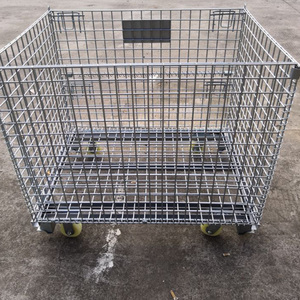
Direct from certified manufacturing facilities: custom OEM/ODM retail backroom racking, vertical carousel picking fixtures, high-density cantilever units, and multi-tier structural mezzanine lofts optimized for international containerized export.
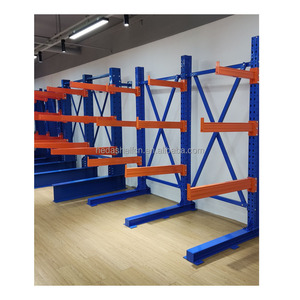
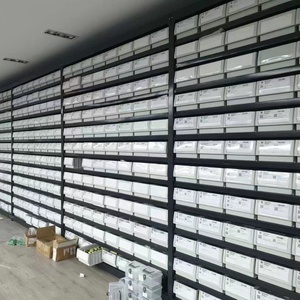
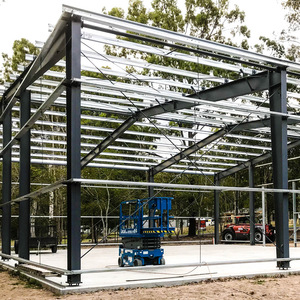
Why traditional lightweight commercial gondolas are being systematically phased out by enterprise hypermarkets, wholesale club warehouses, and multi-channel grocery distribution chains.
In modern high-velocity retail logistics, the division between front-of-house consumer display and backroom replenishment has largely dissolved. Global hypermarket operators, wholesale cash-and-carry clubs, and urban micro-fulfillment operations demand integrated racking frameworks capable of serving two disparate functions simultaneously: presenting merchandised goods cleanly at customer eye level while safely carrying multi-ton reserve palletized inventory directly overhead on upper tiers. Sourcing storage infrastructure from a custom OEM supermarket storage racks exporter requires evaluating not merely aesthetic superficialities, but strict mechanical load ratings, cold-formed steel tensile thresholds, and seismic deflection behavior under maximum dynamic loading.
Under international engineering codes such as EN 15512 and the FEM 10.2.02 guidelines, retail storage racks located in consumer-accessible zones carry significantly higher legal safety factors than closed-access industrial warehouses. The presence of consumer traffic demands zero tolerance for catastrophic structural failure, frame twisting, or dynamic beam dislodgement. Uprights must be fabricated from cold-rolled steel coils with guaranteed yield strengths (minimum 235 MPa to 355 MPa), coupled with CNC continuous multi-stage roll-forming profiles featuring 8 to 12 cold-bent work-hardened corners. These geometric bends drastically amplify the section modulus and radius of gyration, ensuring resistance against torsional buckling when uneven pallet loads are staged above retail shoppers.
Technical Deflection Benchmark: While industrial warehouses permit beam deflection ratios up to L/200 under maximum static load, commercial retail cash-and-carry frameworks engineered by tier-one OEM exporters enforce strict limits of L/250 or L/300. This eliminates visible structural sag, reassures shopping patrons, prevents secondary packaging rupture on FMCG cartons, and ensures that beam safety connector locks remain securely seated under continuous forklift docking vibrations.
Furthermore, corrosion mitigation represents a paramount consideration for overseas procurement teams across the Middle East, North Africa, Latin America, and Southeast Asia. Ambient conditions in regional logistics hubs frequently feature elevated coastal relative humidity paired with localized temperature spikes exceeding 45°C. Standard decorative wet paints degrade rapidly under these conditions, causing subsurface iron oxide blooms that undermine frame weldments. Certified OEM exporters employ multi-stage pre-treatment protocols consisting of alkaline degreasing, hot water rinsing, micro-crystalline zinc phosphating, and electrostatic deposition of pure thermoset polyester-epoxy powder coatings cured in automated ovens at 200°C. This guarantees a continuous, uniform dry film thickness (DFT) of 70 to 90 microns, verified by 500-hour neutral salt-spray exposure testing per ASTM B117.
| Storage System Classification | Material Specification | Typical Payload / Level | Safety Code Benchmark | Best Applied Facility Architecture |
|---|---|---|---|---|
| Light-Duty Retail Gondola | Cold-Rolled SPCC Sheet (0.8 - 1.2 mm) | 80 kg – 150 kg (Uniformly Distributed) | Commercial Visual Display Standard | Boutique groceries, convenience stores, impulse display aisles |
| Integrated Cash & Carry Storage Rack | Q235B Cold-Formed Steel (1.8 - 2.5 mm) | 1,200 kg – 3,000 kg (Pallet Reserve) | FEM 10.2.02 / EN 15512 (Retail Zone) | Wholesale clubs, hypermarket bottom-display top-storage bays |
| Heavy-Duty Backroom Selective Racking | High-Tensile Q355B Steel (2.0 - 3.2 mm) | 2,000 kg – 4,500 kg (Full Pallets) | EN 15512 / SEMA / OSHA Approved | Primary backroom distribution hubs, high-bay reserves |
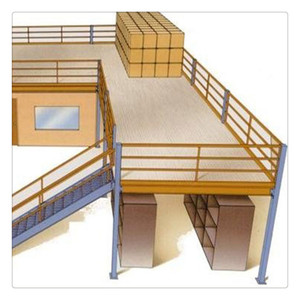
| Rack-Supported Mezzanine Lofts | Structural Steel Hollow Sections + Q235B | 350 kg – 1,000 kg / m² (Floor Decking) | AISC 360 / Eurocode 3 Structural Steel | Urban micro-fulfillment, retail dark-stores, multi-tier order picking |
| Automated Mini-Load ASRS Racking | Precision Laser-Punched Tool Steel | 30 kg – 70 kg / Bin (High-Speed Crane) | FEM 9.831 / DIN 15185 Millimeter Precision | Automated dark grocery consolidation, pharmaceutical sortation |
From mill-certified steel coil receiving to precision robotic weld cells and export-safe container pack-outs, our structural production processes remove operational risk from global retail rollouts.
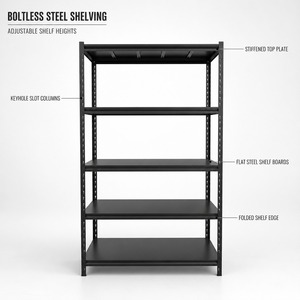
Manufactured using CNC-controlled 18-station roll-forming lines. Continuous 50 mm or 75 mm pitch teardrop/diamond punchings enable tool-free modular shelf height adjustments while maintaining high cross-sectional stability.
Beams are formed by twin cold-rolled C-channels dynamically interlocked and seam-welded via automated multi-torch robotic welders. 3-hook and 4-hook stamped connectors ensure rigid end-fixity to suppress frame sway.
Exporting structural racking requires rigorous container cubing analysis to protect pre-finished coatings while reducing freight cost per cubic meter. Component packages are strapped, framed, and crated for sea transit.
How omni-channel retail fulfillment, micro-warehousing, and supply-chain ESG directives are transforming the technical specifications issued by retail procurement directors worldwide.
Retail chains are dedicating up to 40% of standard supermarket footprints to automated or semi-automated backroom picking hubs. Procurement demands high-density, multi-tier racking compatible with AMR (Autonomous Mobile Robots) and guided picking carts.
Next-generation racking specifications increasingly incorporate IoT impact-detection sensors attached to critical aisle uprights. Procurement teams prioritize factory-drilled channel designs prepared for immediate telemetry and dynamic load monitoring.
European and North American retail conglomerates mandate verified Environmental Product Declarations (EPDs). OEM exporters are adopting scrap-based electric arc furnace (EAF) steel and solvent-free, low-temperature curing powder systems.
Fluctuating SKU dimensions require retail racks that transition seamlessly from standard heavy-duty pallet shelves to retail shelving with hang-bars and wire dividers in under 15 minutes per bay, without cutting or hot works.
Proven operational pedigree spanning load-engineered system layouts, localized Middle East and African regional logistics, and certified installation engineering.
Every proposal is grounded in a site-specific survey and rigorous CAD modeling. We calculate structural capacity around actual forklift turning radiuses, unit load dimensions, floor slab depth, and seismic zone requirements—never relying on catalog approximations.
Our uprights, beams, and bracing geometries are designed and verified against European Federation of Materials Handling (FEM) 10.2.02 and EN 15512 specifications. Finished installations receive clear, certified load-capacity plaques on every run.
Tailored specifically for GCC, African, and tropical warehouse atmospheres. Advanced thermoset polyester powder coatings provide exceptional resistance against chalking, UV degradation, and chemical cleaning agents used in food retail environments.
Our commitment extends beyond ocean container delivery. In-house certified installation teams provide on-site plumb, level, and anchor services, annual safety audits, component replacement, and turnkey warehouse relocation support.
Direct answers to the structural, engineering, and logistic questions most often posed by overseas project engineers and corporate procurement teams.
To deliver an accurate CAD layout and engineering bill of materials (BOM), our design office requires: (1) Architectural floor layout drawings detailing column grids, fire exit paths, and docking bays; (2) Building clear height measured beneath sprinkler pipes, lighting fixtures, and HVAC ducting; (3) Pallet parameters, including width, depth, overall height (including pallet structure), and maximum gross payload; (4) Material handling equipment (MHE) specifications, specifically forklift/reach-truck minimum turning aisle width (AST) and mast lift reach; (5) Floor concrete slab depth and compressive strength ratings (e.g., 25–30 MPa).
Standard logistics racking is engineered for restricted-access environments operating under basic industrial warehouse regulations. In contrast, cash-and-carry retail storage racking features direct public consumer interaction at the floor level. This necessitates: (1) Higher structural safety factors under FEM 10.2.02 and EN 15512; (2) Deflection limits tightened from L/200 down to L/250 or L/300 to prevent visual beam sagging; (3) Heavy-duty impact guard column protectors installed at every aisle end and upright base; (4) Integral wire mesh decking or steel shelf panel inserts to eliminate product fall-through risks into consumer walkways.
Our OEM factories utilize certified prime hot-rolled and cold-rolled steel coils matching Q235B (yield strength ≥ 235 MPa) for standard shelves, beams, and bracing, and Q355B (yield strength ≥ 355 MPa, equivalent to European S355JR) for heavy-load upright columns and structural mezzanine main support beams. Mill test certificates (MTC) documenting chemical composition and tensile elongation tests per EN 10204 3.1 are provided with every export container dispatch.
Uprights are shipped fully knocked down (bolted assembly) or pre-assembled based on buyer preference and container optimization calculations. Beams are bundled face-to-face with protective corrugated card partitions and strapping bands to prevent friction abrasion during sea transit. Small components, baseplates, shims, and safety locking pins are packed in reinforced wooden crates or heavy-duty five-ply corrugated cartons strapped onto fumigated export pallets. Desiccant packs are inserted to combat container sweat during trans-ocean shipping across varying climate zones.
Yes. Our full-lifecycle capabilities include comprehensive warehouse racking relocation services. Our certified engineers inspect existing bays, tag structural members, safely dismantle systems, transport components to new facilities, re-engineer layouts for updated ceiling and column realities, replace impact-damaged uprights or bent beams, re-anchor systems into the new slab, and issue updated, certified load notices adhering to local health and safety mandates.
Standard fabrication lead time for a customized 40ft high-cube (HQ) container order ranges from 18 to 25 working days following final approval of CAD shop drawings and color selection. Custom OEM branding, unique RAL color matches, specialized laser-punched company logos on upright protectors, or high-volume project rollouts involving 10+ containers follow phased manufacturing and staggered logistics schedules developed in close coordination with the client's procurement department.
Need custom CAD capacity planning, FEM load calculations, or a factory-direct OEM manufacturing proposal for your supermarket chain or logistics warehouse? Contact our international export engineering desk today.