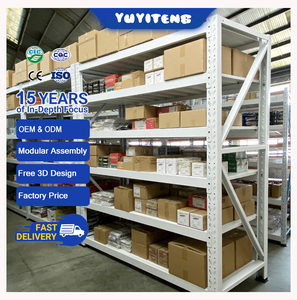
Medium Duty | Galvanized
Direct factory production lines deliver modular boltless storage architecture calibrated for specific uniform distributed load (UDL) capacities ranging from 150 kg to over 800 kg per level, complete with hot-dip galvanized or corrosion-resistant powder-coated surface treatments.
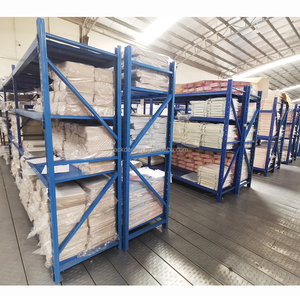
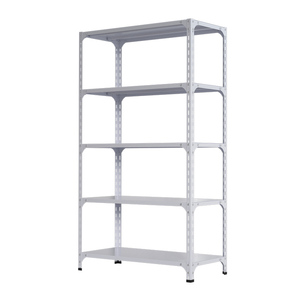
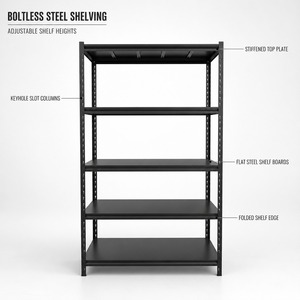
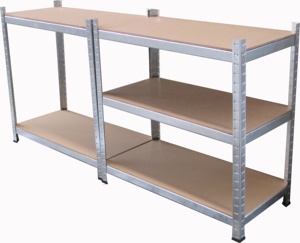
Rivet shelving systems (often termed boltless or keyhole racking) serve as the backbone of high-velocity carton picking, manual assembly lines, and intermediate bulk storage. An in-depth evaluation of cold-formed structural members, load dissipation paths, and metallurgy reveals why precision OEM manufacturing is critical for structural safety and logistics ergonomics.
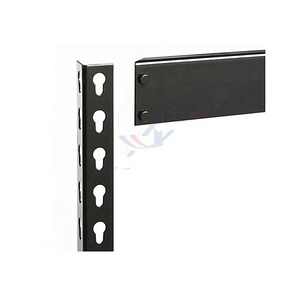
Unlike standard nut-and-bolt angle shelving that develops loose fasteners under cyclical floor vibrations, our OEM rivet systems leverage CNC-stamped teardrop or double-keyhole slots. Single-rivet beams deliver swift vertical adjustment, whereas double-rivet horizontal beams secure rigid moment-resistant connections without diagonal cross-bracing, enabling 360-degree clear shelf accessibility.
Fabricated exclusively from high-yield cold-rolled Q235B structural carbon steel (equivalent to European EN S235JR and American ASTM A36), our upright posts undergo roll-forming through 14 progressive stations. This rolling sequence minimizes internal residual stress while inducing work-hardening along the bend radii, significantly enhancing torsional buckling resistance under eccentric point loads.
Corrosion dynamics vary widely across international supply depots—from the humid maritime ports of West Africa to the arid, high-salinity desert distribution parks of the GCC. Our factories support automated 5-stage iron phosphating or zirconium nano-pretreatment before applying an 80–110 µm electrostatic thermoset epoxy-polyester coating, alongside continuous hot-dip pre-galvanization capable of passing 500-hour ASTM B117 salt spray trials.
Data derived from finite element analysis (FEA) and destructive load testing adhering strictly to FEM 10.2.02 and ANSI/RMI MH16.1 protocols.
| System Classification | Standard Post Profile (mm) | Upright Gauge (Thickness) | Beam Section Geometry | Maximum Shelf UDL | Recommended Decking Type |
|---|---|---|---|---|---|
| Light-Duty Commercial Rivet | 38 x 38 Angle Profile | 1.0 mm – 1.2 mm | Single Rivet L-Profile (32mm) | 150 – 200 kg / level | 9mm MDF / E1 Melamine / Poly Board |
| Medium-Duty Warehouse Boltless | 50 x 50 C-Channel / Angle | 1.5 mm – 1.8 mm | Double Rivet Step Beam (55mm) | 300 – 500 kg / level | 12mm High-Density Particle Board / Ribbed Steel |
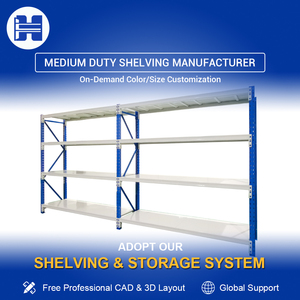
| Widespan Longspan Industrial | 55 x 47 Omega (Ω) Profile | 1.8 mm – 2.0 mm | Box Beam / P-Beam with Tie Bars | 600 – 900 kg / level | Flush Galvanized Steel Panels / 50x50 Wire Mesh Deck |
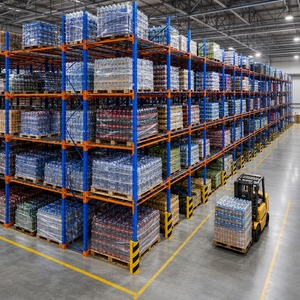
| Pallet / Heavy Flow Integration | 80 x 60 to 100 x 70 Upright | 2.0 mm – 2.5 mm | Twin C-Welded Box Beam | 1,000 – 3,000 kg / level | Heavy-Duty Roller Tracks / Drop-in Drop Panels |
Strategic enterprise buyers are shifting from ad-hoc commodity acquisitions to load-engineered contract manufacturing. Discover the macro and micro procurement dynamics driving supply chain specifications in 2025 and beyond.
Omnichannel fulfillment centers experience dynamic SKU size shifts. Modern procurement contracts require rivet racking architectures that support tool-free reconfiguration in 38.1 mm increments, eliminating hot-work permits, welding, or specialized contractors during facility retrofits.
With ocean freight volatility remaining a key variable in container landing costs, forward-thinking B2B procurement heads mandate knock-down (KD) palletization designs. Custom profile nestability achieves up to 40% density gains per 40ft HQ container, slashing shipping overheads per linear meter of storage.
Strict insurance standards (such as FM Global and NFPA 13 regulations) are increasingly penalizing solid timber shelving in multi-tier installations. Procurement orders are aggressively pivoting toward flush drop-in galvanized wire decking, ensuring uninterrupted sprinkler water penetration and ambient light diffusion.
In regions such as the United Arab Emirates, Saudi Arabia, and Coastal Africa, ambient warehouse temperatures can surpass 48°C with high relative humidity. Procurement teams now specify specialized polyester exterior-grade powders with UV inhibitors and thermo-curing profiles engineered to resist chalking, blistering, and rust bleed.
Corporate ESG commitments require quantifiable steel origin tracking. Tier-1 enterprise tenders necessitate mill test certificates (MTC) proving scrap-blended electric arc furnace (EAF) production alongside non-toxic dry-powder finishing free of VOCs, heavy metals, and lead compounds.
Distributors across North America, the Middle East, and Europe are partnering directly with source factories for comprehensive private-label programs—spanning custom-branded carton printing, bilingual assembly instructions, color-coded upright stamping, and pre-packaged hardware blister packs.
The industrial storage industry is undergoing deep technological transformation. Here is how advanced manufacturing, finite element modeling, and robotics-ready interfaces are reshaping boltless rivet shelving performance.
Traditional shelving relied heavily on thicker low-carbon sheets to satisfy static deflection criteria. Future manufacturing leverages niobium- and vanadium-microalloyed steels that elevate yield strength above 355 MPa. This structural evolution permits a 15–20% reduction in profile deadweight while maintaining or exceeding rated bay loading limits, reducing raw material consumption and shipping emissions.
The rise of warehouse robotics is transforming manual rivet shelving into semi-automated pick cells. Racks are now precision-stamped with indexing registration holes to anchor optical fiducials, LiDAR targets, pick-to-light LED channels, and bottom-clearance outriggers specifically sized for Autonomous Mobile Robots (AMR) carrying sub-tier tote totes.
Instead of investing millions in building expansions, facilities are turning to multi-tier catwalk rivet shelving systems. Heavy-duty slotted angle and rivet uprights double as vertical structural columns supporting upper steel grid mezzanines, staircase assemblies, and overhead chute gravity conveyors, tripling warehouse usable volume on the exact same concrete footprint.
Drawing from decades of storage system design, supply, and installation across the Middle East, Africa, and global territories, our engineering discipline guarantees unmatched durability and safety assurance.
Every industrial project begins with comprehensive structural calculations matching your exact pallet dimensions, forklift turn radiuses, clear heights, and floor slab load thresholds.
Our boltless and rivet systems are designed according to recognized European FEM (Fédération Européenne de la Manutention) and EN 15512 structural calculation frameworks.
Continuous electrostatic powder coating lines apply thermosetting epoxy-polyester coatings engineered specifically to withstand punishing hot-climate and high-salinity industrial environments.
Comprehensive life-cycle support including laser-guided plumb and level installation, certified load warning signage, annual safety audits, component replacement, and facility relocation.
Technical, commercial, and engineering questions answered directly by our senior structural storage engineers.
Speak directly with our technical engineering team for layout optimization, custom OEM manufacturing inquiries, or international project consultations. We supply high-performance storage solutions tailored to your operational KPIs.