Featured Racking Systems & Heavy-Duty Structural Equipment
As a tier-one OEM manufacturing facility, we engineer and mass-produce industrial storage systems, structural mezzanines, and safety accessories designed to integrate seamlessly with standard box beams and structural channel profiles.
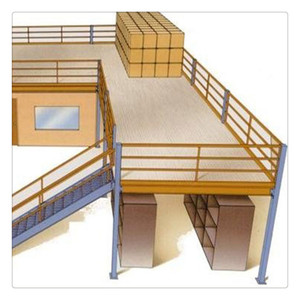
ODM / OEM Steel Structure Attic Style Loft Mezzanine Floor System
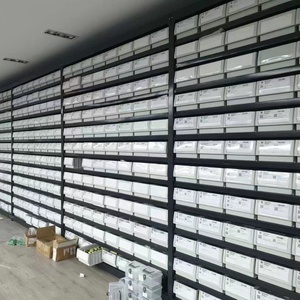
Industrial Vertical Carousel Small Parts Storage Organizer Shelf Bins
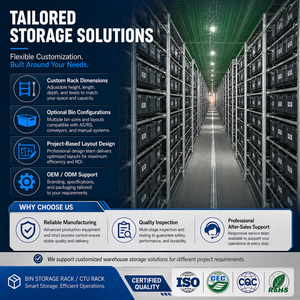
Mini Load ASRS Tote Storage Rack Automated Bin Warehouse System
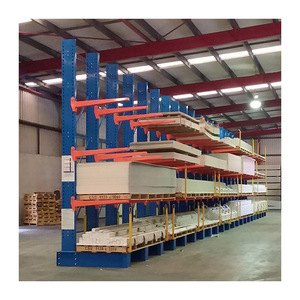
Adjustable Corrosion Protection Steel Pipe Storage Cantilever Rack
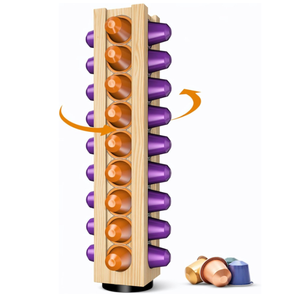
High Quality Rotating Vertical Carousel Pod Holder Organizer Rack
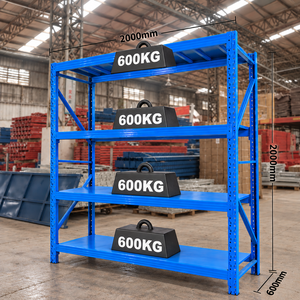
OEM ODM Adjustable Multi Tier Longspan Warehouse Storage Metal Rack
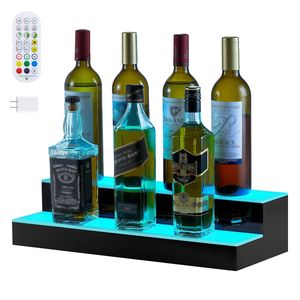
2-Tier LED Lighted Commercial & Bar Display Illuminated Rack
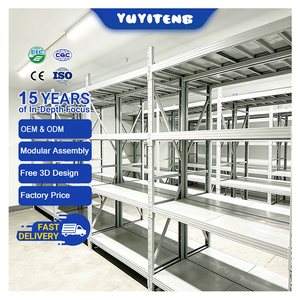
Commercial Movable Storage Shelving Units High Density Mobile Racks
Pallet Support Bar Mechanics & Load Redistribution Dynamics
Pallet support bars (also known in industrial logistics as crossbars, safety cross-ties, or flute bars) are structural load-distributing elements placed perpendicular to step beams or structural box beams. In standard warehouse configurations, pallets that are weak, undersized, damaged, or manufactured from flexible plastics create dangerous point loads. Without support bars, these non-standard loads cause uneven outward thrust or localized deflection, posing severe structural collapse risks.
Our custom OEM factory lines manufacture support bars engineered from hot-rolled Q235B and high-yield Q355B structural steel, conforming strictly to ANSI MH26.2, RMI Specification MH16.1, and EN 15512:2020. Depending on your racking profile, we supply drop-in flanged configurations that interlock with standard step beams without fasteners, as well as bolted top-hat profiles with pre-punched Tek-screw slots that lock the beams together under high lateral seismic motion.
By shifting concentrated loads from the center of timber runners to the longitudinal neutral axis of load beams, custom support bars reduce effective beam deflection from an unrated failure state down to certified tolerances ($L/200$ to $L/300$).
| Engineering Metric | Standard Duty (Q235B) | Heavy Duty (Q355B / ASTM A36) |
|---|---|---|
| Yield Strength ($f_y$) | $\ge 235\text{ MPa}$ | $\ge 355\text{ MPa}$ |
| Material Thickness | 1.5 mm – 2.0 mm (14–16 Ga) | 2.5 mm – 4.0 mm (8–12 Ga) |
| Standard Beam Depths | 800 mm / 1000 mm / 1050 mm | 1100 mm / 1200 mm / Custom |
| UDL Load Capacity (Pair) | 1,000 kg – 1,500 kg | 2,000 kg – 3,500 kg+ |
| Protective Coating | Electrostatic Epoxy ($70\text{--}90\,\mu\text{m}$) | Hot-Dip Galvanized ($\ge 65\,\mu\text{m}$) |
| Beam Fitment Styles | Drop-in Flanged (Step Beam) | Wrap-Around / Structural C-Lip |
Future Procurement Trends in Industrial Pallet Support Manufacturing
Procurement leaders across the Middle East, GCC, Africa, and North America are recalibrating their warehouse supply chains. Below are the five pivotal procurement trends driving custom OEM pallet support bar specifications through 2030.
1. High-Strength Micro-Alloy Steel Usage
To optimize logistics freight costs and warehouse dead-load, global procurement contracts are shifting from bulky 3.5mm commercial cold-rolled steel to lightweight High-Strength Low-Alloy (HSLA) formulations. These advanced profiles provide a 35% reduction in dead-weight while preserving ultimate tensile yield strength, drastically lowering ocean container shipping rates for large-scale logistics hub fit-outs.
2. ASRS & Shuttle-Ready Tolerances
As automated storage and retrieval systems (ASRS) and 4-way pallet shuttle systems replace traditional counterbalanced forklifts, optical sensor tolerances have tightened to within $\pm 1.0\text{ mm}$. Flanged pallet support bars must now be fabricated with robotic laser trimming to prevent sensor occlusion and ensure exact bottom-skid contact without catching high-speed automated retrieval sleds.
3. Climate-Resilient Hybrid Coatings
Procurement for extreme climate zones—such as high-humidity marine ports in the GCC or extreme-temperature cold storage facilities (down to $-30^\circ\text{C}$)—now mandates multi-stage pre-treatments. Zinc-phosphate primer basecoats followed by thermoset electrostatic architectural powders or continuous pre-galvanized strip forming prevent micro-fissuring and rust creep under extreme thermal expansion cycles.
4. Universal Interlocking Cross-Beam Geometries
Warehouse operators increasingly run mixed-vendor racking structures. Modern OEM procurement demands crossbars featuring universal 'butterfly' end-connectors or multi-step flange tabs capable of seating into both 40mm and 50mm step beams, as well as resting securely over traditional structural C-channel and structural box beams with self-centering locating indentations.
5. Circular Steel Sourcing & Scope 3 Traceability
International corporate sustainability reporting (ESG) requires distribution centers to account for embodied carbon within structural steel members. Our factory sources scrap-recycled EAF (Electric Arc Furnace) coils, backed by documented metallurgical mill certificates, providing buyers with verifiable carbon footprint credits and structural safety compliance for green building certifications.
The Evolution of Warehouse Safety: From Passive Bars to Active Load Restraints
The industrial racking sector has experienced a profound structural evolution over the past decade. Historically, pallet supports were treated as incidental accessories—simple flat angle irons or cheap wooden boards added haphazardly when pallets began to sag. However, finite element analysis (FEA) and modern forensic failure analyses have proven that unanchored, non-engineered supports are a prime contributor to rack beam twisting (torsion) and progressive bay collapse.
Torsional Restraint Integration
Modern custom OEM support bars feature dual flanged return lips that embrace the step beam vertical wall. This mechanical lock actively resists the inward rotational pull generated when heavy pallets cause beam deflection under dynamic forklift set-down.
Flush Top-Surface Engineering
Traditional drop-over support bars raised the pallet 15–20mm above the beam plane, creating snag hazards for order pickers and robot sensors. Our flush-drop tooling ensures the upper flange rests strictly coplanar with the step beam, presenting a flat, catch-free storage deck.
Integrated Hardware Lock Points
In accordance with international safety codes, modern crossbars include pre-slotted fixing holes. This allows rapid insertion of mechanical lock pins or self-drilling screws, preventing bar dislodgement during accidental mast impact from bottom-up pallet maneuvering.
Certified Engineering, OEM Custom Tooling & Regional Execution
We combine direct manufacturing scale with certified engineering rigor. From raw steel slitting and continuous roll-forming to automated welding cells and on-site commissioning across the UAE, GCC, Africa, and beyond.
Calculated Load Engineering
Every support bar profile is structural-engineer verified using finite element load calculations based on your specific pallet sizes, forklift entry methods, and seismic risk profiles. We deliver documented capacity ratings, eliminating structural uncertainty.
Full CAD & Capacity Planning
Our engineering studio models beam depths, clear clearances, and pallet runner orientations in 3D CAD/BIM formats. We balance unit load distribution across upright frames to protect your concrete floor slab from concentrated punching shear.
Hot-Climate Durable Finish
Manufactured for the world's most aggressive operating environments, our automated coating lines apply high-adhesion zinc phosphate conversion coatings followed by tough, thermoset powder enamel resistant to desert heat, chemical fumes, and freezing temps.
Turnkey Supply & Installation
With factory production backing and certified installation crews deployed throughout the UAE, GCC, and Africa, we execute projects from structural design and factory tooling to on-site assembly, load signage posting, and annual safety audits.
Frequently Asked Questions: Technical Procurement & Compliance
Clear, engineering-backed answers to the most common structural, load-rating, and operational questions asked by warehouse architects, procurement managers, and racking contractors.
How many pallet support bars are required per pallet position?
The industry standard under ANSI MH26.2 and EN 15512 recommends two pallet support bars per pallet storage position. For high-density concentrated loads (exceeding 1,500 kg per pallet), weak bottom-deck timber skids, or dynamic automated crane retrieval systems, an engineering review may recommend three support bars per bay position to distribute point loads across the structural beams without exceeding the permissible deflection limit of $L/200$.
What is the difference between drop-in flanged bars and wrap-around bars?
Drop-in flanged support bars are designed specifically for step beams; the precision-formed flange drops cleanly into the step channel, creating a flush, level surface with the beam's upper plane. Wrap-around (top-hat) bars feature a broader hook configuration that wraps over the top and down the outside face of roll-formed box beams or structural channel beams, preventing lateral spreading under severe loads.
Can your factory manufacture custom lengths for non-standard racking depths?
Yes. While our most frequent high-volume OEM production runs cover 800mm, 1000mm, 1050mm, 1100mm, and 1200mm frame depths, our continuous roll-forming lines and CNC punching stations can produce custom lengths ranging from 400mm up to 2500mm with custom step depths (such as 40mm, 50mm, or structural 75mm flanges) tailored to your exact drawings.
Are pallet support bars required to be bolted or screwed into the beams?
While friction fit is common in light-duty applications, safety guidelines in seismic zones and high-throughput distribution hubs strongly advise securing bars to the step beam using certified self-drilling Tek screws through pre-punched locating slots. This eliminates bar migration caused by forklift forks scraping the underside of the pallet during insertion and retrieval.
How does galvanized finish compare to electrostatic powder coating?
Electrostatic polyester powder coating (applied at 70–90 microns) is highly cost-effective and provides superb durability for dry, indoor ambient warehouses. For harsh coastal environments, outdoor yard storage, or sub-zero blast freezers with condensation risk, hot-dip galvanizing (HDG) to ISO 1461 provides a permanent metallurgical zinc-iron alloy barrier that will not chip or corrode over decades.
What steel grades and mill certificates do you supply for quality assurance?
We manufacture all pallet support bars from high-grade structural coil, primarily Q235B (equivalent to EN 10025 S235JR or ASTM A36) and Q355B (equivalent to S355JR or ASTM Grade 50) for heavy duty loads. Every batch is dispatched with comprehensive EN 10204 Type 3.1 Mill Test Certificates verifying chemical composition, elongation, and yield strength.
What is the standard production lead time and minimum order quantity (MOQ)?
For standard sizes and tooling profiles, our minimum order quantity starts at 500 units for OEM branding, with production lead times averaging 14 to 21 working days for containerized shipments. Custom tooling for non-standard beam geometries requires approximately 7 to 10 days for sample validation prior to full mass manufacturing.
Can support bars be used alongside wire mesh decking or steel shelf panels?
Yes. In operations handling irregular cartons, broken skids, or small-item hand-stacking alongside palletized inventory, support bars can be positioned beneath lighter wire decking or perforated steel panels to provide localized reinforcement for ultra-heavy point concentrated footprints without overloading the wire mesh wires.
Request an Engineered Layout & Custom OEM Quotation
Whether you require 1,000 standard drop-in crossbars or a complete load-engineered racking configuration with custom tooling, our structural engineers and production specialists are ready to calculate, design, and manufacture to your project's exact load criteria.