Featured Industrial Storage Systems & High-Density Racks
Every system fabricated in our facility undergoes rigorous finite element structural analysis (FEA) and strict deflection-load testing. Explore our standardized and custom-engineered racking units built for automated distribution, heavy logistics, and specialized retail operations.
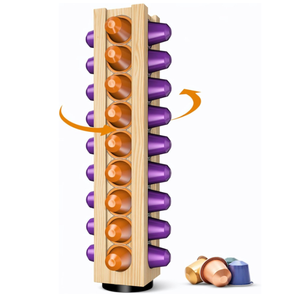
High Quality Rotating Vertical Carousel Pod Holder Coffee Station Countertop Organizer Storage Rack for 36 Pods
- 360° Silent Bearing Swivel Base
- Anti-Rust Electroplated Wire Steel
- Compact Breakroom Footprint
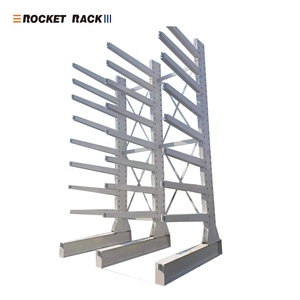
Industrial Heavy Duty Steel Cantilever Rack Layers Adjustable Durable Customizable Warehouse Racking for Lumber Pipe Storage
- Capacity: Up to 1,500kg per arm
- Adjustable Pitch: 100mm Increments
- Single & Double Sided Uprights
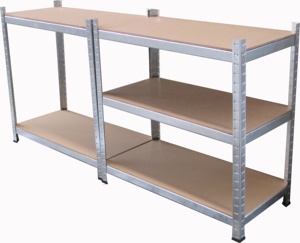
Shelves - Industrial High-Density Multi-Tier Steel Shelving Storage Units
- Load Rating: 300 - 800kg/Shelf
- Cold-Rolled Steel Decking Panels
- Quick Bolt-Free Interlocking Clips
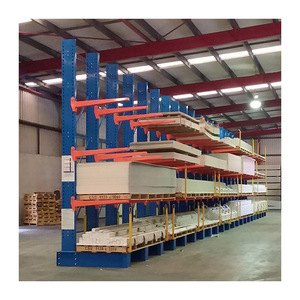
Mracking Adjustable Corrosion Protection Steel Pipe Storage Shelf Custom Warehouse Cantilever Rack System
- Hot Climate Polyester Powder Coat
- Custom Pipe Retaining End Stops
- High Rigidity Solid Base Anchoring
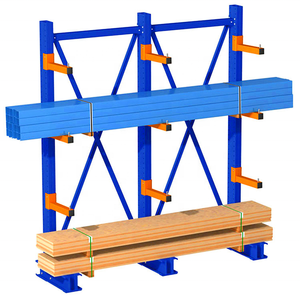
Customizable Available Industrial Steel Cantilever Racking System With High Load Capacity for Pipe and Lumber Storage 500kg/arm
- 500kg Continuous Arm Structural Load
- Certified Q235B High-Tensile Steel
- Eliminates Front Column Obstacles
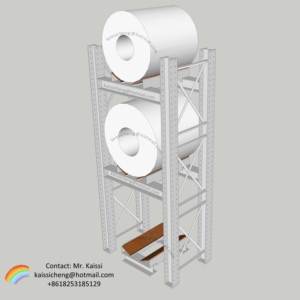
Standard and Custom Heavy-Duty Steel Coil Racks
- Cradle Design for Slit & Master Coils
- Payload: Up to 25 Tonnes/Position
- Heavy Polyurethane Bed Cushioning
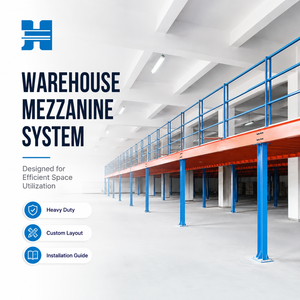
H-Beam Steel Mezzanine Floor Industrial Platform Mezzanine
- Structural H-Beam Wide Span System
- Flooring Load: 300kg - 1,200kg/m²
- Integrated Staircases & Pallet Gates
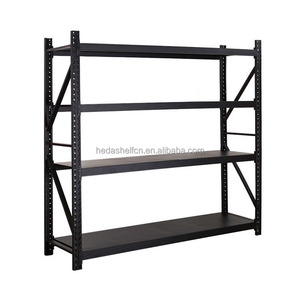
Heavy Duty Metal Garage Shelving Industrial Shelves 4 Tier Boltless Durable Shelves Warehouse Longspan Rack
- Rivet Keyhole Tool-Free Assembly
- 250kg per Level Uniform Load
- Industrial Powder Coat Finish
Engineering Integrity, Production Precision & Certified Handover
Structural racking collapses originate from three distinct vulnerabilities: under-engineered beam profiles, poor raw material metallurgical grain, or substandard field anchoring. As an integrated China manufacturer with turnkey project offices in the Middle East and Africa, we design out failure at every point of the manufacturing lifecycle.
Calculated Load Engineering
Every bay profile is determined by your pallet payload, forklift dynamics, and slab PSI ratings. We compute upright buckling limits and beam deflection under FEM 10.2.02 and EN 15512 codes, supplying permanent stamped load signage for OSHA/local authority compliance.
Prime Baosteel Structural Steel
We source prime hot-rolled and cold-formed coil exclusively from premier Chinese steel mills including Baosteel and Shougang. Utilizing certified Q235B and Q355B grades with verifiable metallurgical mill test certificates (MTC), your uprights maintain structural ductility under sudden dynamic impact.
Hot Climate Powder Coating
Operate in high-humidity littoral environments or high-temperature GCC/African climates without corrosion worries. Our continuous automated multi-stage pre-treatment wash and electrostatic epoxy-polyester powder baking creates an 80-120μm anti-scratch finish passing 500-hour salt spray endurance.
Turnkey Relocation & Lifecycle Care
From initial DWG/Revit warehouse layouts to container loading, port logistics, laser-guided assembly, and post-commissioning rack relocation, our certified installation crews provide single-point accountability across the entire storage system operational lifespan.
Future Procurement Trends in Global Warehouse Storage Systems
Global supply chain leaders are transitioning from spot purchasing of steel racks to integrated structural asset planning. These three structural purchasing shifts define successful enterprise procurement through 2030.
Total Cost of Ownership (TCO) vs. Initial Steel Price
Top 3PLs and logistics operators have recognized that ultra-cheap, under-gauge steel racks result in structural beam sagging, forklift guide rail deformation, and frequent warehouse downtime. Enterprise procurement teams now prioritize lifetime resilience:
- Standardized modular components allowing bay reconfigurations as SKU profiles change.
- Inclusion of certified upright column protectors and wrap-around end-of-aisle safety barriers.
- Verification of steel yield strength (minimum 235 to 355 MPa) over nominal profile thickness.
- Pre-engineered connection tabs that prevent accidental dislodgement without requiring replacement hardware.
Container Packing Optimization & Multimodal Freight
With volatile maritime container rates, the landed cost per pallet position is dictated by ocean freight density. Modern factory procurement leverages specialized container-stuffing software algorithms:
- Nesting teardrop upright frames and step beams into interlinked bundles to hit 26-28 metric tons per 40ft HQ.
- Pre-assembled spacer brackets and pallet supports shipped inside hollow upright channels to eliminate void volume.
- Anti-condensation desiccants and VCI corrosion inhibitors applied inside ocean shipping packs.
- Color-coded bundle identification tags matching site CAD erection zones to reduce on-site sorting labor by 35%.
Multi-Standard Compliance & Structural Stamping
Multinational warehouse operators require systems engineered to pass scrutiny by municipal building inspectors, international underwriters (FM Global), and corporate safety audits simultaneously:
- Harmonized engineering adhering to European FEM 10.2.02, American RMI MH16.1, and Australian AS 4084.
- Detailed seismic site coefficient calculations taking into account local ground acceleration metrics.
- Certified slab anchor bolt embedment depth calculations to eliminate base shear failure risks.
- Formal factory mill test reports (MTC) accompanying every steel coil heat batch to provide complete audit traceability.
Technological Advancements Transforming Racking Systems
Industrial racking is no longer static metal shelving. The rapid expansion of autonomous material handling, automated storage and retrieval systems (AS/RS), and IoT-driven maintenance is transforming warehouse racking into high-precision structural infrastructure.
Sub-Millimeter Tolerances for AGVs & Shuttle Carts
Autonomous 4-way radio shuttles, high-reach turret trucks, and Automated Guided Vehicles (AGVs) demand rack dimensional tolerances far tighter than traditional forklift aisles:
- Automated robotic CNC punch lines maintaining beam-slot pitch accuracy within ±0.5mm across 12-meter uprights.
- Precision laser-welded connector brackets preventing angular deflection under high-speed shuttle deceleration.
- Galvanized running rails engineered for minimum rolling friction and zero acoustic resonance.
- Optical reflector mounting brackets integrated directly into beam upright profiles for AGV navigation targets.
Integrated Structural Health Monitoring (IoT Sensors)
Industrial logistics centers are deploying real-time telemetry to monitor racking structural integrity and catch micro-deflections before catastrophic failure occurs:
- Tri-axial wireless accelerometers embedded on aisle entry columns to log unauthorized forklift impact force.
- Fiber-optic strain gauge sensors installed on high-bay beams to monitor dynamic live deflection ratios.
- Cloud-connected monitoring hubs alerting operations supervisors when load limits exceed structural thresholds.
- Digital twin integration into warehouse management software (WMS) to prevent overloading specific floor bays.
High-Yield Lightweighting & Green Steel Sustainability
Decarbonization mandates across European and North American supply chains are reshaping raw steel consumption in industrial storage manufacturing:
- Shift toward micro-alloyed ultra-high-strength steel grades delivering higher load capacities with 18% less steel mass.
- Closed-loop electric arc furnace (EAF) steel sourcing with certified low embodied carbon footprints.
- Solvent-free, VOC-free thermoset powder coatings reclaiming 98% of overspray during automated manufacturing.
- 100% infinitely recyclable modular steel components designed for multi-decade circular lifecycle repurposing.
Comparative Matrix: Selecting the Right Industrial Racking Architecture
Selecting the optimal storage configuration requires balancing SKU velocity, floor footprint, forklift mast limits, and capital expenditure. Review our engineering benchmark table below.
| Racking Architecture | Primary Load Application | Floor Area Utilization | Selectivity | Standard Capacity per Bay/Arm | Forklift Compatibility | Compliance Standards |
|---|---|---|---|---|---|---|
| Selective Pallet Racking | High-SKU palletized goods, FMCG, retail hubs | 35% - 45% | 100% Direct Access | 1,000kg - 4,500kg per level | Counterbalance, Reach Truck, VNA | FEM 10.2.02 / RMI MH16.1 |
| Drive-In / Drive-Through | High-volume uniform SKUs, cold storage | 65% - 80% | LIFO or FIFO Bulk | 1,000kg - 2,000kg per pallet rail | Narrow Reach Truck, Counterbalance | EN 15512 / ISO 9001 |
| Double Deep Racking | Buffer stock, medium SKU diversity | 50% - 60% | 50% Direct Access | 1,500kg - 3,500kg per level | Pantograph / Deep Reach Truck | AS 4084 / FEM 10.2.02 |
| Heavy-Duty Cantilever | Pipes, lumber, steel bars, extrusions | 40% - 55% | 100% Continuous Length | 500kg - 1,800kg per arm | Side Loader, Multi-directional Forklift | EN 1993-1-3 Eurocode 3 |
| Structural H-Beam Mezzanine | Parts picking, assembly, offices over storage | Double / Triple Floor Area | 100% Open Span Floor | 300kg - 1,500kg / m² uniformly | Pallet Jack, Hand Truck, Goods Lift | AISC 360 / EN 1090-2 CE |
| Multi-Tier Longspan Shelving | Loose boxes, archive bins, automotive spares | 55% - 70% | 100% Manual Hand Pick | 200kg - 800kg per tier shelf | Order Picker, Manual Operation | FEM 10.2.06 Shelving Code |
Frequently Asked Questions by Industrial Storage Buyers
Essential answers addressing slab load considerations, international seismic codes, structural deflection tolerances, anti-corrosion chemistry, and international shipping protocols.
What structural data is mandatory before designing a commercial warehouse racking layout?
To produce an authoritative, code-compliant CAD proposal and accurate quotation, our engineering team requires five primary inputs: 1) Building Architectural Plan: CAD drawing (.dwg) detailing column grid coordinates, expansion joints, dock door placements, emergency exits, and lighting/sprinkler head clear heights; 2) Floor Slab Specification: Concrete compressive strength (e.g., C25/30, 3000-4000 PSI), slab thickness (typically 150mm to 250mm), reinforcing rebar details, and maximum allowable point load; 3) Pallet & Unit Load Profile: Exact width, depth, overall height (including overhang), and maximum gross payload per pallet; 4) Handling Equipment Parameters: Forklift make and model, minimum aisle turning radius requirement (AST), collapsed mast height, and maximum lifting reach; 5) Environmental & Seismic Criteria: Local seismic zone acceleration coefficient and ambient temperature envelope (dry warehouse, cold store, or ambient external storage).
How does your factory ensure compliance with European FEM 10.2.02, EN 15512, and American RMI standards?
Every profile section—including our multi-bend teardrop uprights, boxed step beams, and heavy cantilever arms—is modeled using structural finite element software to analyze axial compression, local plate buckling, and torsional flexure. We maintain continuous material testing regimes verifying minimum yield stress ($f_y$) and ultimate tensile strength ($f_u$) in conformance with EN 10025 and ASTM A36 standards. Furthermore, our manufactured upright columns and beam connectors are cycle-tested for tab shear capacity, connection rotational stiffness, and beam end-connector lozenge resistance in accredited structural testing laboratories.
What is the standard beam deflection limit permitted under heavy industrial racking codes?
Under international racking standards (FEM 10.2.02, EN 15512, and RMI MH16.1), the maximum vertical deflection of a horizontal load beam under full uniform distributed working load (UDL) must not exceed $L/200$ (where $L$ is the clear span distance between upright columns). For example, on a standard 2,700mm beam level, maximum permissible deflection under rated load is $2700 / 200 = 13.5\text{ mm}$. In specialized high-precision automated systems (such as AS/RS or AGV shuttle lanes), we design down to a stricter deflection limit of $L/300$ or $L/400$ to ensure automated sensors operate without clearance errors.
How does your powder coating prevent rust in coastal regions, GCC countries, and tropical zones?
Corrosion failure in steel racking begins at micro-cracks in poorly cured paint. Our factory operates a fully enclosed, automated continuous surface treatment line. First, steel parts undergo alkaline degreasing, ultrasonic water rinsing, iron/zinc phosphating, and deionized water drying to etch the steel surface and guarantee chemical adhesion. Second, we electrostatically spray pure architectural-grade TGIC-free epoxy-polyester thermosetting powder, curing parts in high-temperature convection ovens at 190°C–210°C for 20 minutes. This creates an 80 to 120 micron non-porous protective envelope that withstands over 500 hours of neutral salt spray testing (ASTM B117), resisting extreme thermal cycling, humidity, and abrasion from forklift pallet skids.
Can existing warehouse racking systems be safely disassembled, reconfigured, and relocated?
Yes. Our relocation and engineering services team regularly oversees full warehouse racking relocations across the Middle East, Africa, and global territories. The protocol includes: 1) Structural pre-audit to inspect uprights, baseplates, and beams for invisible fatigue or forklift denting; 2) Controlled unbolting, tagging, and bundling according to structural zone; 3) Safe transport and floor-level inspection; 4) Re-erection in the new facility aligned with the new building's slab and sprinkler layout; 5) Replacement of all non-reusable wedge anchor bolts, safety pins, and damaged frame braces; 6) Laser plumbing, torque verification, and installation of updated rated capacity signs.
What is the standard production lead time and ocean shipping container load factor?
Standard fabrication lead time is 15 to 25 working days from approved CAD drawing sign-off and deposit receipt. For complex high-bay AS/RS systems or heavy custom cantilever projects requiring specialized tooling, lead time averages 30 to 40 days. In terms of shipping efficiency, our shipping engineers utilize bespoke 3D container packing software to nest upright frames and interlock step beams, ensuring every 40ft High Cube (40HQ) container achieves maximum legal payload density—typically 24 to 28 metric tonnes per container—slashing landed freight costs per pallet location.
Do you supply official stamped structural calculations and load notices for local fire & municipal audits?
Yes. We deliver complete engineering documentation packages for commercial facilities. This includes structural calculation reports showing dead load, live load, wind load (for outdoor cantilever/sheds), and seismic drift parameters calculated by certified structural engineers. Upon project completion, we provide durable aluminum or high-impact UV-resistant PVC load capacity plaques mounted at every aisle entry, clearly declaring maximum permissible load per beam pair, maximum load per bay, and top beam elevation heights, ensuring 100% compliance during insurance and civil defense inspections.
What warranty and aftercare protection is provided with factory-direct procurement?
We provide a comprehensive 10-year structural warranty on all factory-supplied structural steel uprights, cantilever columns, mezzanine H-beams, and load beams against manufacturing defects, weld shearing, or material delamination under rated operating conditions. In addition, we maintain rapid replacement parts inventory (upright frames, beams, row spacers, column protectors) capable of immediate air or sea dispatch to support warehouse maintenance protocols.
Accelerate Your Storage Capacity with Certified Factory-Direct Engineering
Connect with our structural engineers today for a complimentary CAD warehouse layout, capacity calculation, and FOB/CIF pricing proposal tailored to your facility footprint.