Whitepaper: Engineering Principles of High-Density Radio Shuttle Systems
Modern distribution centers, cold chain operators, and fast-moving consumer goods (FMCG) suppliers face surging square-meter real estate costs and mounting labor shortages. Traditional selective pallet racking, while offering 100% selectivity, suffers from abysmal volumetric space efficiency—typically sacrificing over 60% of warehouse floor area to forklift operational aisles. Drive-in racking systems increase density but introduce severe risks of forklift collision with structural uprights, painfully slow loading/unloading cycle times, and operational inflexibility limited almost entirely to Last-In, First-Out (LIFO) order processing.
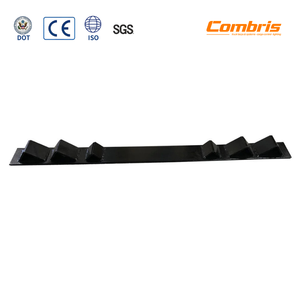
The Radio Shuttle Racking System (also recognized globally as a Pallet Runner, Pallet Mole, or Pallet Shuttle System) eliminates this operational bottleneck. Operating as a semi-automated deep-lane storage system, the radio shuttle machine travels autonomously along precision-formed steel runner rails within the racking channels. Forklifts do not enter the storage channels. Instead, a standard counterbalance or reach truck places the self-powered shuttle onto the designated channel track, deposits the pallet load onto the shuttle carriage, and signals the unit via an industrial radio frequency (RF) or Wi-Fi controller. The shuttle lifts the pallet, navigates to the deepest available storage buffer at speeds up to 1.2 m/s, lowers the load onto structural support rails, and returns instantly for the next load cycle.
Strategic Storage Density Formula: High-density pallet shuttle arrays regularly achieve floor utilization rates exceeding 80% to 85%, compressing 10,000 pallet positions into footprints that would accommodate fewer than 5,200 positions under standard wide-aisle selective configurations. Furthermore, channel depths can extend up to 40+ pallets deep without risking rack structural fatigue or collision damage.
Kinematic Design, Battery Architecture & Cold Storage Resilience
The operational core of our shuttle systems lies in military-grade mechatronics engineered for 24/7 continuous duty cycles. Equipped with high-torque brushless DC (BLDC) motors and regenerative braking circuits, our shuttle cars minimize thermal loss and maximize battery cycle life. Lithium Iron Phosphate (LiFePO4) power banks deliver 8 to 10 hours of uninterrupted high-cycle operation on an accelerated 2.5-hour fast-charge cycle. In sub-zero cold chain and blast freezer facilities operating down to -30°C, custom thermal insulation blankets, internal condensation heaters, and low-temperature electrolyte chemistries prevent lithium plating and capacity drop-offs, ensuring steady operational torque without freezing sensor lenses or rail drive wheels.
Structural Comparison: Industrial Storage Densities & Operating Physics
Understanding where radio shuttle technology stands relative to alternative warehouse racking infrastructures is vital for supply chain directors balancing Capital Expenditure (CAPEX) against long-term Operational Expenditure (OPEX).
| System Architecture |
Volumetric Density |
Inventory Logic |
Forklift Impact Risk |
Throughput Speed |
OPEX & Labor Demand |
| Radio Shuttle Racking |
Extremely High (85%+) |
FIFO & LIFO Flexible |
Virtually Zero (No Entry) |
High (Simultaneous Cycles) |
Low (Reduced FLT Fleet) |
| Standard Selective Racking |
Low (35% - 40%) |
100% Direct FIFO |
Moderate (Frequent Turns) |
Medium (Aisle Dependent) |
High (Many Operators) |
| Drive-In / Drive-Through |
High (65% - 75%) |
Strict LIFO (FIFO Weak) |
Severe (High Collision) |
Very Slow (Careful Driving) |
High (Frequent Rack Repair) |
| Push-Back (Cart/Roller) |
Moderate-High (60%) |
Strict LIFO Only |
Moderate |
Moderate (Gravity Dependent) |
Medium |
| Automated Stacker Crane AS/RS |
Maximum (90%+) |
100% Dynamic Automation |
None (Fully Automated) |
Ultra-High |
Lowest Labor / Extreme CAPEX |
Transition from 2D to 4-Way Shuttle Architectures
While traditional 2D shuttles rely on forklift repositioning between rail channels, global procurement is rapidly expanding into 4-Way Multi-Shuttle matrix solutions. Incorporating automated vertical reciprocating lifts (VRCs) and cross-directional directional wheels, 4-way systems grant a single fleet of autonomous shuttles complete access to all three warehouse dimensions without operator intervention.
WMS / WCS Open API Integration
Enterprise procurement teams reject isolated, proprietary control systems. Future-proof shuttle fleets must provide native RESTful APIs, Modbus-TCP, and OPC-UA connectivity. This allows enterprise Warehouse Management Systems (WMS) to dynamically allocate channel buffering, execute automated FIFO batch consolidation, and orchestrate pallet picks with precision tracking.
Supercapacitor Fast-Charging Integration
To eliminate manual battery swapping in high-velocity e-commerce operations, next-generation shuttle procurement increasingly specifies onboard graphene supercapacitors paired with end-of-channel induction copper charge plates. The shuttle recharges in 12–15 seconds during pallet drop-offs, enabling true continuous 24/7 "lights-out" operation without dedicated charging stations.
Direct Manufacturer Sourcing & Raw Material Traceability
International wholesale buyers are bypassing trading intermediaries, contracting directly with certified Chinese manufacturing facilities possessing internal continuous roll-forming lines. Buyers demand mill-test certificates for structural steel (Q235B / Q355B), ultrasonic weld integrity testing, and hot-climate powder coating certifications to ensure compliance with strict regional building codes.
ToF Laser & LiDAR Obstacle Avoidance
Next-gen shuttles integrate dual front-and-rear Time-of-Flight (ToF) optical lasers alongside ultrasonic echo sensors. This redundancy prevents collisions with warped wooden pallets, broken pallet runners, or out-of-gauge carton overhangs, automatically stopping the shuttle within 20 milliseconds to eliminate derailment risks.
IoT Predictive Maintenance Telemetry
Embedded IMU accelerometers, wheel bearing temperature sensors, and battery health telemetry chips stream performance metrics wirelessly to cloud dashboards. Automated alerts identify uneven rail track settling, wheel tread wear, or abnormal drive motor currents long before mechanical breakdown occurs.
High-Ductility Seismic Engineering
Modern radio shuttle racking utilizes high-tensile cold-formed omega uprights (up to 120mm profile width) connected via structural diagonal bracings engineered according to FEM 10.2.02 and European EN 15512 codes. Baseplates incorporate high-yield chemical expansion anchors to absorb lateral seismic shear loads without track displacement.
Engineering Discipline Behind Every Bay: Our Manufacturing Advantages
Racking failures are almost universally rooted in under-specified steel thickness, amateur layout modeling, or uncertified installation practices. As a premier Chinese manufacturing facility and global supplier, our production and engineering workflow eliminates all three vulnerabilities.
01 / Precision Load Calculations
We do not guess structural sizing from catalogue averages. Every project undergoes rigorous Finite Element Analysis (FEA) factoring in dead loads, live loads, pallet dynamic deflection, forklift aisle clearances, seismic zoning, and floor slab geotechnical compressive strengths.
02 / Full-Spectrum CAD & Capacity Modeling
Our in-house design engineering department generates full 3D CAD and BIM layout drawings that model flue spaces, fire suppression sprinkler clearances, dock doors, and reach-truck turning radiuses to achieve optimal pallet capacity without compromising aisle egress.
03 / Premium Cold-Rolled Certified Steel
We utilize prime certified high-tensile structural steel (Q235B and Q355B). Our multi-stage continuous automated cold roll-forming lines guarantee shuttle rail profile tolerances within ±0.5mm, ensuring smooth shuttle wheel transit without vibration or premature wear.
04 / Turnkey Handover, Signage & Relocation
All delivered projects include official FEM/EN rated load safety signage, comprehensive operation manuals, certified anchor torque validation, replacement parts support, and expert warehouse racking relocation services across global logistics hubs.
Transform Your Warehouse Floor into a High-Yield Asset
Whether you are designing a greenfield automated logistics park, converting an existing cold-storage warehouse, or sourcing wholesale containers of structural racking components, our structural engineering team delivers free layout capacity calculations and competitive direct-manufacturer quotations within 24 hours.
✓ Free 2D/3D CAD Layouts
✓ Structural FEM Analysis
✓ Direct Factory Wholesale Pricing
✓ Global Export Support