Engineered Pallet Flow & Heavy-Duty Warehouse Storage Solutions
Precision-fabricated utilizing certified Q235B and Q355B structural steel, high-durability polymer/steel skate rollers, and dynamic centrifugal braking systems. Fully tailored for high-throughput distribution hubs, manufacturing buffers, and cold storage chains.
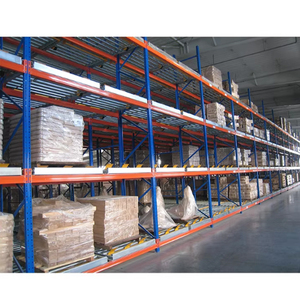
Warehouse FIFO Storage Racking System Flow Through Pallet Roller Racking
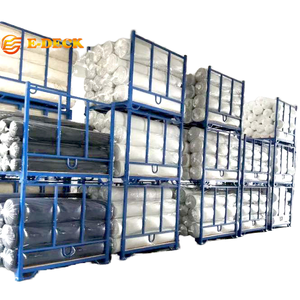
Heavy Duty Double Stacking Pallet Rack Industrial Fabric Storage System Warehouse Shelving Metal Racking
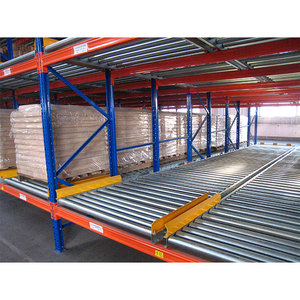
Q235 Steel 2000kg Capacity FIFO High Density Industrial Warehouse Storage Gravity Pallet Flow Rack System
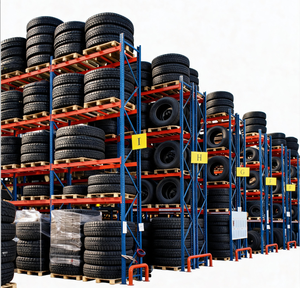
Custom Heavy Duty Industrial Pallet Racking Load Capacity Warehouse Pallet Shelving Q235 Steel Beam Type Adjustable Powder Rack
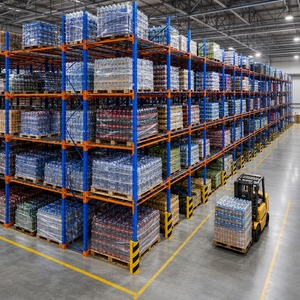
Palettenregal Racks Industriales Pallet Flow Racking Steel Storage Rack Q235B Steel for Bulk Chemical Plants
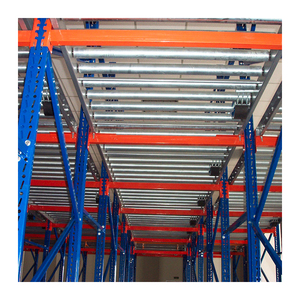
Pallet Flow Rack High Quality Fifo Warehouse Storage Racks Gravity Pallet Flow Racking First In First Out Rack System
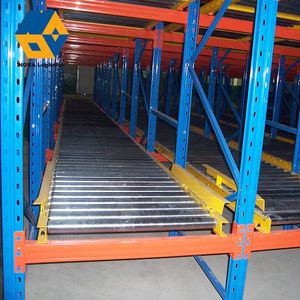
NOVA Cold Room Heavy Duty Steel Rack Logistics Equipment Warehouse Gravity Pallet Flow Racking
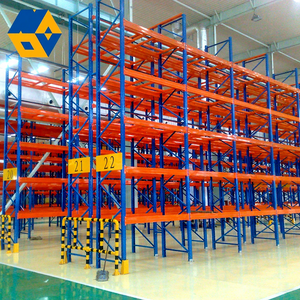
NOVA Industry Warehouse Steel Adjustable Shelf, Automation Equipment Heavy Duty Pallet Racking System Selective Pallet Rack
The Mechanics of High-Density Gravity Pallet Flow: Physics, Kinematics, and ROI Dynamics
In modern supply chain architecture, warehouse cubic volume represents one of the largest capital expenditure line items. Conventional selective pallet racking systems dedicate up to 65% of floor space to operational forklift access aisles. As real estate valuations climb across international distribution corridors, global logistics managers are transitioning toward dynamic compact storage topologies. Among high-density technologies, Gravity Pallet Flow Racking (Live Pallet Storage) stands out as the ultimate First-In, First-Out (FIFO) mechanical powerhouse, combining rapid dispatch throughput with zero electrical operational expenditures.
Operating entirely on dynamic gravitational potential energy, pallet flow systems integrate dedicated loading faces (rear charge end) and picking faces (front discharge end) divided by inclined roller beds pitched at an engineered gradient between 2.5% and 3.5% (1.5° to 2.0°). When a pallet is set down at the charging face by an entry forklift or Autonomous Mobile Robot (AMR), gravitational force overcomes initial static friction. The pallet glides downstream in a steady, controlled trajectory toward the retrieval face.
| High-Density Storage Topology | Pallet Density Index | Inventory Logic | Operating Energy Cost | Forklift Travel Distance | Cold Chain Suitability | Labor Efficiency Index |
|---|---|---|---|---|---|---|
| Pallet Flow (Gravity FIFO) | Ultra-High (85%+) | Strict FIFO (100% compliance) | Zero kWh (Pure Gravity) | Minimal (Dedicated Endpoints) | Optimal (Cubic Conserved) | Maximum (+55% Picks) |
| Drive-In Racking | High (75%) | Strict LIFO (Last-In, First-Out) | Zero kWh | Excessive (Mast Drives In Lane) | Moderate (Impact Risks) | Slow (High Cycle Times) |
| Radio Shuttle Cart | Ultra-High (85%+) | Configurable FIFO / LIFO | Battery Charging Dependent | Low (Aisle Pick Faces) | Moderate (Battery Chill Degrades) | Moderate-High |
| Selective Pallet Racking | Low (40-45%) | Selective Random Access | Zero kWh | Maximum (Every Bay An Aisle) | Poor (High Cubic Waste) | Standard Baseline |
Critical Kinetic Control: Centrifugal Retarders & Pressure Separation Physics
Uncontrolled acceleration along long-distance gravity lanes represents a profound workplace safety hazard and can compromise unitized packaging integrity. In an unconstrained lane of 15 to 25 pallets deep, a 1,200kg unit load would gather kinetic energy sufficient to crush structural end-stops upon terminal impact. To counter this, our engineering integrates continuous internal-gear centrifugal brake rollers spaced systematically at one-pallet pitch intervals along the roller beds.
These retarder rollers engage mechanically as rotational velocity increases. Internal planetary gearing expands centrifugal brake pads against the inner roller casing, limiting maximum pallet speed to an invariant safe descent velocity of 0.20 to 0.30 meters per second, regardless of whether the gross load weight is 300kg or 2,000kg.
Simultaneously, at the discharge pick face, terminal extraction presents a hazardous mechanical challenge known as line pressure. In a 20-pallet-deep lane, the cumulative forward gravitational thrust of 19 trailing loads against the frontmost pallet can exceed 4,500 Newtons, pinning the pallet against the stop and binding forklift forks. Our proprietary Automatic Mechanical Pallet Separator eliminates this phenomenon completely. Upon entry into the pick station, the lead pallet depresses a mechanical trip-lever that springs open a secondary arresting escapement, locking the second and all subsequent trailing pallets exactly 150mm behind the lead position. The forklift operator lifts the retrieval pallet with zero frictional backpressure. Once lifted, the trip-lever resets, allowing the trailing pallets to advance one position smoothly.
Why Global Tier-1 Logistics Hubs Source Wholesale From China
Combining high-grade metallurgical chemistry, automated continuous roll-forming production lines, and structural FEA load-engineering compliant with stringent European (FEM) and American (RMI) standards.
Certified Q235B & Q355B Steels
Sourced exclusively from certified domestic steel mills with validated chemical heat certificates. Yield strength exceeds 355 MPa, providing a structural safety design factor of 1.65 under full seismic moment loads.
Turnkey CAD & BIM Engineering
We calculate clear mast heights, building column envelopes, flue spaces, and NFPA 13 in-rack fire suppression clearances, modeling exact 3D layouts before raw coil slitting begins.
Robotic Cold-Forming Lines
Our manufacturing facilities utilize CNC-controlled multi-station cold-roll formers and robotic continuous seam welders, ensuring zero twisting tolerances across 12-meter upright runs.
Dual-Cure Powder Finishing
Pre-treated through a 7-stage automated chemical wash and phosphating rinse, followed by electrostatic epoxy-polyester powder thermosetting at 200°C for exceptional chip and corrosion resistance.
Emerging Trends Transforming Pallet Flow Racking Architecture
Forward-thinking warehouse procurement executives look beyond initial steel prices per bay. The next decade of high-density storage emphasizes IoT operational tracking, autonomous interfaces, and climate resiliency.
1. Smart Lanes & IoT Optical Sensing
Integration of low-power wireless infrared and optical time-of-flight (ToF) sensors inside the roller beds. Warehouse Management Systems (WMS) obtain real-time visibility into exact pallet counts per lane, alerting operators instantly to mid-lane hang-ups or empty picking faces.
2. AMR & AGV Infeed Interfacing
Manual forklift drop-offs are transitioning to robotic integration. Modern charging faces are custom-fitted with self-centering funnel entry guides, magnetic alignment tags, and reinforced heavy-gauge bumper skirts to accept high-speed Autonomous Mobile Robot (AMR) high-lift drops.
3. Cryogenic Steel for Cold Chains
With the boom in temperature-controlled pharmaceutical logistics and cold-chain prepared foods, cold-room racks operate at -28°C to -35°C. Procurement standards mandate impact-tested low-temperature steels, specialized cryo-grade synthetic bearing lubricants, and zinc-nickel plating.
4. Modular Circularity & Decarbonization
International buyers are demanding lower Scope-3 embodied carbon. Chinese manufacturers are adopting Electric Arc Furnace (EAF) recycled billet processing and fully demountable, modular bolted frame connections that allow 100% component reuse, relocation, or repurposing without scrap cutting.
Step-by-Step OEM/ODM Procurement Roadmap
From physical slab load verification to final load rating certification, our structured engineering workflow mitigates operational risk at every project milestone.
Slab & Facility Audit
Verification of concrete compressive strength (minimum 25-30 MPa), slab flatness (DIN 18202 Class 3 / TR34 FM2), clear height under sprinklers, and seismic zone classification.
Pallet Kinematic Testing
Physical testing of client pallet specimens (Euro, GMA, CHEP, plastic, or perimeter base) on full-scale dynamic incline beds to calculate optimal roller pitch and retarder spacing.
BIM Modeling & FEA
Finite Element Analysis of column beam nodes, wind/earthquake moment resisting frames, aisle clearances, and generation of certified CAD shop fabrication drawings.
Precision Roll-Forming
Automated punching, roll-forming, robotic welding, shot blasting, and thermoset powder baking, accompanied by ultrasonic weld inspection and mill test reporting.
Installation & Commissioning
Site anchoring with chemical wedge anchors, precise optical laser plumb leveling, roller track fine-tuning, dynamic live-load test runs, and static load plaque handover.
Frequently Asked Questions: Pallet Flow Rack Procurement
Critical technical answers compiled by our senior structural storage engineers to help procurement directors make informed, cost-effective infrastructure decisions.
What is the precise pitch slope angle required for gravity pallet flow?
Can poorly maintained or damaged pallets run safely in a flow rack?
How do brake retarders prevent runaway loads in deep flow lanes?
What is the function of the Automatic Pallet Separator mechanism?
How does Pallet Flow Racking comply with NFPA 13 Fire Sprinkler Codes?
What information is required from the buyer to produce a formal CAD layout and quote?
Engineer Your High-Density Storage Advantage Today
Connect directly with our senior application engineers. We provide comprehensive CAD warehouse layout drawings, dynamic structural capacity calculations, and factory-direct wholesale pricing within 24 hours. Let us help you maximize cubic capacity while slashing picking travel times.
Direct Project Engineering Channel:
Contact UsInstant response for RFQs, CAD analysis, and wholesale volume tenders.