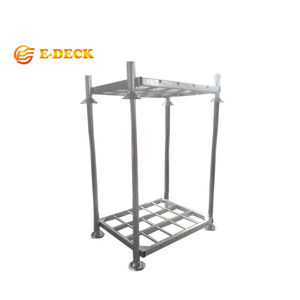
Heavy-Duty Warehouse 2000lb Capacity Single Pallet Mobile Rack
Capacity: 2,000 lbs/pallet | Integration: Mobile Base Base Rails | Finish: Anti-corrosive Powder Coat
Get a Quote
Explore our premier heavy-load storage equipment and steel racking configurations. Designed for seamless structural integration with standard waterfall wire mesh decks, ensuring maximum warehouse throughput and zero-deflection operations.
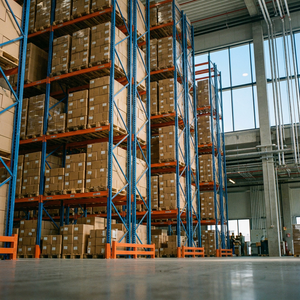
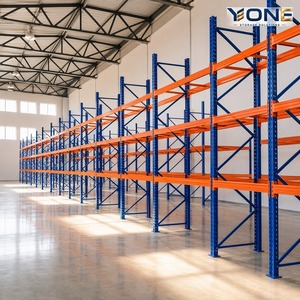
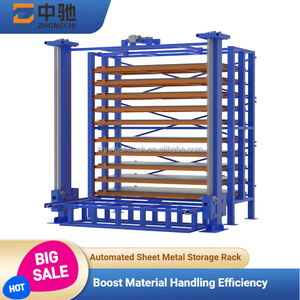
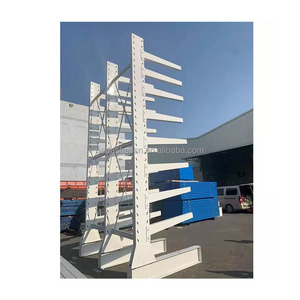
In modern international intra-logistics, industrial pallet racking systems cannot function safely or efficiently without structurally verified horizontal load levels. Modern distribution centers, automated 3PL fulfillment warehouses, and regional cold-storage hubs are systematically phasing out hazardous solid timber decking and combustible composite wood panels. In their place, heavy-duty wire mesh decking has established itself as the indispensable global standard across North America, Europe, the Middle East, and the Asia-Pacific region.
As enterprise logistics architectures transition toward taller vertical clear heights (exceeding 14 to 32 meters) and higher throughput handling frequencies, the performance required from wire mesh decking extends far beyond serving as a basic "safety drop stop" for misplaced pallets. Wire mesh decking manufactured in premier Chinese production facilities functions as a calibrated structural component. It delivers three critical engineering objectives: uniform load distribution across racking step beams, unhindered vertical water penetration for NFPA 13 in-rack fire suppression sprinklers, and operational flexibility for non-standard pallets, skid bins, broken bottom-board units, and carton split-case picking.
Choosing the best China wire mesh decking manufacturer is not merely a purchasing transaction; it is an exercise in structural vetting. Sourcing teams must evaluate base steel chemistry (ensuring authentic Q235B low-carbon structural steel), cold-drawn wire tensile resilience, channel flange geometry, automated resistance welding fusion integrity, and protective surface finishing (ranging from high-durability electro-zinc galvanization to hot-dip galvanization and electrostatically cured polyester powder coatings).
Features an open grid aperture (typically 50×100mm or 50×50mm) guaranteeing >70% open surface area. Enables immediate deluge penetration from overhead and in-rack fire sprinklers, eliminating the dangerous water umbrella effect associated with solid wooden shelves.
Engineered with precision-pressed external waterfalls, flush drop-ins, or inverted flared support channels. Adapts flawlessly to standard 1-5/8" step beams, European boxed beams, roll-formed structural channel beams, and light-duty angle profiles.
Every wire intersection undergoes high-frequency microcomputer-controlled resistance welding. Guarantees uniform weld penetration depth (>25% cross-section fusion) without localized burn-through, ensuring rugged resilience against rough forklift drop impacts.
The total load capacity of a wire mesh deck is determined by the synergistic interaction of three primary structural variables: the wire diameter (gauge), the grid spacing (pitch), and the geometry and thickness of the underlying pressed steel support channels. In premium Chinese manufacturing facilities, automated roll-forming and progressive stamping lines manufacture three principal channel cross-sections:
1. Standard Flared (Universal) Channels: Designed with flared waterfall ends that rest over the top load face of the beam. This universal profile fits both standard step beams and structural box beams. It is the premier choice for multi-purpose warehouses where racking beam profiles vary across aisles.
2. U-Channel (Step Channel) Decks: Formed with 90-degree vertical stepped ends that seat squarely inside the step of a standard 1-5/8" or 2" pallet rack step beam. Because the channel rests directly on the step shelf, it provides superior structural stability, preventing beam rotation and delivering unmatched deflection resistance under severe point loads.
3. Inverted Flare & Inside Waterfall Decks: Specifically configured for food processing, pharmaceutical, and high-cleanliness distribution centers. In standard channels, the open U-shape faces upward, creating a trough where debris, packaging dust, and spilled powders can collect. Inverted channels present a flat top surface, forcing particles to fall completely through to the floor for easy automated vacuuming.
| Standard Model Size (D × W) | Wire Gauge & Mesh Grid | Channel Type & Qty | UDL Capacity Rating | Deflection Safety Ratio |
|---|---|---|---|---|
| 36" × 46" (914 × 1168 mm) | 4 Gauge (5.0 mm) / 2" × 4" (50×100mm) | 3 × Heavy U-Step Channels (14 Ga) | 2,500 lbs (1,135 kg) | $L/250$ @ Rated UDL (ANSI MH26.2) |
| 42" × 46" (1067 × 1168 mm) | 5 Gauge (4.8 mm) / 2" × 4" (50×100mm) | 3 × Universal Flared Channels | 2,000 lbs (910 kg) | $L/250$ @ Rated UDL (ANSI MH26.2) |
| 42" × 46" (1067 × 1168 mm) | 4 Gauge (5.2 mm) / 2" × 4" (50×100mm) | 4 × Heavy Duty U-Channels (13 Ga) | 3,200 lbs (1,450 kg) | $L/280$ Heavy Industrial Reserve |
| 48" × 46" (1219 × 1168 mm) | 2 Gauge (6.0 mm) / 2" × 2" (50×50mm) | 4 × Custom Box-Fit Channels | 3,800 lbs (1,725 kg) | Seismic & Heavy Point-Load Validated |
| Euro 1000 × 1200 mm | Ø 5.0 mm Steel / 50 × 100 mm | 3 × Omega-profile Welded Ribs | 1,000 kg (2,204 lbs) | Compliant with FEM 10.2.02 / EN 15512 |
*Note on Point Loads vs. Uniformly Distributed Loads (UDL): Standard wire mesh decking is load-engineered based on evenly distributed contact across the entire deck surface. In applications involving small-footprint plastic bins, four-legged metal storage containers, or small caster dollies, concentrated line or point loads occur. Our engineering team utilizes Finite Element Analysis (FEA) to specify reinforced sub-channel gussets, heavier gauge cold-drawn wires (up to 7.0mm), or tight 50×50mm wire apertures to prevent localized punching shear.
Racking component failures in high-volume distribution hubs typically stem from three vulnerabilities: under-specified raw steel chemistry, poor resistance welding fusion, or inadequate surface corrosion protection. Our manufacturing framework systematically eliminates all three risks.
We source hot-rolled wire rod and coil stock exclusively from tier-one domestic steel mills. Every production run undergoes chemical spectrometer analysis to verify carbon, silicon, manganese, and phosphorus levels before entering cold-drawing lines.
High-speed multi-electrode automated resistance mesh welding machines ensure microsecond-level pulse control. This guarantees consistent weld penetration depth without thermal stress cracking or brittle embrittlement.
State-of-the-art automated electro-galvanizing with trivalent chromium passivation, continuous powder coating, or hot-dip zinc galvanization delivering up to 720 hours of ASTM B117 salt spray corrosion resistance for sub-zero freezer hubs.
Randomized sampling from every batch is placed onto calibrated full-scale beam test rigs. Decks are loaded up to 150% and 200% of rated capacity to calculate true ultimate collapse thresholds and verify compliance with ANSI MH26.2 deflection guidelines.
By maintaining complete vertical integration—from raw wire descaling and drawing to high-speed CNC mesh shearing, channel progressive stamping, robotic seam welding, and surface treatment—our manufacturing plant ensures dimensional tolerances within ±1.0mm. This precision allows seamless automated robotic pallet staging and error-free drop-in installation on high-bay pallet racking.
The global warehousing sector is undergoing unprecedented structural modernization. Driven by e-commerce SKUs diversification, supply chain nearshoring, and intense automated warehouse conversions, global procurement directors must adapt to four pivotal market shifts:
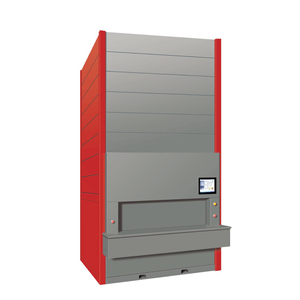
1. Convergence with Autonomous Mobile Robots (AMR) & AS/RS Systems: Modern mega-fulfillment facilities increasingly integrate autonomous shuttles, vertical lift modules (VLMs), and Automated Guided Vehicles (AGVs). These automated systems require decking surfaces with millimeter-precise flatness tolerances, zero burr edges, and specialized cantilevered side stops or backstops that prevent sensor blinding and robot docking errors.
2. Cold-Chain Expansion & Sub-Zero Metallurgical Resilience: With the rapid global expansion of pharmaceutical distribution and frozen food supply chains, wire mesh decks must operate reliably in environments ranging from -25°C to -40°C. Conventional carbon steel and poor paint finishes suffer brittle fracture and catastrophic flaking under thermal cycling. The industry is moving heavily toward hot-dip galvanized (HDG) decks with high-silicon structural steel that resists zinc peeling, or specialized dual-coat epoxy-polyester hybrid powder formulations.
3. Containerized Nested Packing & Ocean Freight Optimization: International logistics costs have redefined factory packaging engineering. Advanced Chinese manufacturers now utilize custom-designed corrugated steel pallet nesting systems and inverted stacking jigs. This allows up to 1,200 to 1,500 pieces of heavy-duty wire mesh decking to fit within a single 40ft High Cube container without crushing channel flanges or bending exterior waterfalls—slashing landed transport costs by up to 28% per unit.
4. ESG Auditing and Low-Carbon Circular Metallurgy: Corporate procurement policies across Europe and North America increasingly require Environmental Product Declarations (EPD) and ISO 14001 compliance. Forward-thinking Chinese factories are replacing coal-fired annealing furnaces with electric induction heating, capturing and recycling 98% of electroplating chemical wash water, and utilizing low-emission scrap-recycled EAF (Electric Arc Furnace) wire rods to satisfy stringent ESG supply chain mandates.
Detailed engineering answers to the most common questions raised by procurement managers, rack safety engineers, and installation contractors.
Whether you require 500 standard step-beam decks or 100,000 custom-engineered, hot-dip galvanized panels for automated mega-distribution hubs, our structural engineering team delivers rapid CAD drawings, finite element load validation, and competitive direct-from-factory pricing.