High-Performance Storage Equipment & Engineered Systems
Engineered upright configurations, heavy-duty load beams, and modular structural integrations manufactured in our ISO 9001 certified Chinese manufacturing complex.
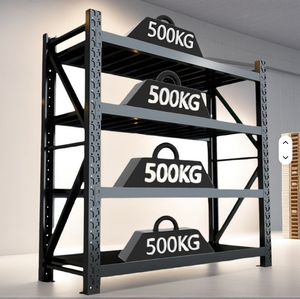
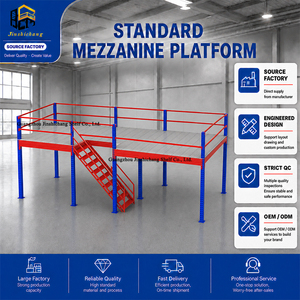
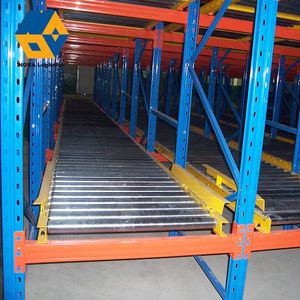
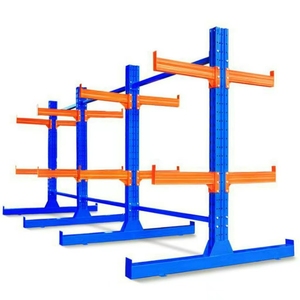
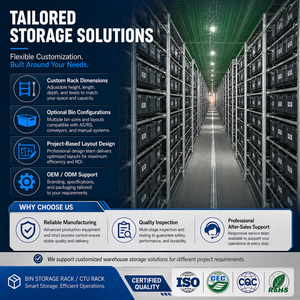
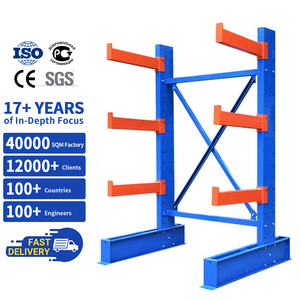
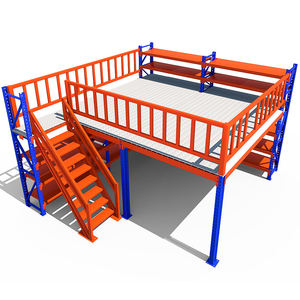
As logistics systems reach vertical thresholds exceeding 30 meters, the upright column frame remains the most safety-critical structural component of modern intralogistics. Operating as a premier pallet rack uprights manufacturer in China, our engineering methodology bridges high-tensile cold-rolled steel profiling, finite element buckling analysis, and rigorous adherence to international structural codes including EN 15512:2020, RMI ANSI MH16.1, and FEM 10.2.02.
1. Cross-Sectional Geometry: The Mechanics of Omega Profiles
The pallet rack upright frame must endure combined axial compression and biaxial bending moments caused by pallet placement offsets, horizontal forklift braking loads, and seismic acceleration. Conventional box or open C-channels exhibit low torsional rigidity and are prone to premature torsional-flexural buckling. To resolve this, our engineering lines produce an optimized 11-to-13 bend Omega (Ω) profile. The multiple cold-formed return flanges shift the shear center closer to the centroid of the profile, drastically elevating the critical elastic buckling load ($N_{cr}$).
By utilizing state-of-the-art continuous roll-forming lines with 24 dedicated forming stations, work hardening occurs gradually along the bend radiuses. This incremental forming preserves steel ductility while yielding an approximate 12% to 15% increase in yield strength at each outer fiber bend. The perforations (whether teardrop, diamond, or keyhole) are punched via CNC servo systems prior to roll-forming, preserving uniform flange geometry and maintaining hole-pitch tolerances of within ±0.15mm across an uninterrupted 12-meter continuous span.
Structural Design Principle: Torsional-Flexural Interaction in Perforated Thin-Walled Columns
Under axial load, perforated thin-walled open members undergo simultaneous flexural buckling about the minor axis and torsional buckling about the longitudinal axis. In accordance with EN 15512 clause 9.7, our factory verifies upright capacity via physical stub column tests and full-scale partner testing to establish the effective cross-sectional area ($A_{eff}$) and determine the exact reduction factor for local buckling at the critical perforation zones.
2. Steel Metallurgy: Chemical Compositions & Tensile Performance
A fundamental failure vector in budget racking systems is steel batch inconsistency. Low-tier rolling mills often mix recycled billets that display variable elongation values, causing unpredictable brittle fractures at anchor bolt locations or tear lines across the upright slots. Our production standard mandates certified structural steels from primary Chinese state mills (such as Baosteel and Shougang):
| Steel Grade (Standard) | Yield Strength ($R_e$, MPa) | Tensile Strength ($R_m$, MPa) | Elongation ($A_{80}$, Min %) | Typical Profile Range | Primary Application Environment |
|---|---|---|---|---|---|
| Q235B (GB/T 700) | ≥ 235 | 370 – 500 | ≥ 26% | 80 × 60 × 1.5 – 1.8mm | Light-to-medium longspan shelving, retail displays |
| Q355B (GB/T 1591) | ≥ 355 | 470 – 630 | ≥ 21% | 90/100 × 70 × 2.0 – 2.5mm | Standard selective pallet racks, drive-in systems |
| Q460D (High-Tensile) | ≥ 460 | 550 – 720 | ≥ 17% | 120/140 × 95 × 2.5 – 3.2mm | High-bay ASRS automated racks >24m, cold chain logistics |
| ASTM A1011 HSLAS | ≥ 345 (50 ksi) | ≥ 450 (65 ksi) | ≥ 22% | 3.0" × 3.0" Teardrop (12–14 GA) | North American specification tear-drop OEM imports |
| S355MC (EN 10149-2) | ≥ 355 | 430 – 600 | ≥ 19% | Omega 90–140 Euro Slot | European standard high-density logistics projects |
3. Structural Bracing Assemblies & Frame Trusses
Upright frames perform as vertical warren trusses or K-trusses. The interaction between vertical uprights and cold-formed C-profile diagonal/horizontal bracing bars defines frame slenderness ($\lambda = L_{cr}/i$). In our factory, brace junction holes are punched using high-precision CNC dies that eliminate excessive hole clearances. Tight-fit M10/M12 grade 8.8 structural bolts combined with internal nylon friction lock nuts ensure that sway displacement is strictly minimized under full live pallet loading.
Baseplate engineering is tailored specifically to warehouse concrete slab specifications (C25/30 to C40/50). Heavy-duty baseplates (minimum 6mm to 12mm thickness) are robotically welded or bolted to the column footings with slotted anchor holes designed for dynamic expansion or chemical M12/M16 anchors. To overcome non-level floor conditions common in industrial developments, our precision-machined steel shims preserve plumb lines within a strict tolerance of 1:1000 height ratio ($H/1000$).
Future Procurement Trends in Industrial Storage Racking
Global supply chain managers, warehouse developers, and automation system integrators are navigating shifting technical parameters. Here are the defining procurement trends shaping 2025 through 2030.
ASRS-Ready Micro-Tolerance Columns
With automated cranes and shuttles reaching velocities of 4 m/s and vertical lifts up to 40 meters, procurement contracts now reject standard commercial tolerances. Buyers demand upright verticality deviations under 1/1200, cumulative hole pitch variance below ±0.5mm across entire runs, and verified stiffness matrices to prevent automated guide mast collisions.
Seismic Performance & Non-Linear Pushover Verification
Modern mega-hubs in seismic zones (such as Turkey, the Pacific Rim, and the Mediterranean) require certified non-linear pushover simulations. Procurement teams now specify ductile column base connections, energy-dissipating seismic fuses, and upright ductility ratios exceeding Class 1 structural classifications.
Decarbonization & EPD Traceability
Global EPC contractors and Fortune 500 logistics brands require third-party audited Environmental Product Declarations (EPD). Procuring pallet rack uprights from manufacturers utilizing scrap-based Electric Arc Furnace (EAF) steel and zero-VOC electrostatic powder lines significantly lowers Scope 3 embodied carbon.
Pallet Rack Upright Product Development Directions
How progressive manufacturing plants in China are re-engineering upright profiles to resist impact fatigue, extreme temperatures, and severe chemical environments.
Cold Chain Thermal Anti-Embrittlement
Cold chain facilities (-30°C) cause cold short transitions in standard carbon steel. Our development incorporates micro-alloyed niobium and titanium steels with Charpy V-notch impact values ≥27J at -40°C, preventing brittle catastrophic fractures.
Integrated Sacrificial Impact Boots
Forklift impacts account for 85% of racking damages. Modern uprights incorporate pre-drilled structural column reinforcers up to 1000mm from floor level, combined with vulcanized rubber shock-absorber dampeners behind cold-formed 4mm steel wrapping boots.
Embedded Telemetry & Deflection Sensors
Smart rack developments include integrated sensor cavities within the neutral axis of upright profiles. Tri-axis MEMS accelerometers track mast impact occurrences and stream deflection metrics directly to warehouse management software (WMS).
Duplex Anti-Corrosion Finishing
For coastal, chemical, and tropical deployments, simple paint is obsolete. Next-gen uprights feature automated continuous hot-dip galvanizing (HDG) to ISO 1461 (>65μm zinc layer) followed by an anti-static TGIC polyester architectural powder topcoat.
Why Tier-1 Importers Partner With Our Factory
Operating as a foundational manufacturer in China's industrial corridor, we combine deep metallurgical engineering, automated fabrication lines, and project-managed global delivery.
FEA & Load Calculated Design
Every bay profile, frame truss geometry, and upright thickness is modeled using advanced finite element software. We compute live dynamic forces, seismic spectrums, and wind overturning moments rather than quoting catalog approximations.
24-Station Progressive Cold-Roll Forming
Our automated high-speed roll forming machinery delivers tight curvature control and minimum residual internal stresses. Servo-controlled flying shears cut profiles to exact millimetric lengths without end-flange deformation.
7-Stage Pre-Treatment Powder Coating
Automated overhead power conveyors pass raw steel through degreasing, ultrasonic water rinsing, zinc phosphating, and nano-ceramic passivation before robotically spraying thermosetting epoxy polyester powder baked at 200°C.
Certified Full-Scale Destructive Testing
Our in-house 50-ton hydraulic structural testing testbed validates yield point, weld shear strength, stub column compression, and beam connector looseness under strict third-party witnessing (SGS, TÜV Rheinland, Intertek).
Ready to Engineer Your Next Storage Distribution Facility?
Send your warehouse architectural CAD drawings, clear height restrictions, handling equipment specs, and target pallet loads. Our structural engineering team will deliver a comprehensive project proposal, load calculation report, and factory-direct pricing within 24 hours.
Contact UsFrequently Asked Questions on Pallet Rack Uprights
Detailed technical, engineering, and contractual answers designed to simplify procurement decisions for industrial racking buyers, distributors, and logistics engineers.
What are the key technical differences between teardrop uprights and European slotted profiles?
Teardrop Profiles: Primarily utilized in North American and Latin American markets, teardrop systems feature a 2-inch (50.8mm) vertical adjustment increment with inverted teardrop hole punches. Beam pins seat automatically via gravity wedging. They offer universal interchangeability with legacy US brands but typically have lower torsional resistance compared to modern European designs.
European Slotted Profiles (Omega Style): Engineered to comply with EN 15512 and FEM standards, these utilize 50mm or 75mm pitch diamond, butterfly, or rectangular punches along the front face and round/slotted holes on the profile side walls. European profiles feature deeper profiles with returned multi-rib edges (such as 90mm, 100mm, 120mm, and 140mm face depths), providing significantly superior section modulii ($Z_x, Z_y$) and superior resistance against lateral-torsional buckling under heavy bay loading.
How is the load-carrying capacity of an upright frame calculated?
Upright frame capacity is not a static catalog number; it is fundamentally determined by the effective unbraced length of the bottom beam level (the distance from the floor slab to the top of the first beam level). As this clear height increases, the column slenderness ratio increases quadratically, reducing axial capacity according to Euler's buckling formulation.
Our engineering department verifies frame capacity by combining the total dead load of the steel structure with the maximum uniform distributed live load (UDL) of all stacked beam tiers, factored by safety margins (γ = 1.4 to 1.5 in accordance with EN 15512). Seismic ground acceleration coefficients, horizontal placement forces (0.5% to 1.0% of total vertical load), and vertical live load combination factors are included in finite element models to define the exact required steel gauge and column profile dimension.
Can damaged uprights be spliced or repaired on-site, or must they be fully replaced?
Under international standards (including EN 15635 and OSHA/ANSI MH16.1), any upright column exhibiting an overall out-of-plumb deviation greater than 3mm per meter or localized denting/creasing along the corners must be immediately unloaded and addressed.
For damaged sections higher up on the column, certified bolted upright splices engineered by the original manufacturer may be installed above the first beam level, provided the splice is located within the middle third of the beam pitch where bending moments approach zero. However, when impact occurs on the bottom 600mm of the bottom upright post (the high-shear forklift collision zone), our engineering recommendation is always complete frame replacement or the installation of certified OEM sacrificial leg replacement kits bolted to heavy-duty baseplates.
What surface treatment methods are recommended for cold storage vs. standard warehouses?
Standard Ambient Warehousing (15°C to 35°C): Thermosetting epoxy-polyester electrostatic powder coating (60–80μm thickness) provides superior chemical resilience, scratch resistance, and aesthetic color-coding (e.g., Ultra Marine Blue RAL 5005 for uprights, Pure Orange RAL 2004 for beams).
Cold Chain & Sub-Zero Freezers (-25°C to -30°C): Standard powder coatings can suffer micro-cracking from moisture freeze-thaw cycles, leading to under-film rusting. We strongly recommend continuous hot-dip galvanized (HDG) steel conforming to ISO 1461 or pre-galvanized high-yield steel coils (Z275 coating mass). The metallurgical zinc-iron alloy layer self-heals minor scratch damage and remains impervious to high relative humidity and sub-zero condensation.
What mill certificates and quality assurance documentation do you supply per shipment?
With every export container leaving our factory dock, our quality control department issues a comprehensive Quality Assurance Dossier including:
- EN 10204 Type 3.1 Mill Test Certificates: Tracing heat numbers, chemical composition (C, Si, Mn, P, S), yield strength, ultimate tensile strength, and elongation.
- Dimensional QC Inspection Logs: Highlighting profile width, depth, wall thickness, hole pitch consistency, and diagonal squareness checks.
- Coating Adhesion & Thickness Reports: Cross-hatch adhesion testing (ISO 2409 Class 0), dry film thickness (DFT) magnetic gauge readings, and salt spray test certificates (ASTM B117 minimum 500 hours).
- As-Manufactured CAD Frame Drawings: Identifying member part numbers, beam levels, and rated load capacity safety placards.
How does your factory package upright frames to prevent transit damage during ocean freight?
Pallet rack upright frames are bulky, heavy, and vulnerable to transit bending if improperly packed. Our export packing system incorporates continuous heavy steel dunnage feet, high-density corrugated cardboard edge protectors, and multiple circumferential PET strapping bands. Frames are nested tightly in alternating orientations to maximize container cubic capacity while preventing steel-on-steel friction wear.
For open-top or flat-rack shipping of oversized tall frames (>11.8m), entire bundles are encapsulated in heavy-duty 250μm UV-stabilized shrink wrap with internal desiccants to prevent white rust formation during trans-equatorial maritime voyages.
Direct Supply from China's Leading Racking Manufacturer
Eliminate intermediary markups, obtain mill-certified cold-formed upright profiles, and secure full project engineering support for your distribution warehouses worldwide. Connect with our technical sales engineers right now:
Contact Us