High-Performance Industrial Racks & Specialized Shelving Systems
Manufactured to rigid European safety directives with full structural certifications, FEA load validation, and comprehensive corrosion-resistant metallurgy.
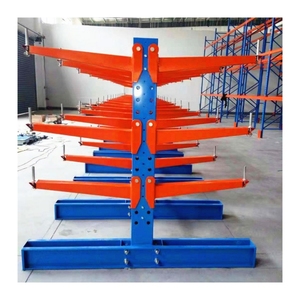
Industrial Heavy Duty Cantilever Pipe Storage Rack & Coil System
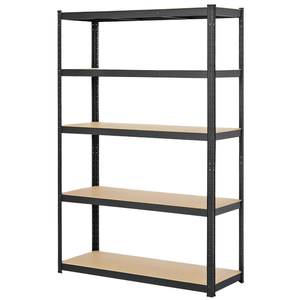
Electronic Commercial 5-Layer Boltless Steel Storage Rivet Shelving
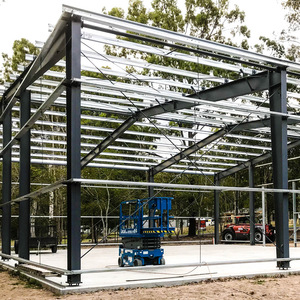
Custom Heavy Industrial Steel Platform Mezzanine Loft System
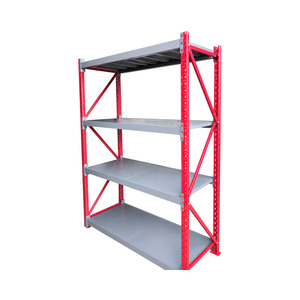
Adjustable Steel Longspan Shelving Unit 5-Tier Medium Duty Rack
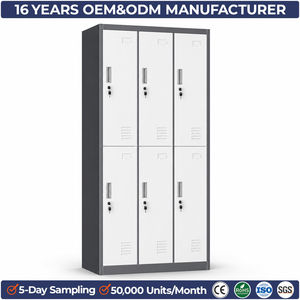
Heavy-Duty 6-Unit Ventilated Industrial Steel Storage Locker
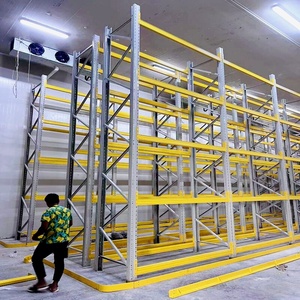
Heavy Duty Very Narrow Aisle (VNA) Selective Pallet Racking
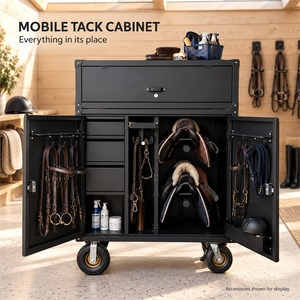
Mobile Heavy-Duty Stainless Steel Sanitary Tack Cabinet with Castors
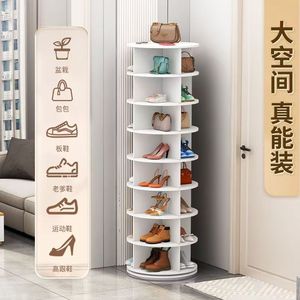
7-Tier Vertical Revolving Lazy Susan Display & Storage Carousel Tower
Structural Rigidity, CE Verification, and Sanitary Metallurgy
A technical guide for procurement directors, logistics engineers, and compliance officers evaluating stainless steel and high-load racking infrastructure.
In modern high-throughput logistics, pharmaceutical compounding, biotechnology cleanrooms, and food-processing hubs, shelving systems can no longer be treated as passive steel furniture. Storage architecture operates as a critical load-bearing component governed by stringent global standards such as EN 15512:2020 (Steel static storage systems – Adjustable pallet racking systems – Principles for structural design) and the European Machinery Directive alongside structural CE execution standards (EN 1090-1 / EN 1090-2 EXC2/EXC3).
When engineering stainless steel storage units, the selection of material grades—principally AISI 304 (EN 1.4301) versus AISI 316L (EN 1.4404)—determines structural lifecycle resilience. Standard carbon steel shelving with organic powder coatings remains vulnerable to micro-crack propagation caused by pallet fork impact, temperature differentials in cold storage facilities, or harsh chemical sanitizers containing peracetic acid, sodium hypochlorite, and caustic soda. Stainless steel systems mitigate structural degradation through a self-healing chromium oxide (Cr₂O₃) passivation film that maintains passivation stability down to a surface roughness of Ra < 0.4 µm.
Advanced Finite Element Analysis (FEA)
Every profile undergoes nonlinear parametric simulation to evaluate second-order elastic-plastic responses under concentrated and seismic dynamic loading profiles.
- Torsional beam-to-column restraint verification
- Elastic buckling load evaluations under ISO 9001:2015
- Global upright frame stabilization calculations
Hygienic Crevice-Free Fabrication
Designed explicitly for FDA/GMP-regulated cleanrooms and washdown zones, eliminating horizontal dirt-catching shelves, open seams, and micro-pores.
- Continuous orbital TIG and fiber-laser welds
- Submerged chemical pickling & electro-polishing
- Perforated tubular beams for unobstructed drainage
Rigid CE Conformity Documentation
Our manufacturing and engineering practices strictly align with European harmonized norms, ensuring flawless audit sign-offs by municipal inspectors.
- Traceable mill test certificates (EN 10204 Type 3.1)
- Permanent safety & rated capacity bay signage
- Compliance with SEMA, FEM 10.2.02, and OSHA codes
Stainless Steel Grade Performance Matrix
Compare mechanical properties, pitting resistance equivalent numbers (PREN), and corrosion ratings across demanding industrial environments.
| Alloy Grade / Specification | Composition (Cr / Ni / Mo) | Yield Strength (Rp0.2 MPa) | Corrosion Resistance (PREN) | Recommended Industrial Applications |
|---|---|---|---|---|
| AISI 304 (1.4301) Standard Austenitic |
18.0% Cr / 8.0% Ni / 0% Mo | ≥ 210 MPa | 18.0 – 20.0 | Commercial dry cleanrooms, retail cold rooms, general chemical warehouse storage. |
| AISI 316L (1.4404) Marine / Low-Carbon |
16.5% Cr / 10.5% Ni / 2.1% Mo | ≥ 220 MPa | 23.1 – 25.0 | Pharma API cleanrooms, maritime dockside hubs, high-saline food processing washdown areas. |
| High-Yield Q235B / S355 Structural Galvanized Steel |
Hot-Dip Galvanized / 65µm Zinc | 235 – 355 MPa | N/A (Barrier Coat) | Heavy-duty industrial cantilever, heavy logistics pallet racking, high-bay automated lofts. |
| Duplex 2205 (1.4462) Austenitic-Ferritic |
22.0% Cr / 5.5% Ni / 3.0% Mo | ≥ 450 MPa | 35.0 – 38.0 | Extreme corrosive offshore chemical terminals, battery electrolyte storage, cryogenic tanks. |
Engineering Discipline & Full Turnkey Lifecycle Capabilities
Drawing on decades of structural execution across the GCC, Africa, and global industrial markets to eliminate operational risks.
Calculated, Not Estimated
Every upright, arm, and beam profile is specified directly from certified unit weights, dynamic lift frequencies, slab thickness, and seismic zones to guarantee zero deflection failure.
Parametric Space Optimization
Our engineers provide complete 2D/3D CAD and Revit models, designing aisle geometries around reach trucks, VNA guided steerers, flue spaces, and NFPA 13 sprinkler clearances.
Climate-Resilient Surface Treatment
From high-grade stainless passivated finishes to 500-hour salt-spray tested electro-powder coatings, our storage equipment withstands blistering humidity and sub-zero cold chains.
Turnkey Installation & Relocation
Certified in-house installation squads anchor, level, and commission your racks with load capacity safety plates. We also provide certified relocation, auditing, and re-profiling services.
Strategic Trends Shaping Stainless & Heavy Warehouse Storage
How automation, ESG directives, and cold-chain compliance are driving the next generation of industrial racking investments.
AMR & ASRS Dynamic Compatibility
Warehousing operations are rapidly pivoting to Autonomous Mobile Robots (AMRs) and Automated Storage and Retrieval Systems (ASRS). Modern shelving requires tighter dimensional fabrication tolerances (±1.0mm), optical alignment markers, and ultra-flat stainless skid plates to permit automated picking arms and shuttles to dock flawlessly without mechanical jamming.
Shift from Carbon Steel to Stainless 304
Procurement directors are calculating 20-year Total Cost of Ownership (TCO). While painted carbon steel possesses lower initial capex, repeated repainting, chipping rust containment, and chemical downtime produce 3x higher lifetime costs in high-moisture cold chains. Stainless steel systems yield an infinite operational lifespan with 100% material recyclability.
IoT-Enabled Structural Health Monitoring
Next-generation stainless shelving and high-bay cantilever uprights are adopting micro-piezoelectric deflection sensors and ambient humidity sensors. These telemetry units feed directly into Facility SCADA and Warehouse Management Systems (WMS), alerting safety officers to overloaded beam spans or unexpected seismic/forklift impact events in real-time.
Frequently Asked Questions on Shelving & Racking Procurement
Authoritative technical answers addressing structural certification, metallurgy choices, and installation parameters.