Engineered Heavy-Duty Industrial Racking & Specialized Storage Lines
From high-velocity gravity flow roller modules to heavy structural cantilever columns and high-density longspan shelving, every component undergoes strict dimensional tolerance, weld integrity testing, and hot-applied electrostatic finish certification.
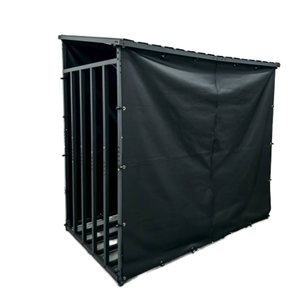
High Quality Wholesale Superior-Grade Modern Log Holder Firewood Rack Black Alloy Steel
- Material: Heavy-gauge structural alloy steel
- Coating: Outdoor UV-resistant powder coat
- Application: Heavy dunnage & specialized retail
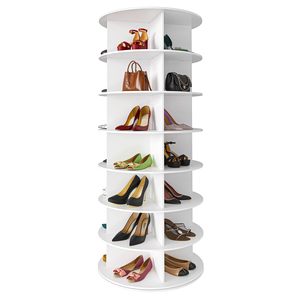
7 Tier Modern Particle Board Rotating Shoe Rack Tower Display Lazy Susan Revolving 360 Storage Carousel Vertical Home Furniture
- Mechanism: 360° Industrial bearing carousel
- Capacity: Multi-tier high-density vertical footprint
- Application: Fast-pick replenishment display
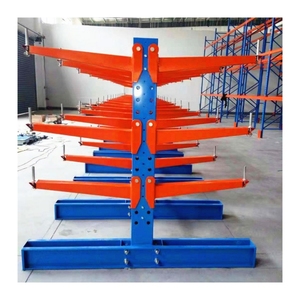
Industrial Shelving Pipe Storage Equipment Warehouse Heavy-duty Cantilever Racking Systems Display Shelves Steel Coil Rack
- Arm Capacity: 500 kg to 2,500 kg per arm
- Structural Column: Hot-rolled H-beam profile
- Application: Long bar, pipe, coil, and timber stock
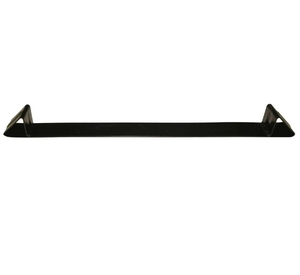
33 Inch Light Duty Steel Flatbed Coil Rack Wholesale Truck Accessories
- Length: 33-inch formed carbon channel
- Safety Standard: Heavy cargo dunnage retention
- Application: Flatbed coil security & staging
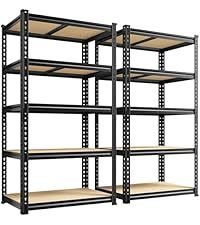
5 Layer Industrial Storage Shelving Racks Heavy Duty Adjustable Boltless Rivet Rack Corrosion Protection Warehouse Powder Coated
- Shelf Loading: 150 kg - 400 kg UDL per tier
- Interlock: Bolt-free keyhole/rivet coupling
- Application: E-commerce manual pick carton lines
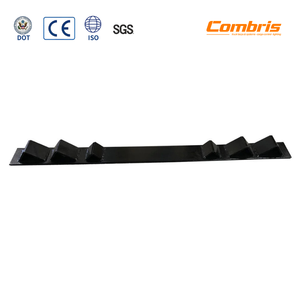
Steel Coil Rack for Flatbed Trailer Hotshot Trucking Coil Securement Dunnage Rack Heavy Duty Metal Coil Holder
- Rating: High-yield reinforced steel saddle
- Design: High-friction heavy-roll cradle
- Application: Industrial sheet mill & transport hubs
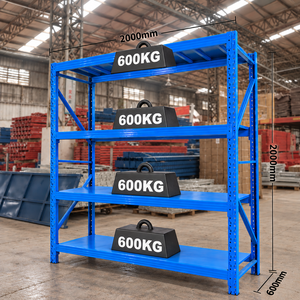
OEM ODM Custom Adjustable Multi Tier Layer Longspan Warehouse Storage Metal Steel Shelf Rack Medium Light Duty Shelving Racking
- Pitch: 50mm pitch adjustable beam levels
- Decking: Galvanized mesh or solid steel plates
- Application: Carton live flow conversion staging
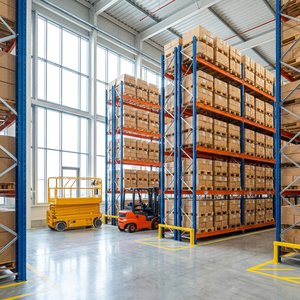
Warehouse Equipment Heavy Duty Pallet Rack Steel Storage Racking System Supplier
- Bay Rating: Up to 24,000 kg total frame load
- Integration: Direct base for dynamic flow tracks
- Application: Multi-depth FIFO & LIFO logistics
Anatomy of Certified Gravity Flow Systems: Kinematics, Braking, and Dynamic Integrity
Gravity flow racking—also classified as pallet dynamic live storage—is an unpowered, high-density accumulation method operating under controlled gravitational acceleration. By angling roller beds along an engineered gradient, pallets load at the rear staging face and descend smoothly to the pick station.
Slope Geometry & Kinematics
The standard operational gradient is calibrated between 3.0% and 4.0% (1.7° to 2.3°). This inclination overcomes static breakaway friction across diverse pallet materials without producing uncontrolled terminal velocity.
- Calculated for wooden EUR/EPAL, GMA, and plastic skids
- Zero-energy autonomous gravitational propulsion
- Maintains steady descent speeds below 0.3 m/s
Centrifugal Speed Controller Rollers
Uncontrolled mass acceleration creates catastrophic impact risks. Our CE-rated lines integrate self-contained internal centrifugal speed governors directly within the roller track bed to regulate velocity regardless of load variations.
- Planetary gear dynamic resistance mechanism
- Automatic braking proportional to pallet weight (150-1500kg)
- Direct drive polyurethane-coated surface contact
Pick-Face Separator Mechanisms
In deep lanes (5 to 25 pallets deep), cumulative line pressure on the front pallet creates immense extraction resistance. Heavy mechanical time-delay or foot-pedal separators isolate the discharge pallet for zero-pressure retrieval.
- Relieves 100% of line backpressure on retrieval
- Protects forklift mast and operator from forward push
- Automatic auto-reset after front pallet is lifted
Storage Density vs. Throughput: Gravity Flow vs. Alternative Topologies
Selecting the right high-density warehouse storage strategy requires balancing spatial footprint, pick rates, operational overhead, and mechanical maintenance. Review the structural trade-offs below:
| System Architecture | Inventory Logic | Floor Footprint Utilization | Travel Time & Pick Speed | Energy Demand | Capital Expenditure (TCO) |
|---|---|---|---|---|---|
| CE Gravity Flow Racking | Strict FIFO | Up to 85% (High-density blocks) | Ultra-Fast (Dedicated charge & pick aisles) | Zero kWh (Gravity powered) | Medium / High ROI payback in 18-24 mos |
| Drive-In Racking | LIFO Only | 65% - 75% | Slow (Forklifts drive into rack tunnels) | Zero kWh | Low initial CAPEX / High forklift damage rate |
| Radio Shuttle Cart System | FIFO or LIFO | 80% - 90% | Moderate to Fast (Dependent on shuttle battery/fleet) | Medium (Li-ion battery charging) | High (Sensors, PLC boards, motor wear) |
| Standard Selective Racking | 100% Random Access | 35% - 45% (Aisle-heavy floor plan) | Fast access, High travel time across aisles | Zero kWh | Low CAPEX / High ongoing real-estate cost |
| Push-Back Racking | LIFO Only | 60% - 70% (2 to 6 pallets deep) | Moderate (Forklift opposes gravity during loading) | Zero kWh | Medium CAPEX / Mechanical nest cart system |
Key Industry Trends Reshaping High-Density Gravity Racking Procurement
Industrial supply chains face soaring warehouse rents, volatile energy tariffs, and labor shortages. Gravity flow technology is rapidly evolving from simple mechanical racks into high-precision, automated fulfillment modules.
Zero-Carbon Intralogistics & ESG Directives
Unlike powered conveyor systems and automated shuttle bots that consume continuous industrial power, gravity flow leverages potential energy ($\Delta E_p = m \cdot g \cdot \Delta h$). Enterprise logistics operators in Europe, the Americas, and the GCC are specifying gravity lanes to lower Scope 2 greenhouse gas emissions and protect against electrical grid blackouts in mission-critical hubs.
AMR & AGV Pick-Face Synchronization
Modern fulfillment designs replace manual reach-trucks with Autonomous Mobile Robots (AMRs) and Automated Guided Vehicles (AGVs). Gravity flow output faces are now engineered with micro-switch load sensors, optical interlocks, and millimeter-precision docking tolerances to allow robotic pallet lifters to extract loads without human intervention.
Cold Chain & Pharmaceutical Deep-Freeze Demand
Refrigerated space is 3x to 5x more costly to cool than dry ambient storage. Logistics operators in temperature-controlled environments (-25°C to -30°C) increasingly mandate pallet flow systems. High thermal-conductivity bearings, specialized synthetic cryogenic greases, and stainless/galvanized rollers prevent bearing freeze-up and preserve rapid rotation of frozen foods and biologics.
EN 15512:2020 Structural Limit State Code Compliance
The revised European standard EN 15512:2020 enforces advanced non-linear structural design, second-order analysis for frame sway, and stringent beam-to-column connector testing. Importers and multi-national warehouse developers now reject non-certified racking, prioritizing verified structural steel grade declarations (Q235B, Q355B, S355MC) with full CE execution trace sheets.
Why Engineering Teams & Global EPC Contractors Partner With Us
As a direct manufacturer and international exporter, we eliminate middlemen and supply turnkey, fully load-rated, CE-certified storage installations backed by documented structural calculation reports.
Calculated & FEA Verified
Every bay profile is simulated through finite element analysis under seismic and live-load combinations according to FEM 10.2.02 and EN 15512, providing certified working load limit plates.
High-Precision Roller Tracks
Fabricated with high-grade galvanized steel tubing, double-shielded precision 6204/6205 bearings, and heavy-duty triple-riveted axle brackets for zero-sag performance up to 1,500 kg per pallet.
Turnkey Global Exportation
Full ocean freight packaging, component tagging, sea-worthy bundling, and coordinated multi-container export throughout Europe, the Middle East, GCC, Africa, and the Americas.
Certified On-Site Handover
We supply complete CAD fabrication drawings, assembly guides, on-site supervision capabilities, and lifetime spare-parts replacement for rollers, brakes, and guide rails.
Frequently Asked Questions: Technical Engineering & Sourcing
Answers to complex engineering, floor slab, pallet quality, and safety inquiries compiled by our technical sales director and structural racking engineers.
What slope gradient is standard for pallet flow systems, and can it be adjusted on-site?
The industry standard slope is between 3.0% and 4.0% (approximately 1.7° to 2.3°), translating to roughly 35mm to 40mm of vertical drop per linear meter of track bed. The exact slope depends on pallet weight, bottom deck board orientation, and the friction coefficient of the pallet material (wooden EUR/GMA, smooth plastic, or metal runner).
Our gravity flow rack designs incorporate incremental 50mm vertical beam height adjustments on the upright frames, allowing minor fine-tuning of the gradient during installation to match specific pallet inventory batches.
How do brake rollers (speed controllers) prevent pallet runaway and lane damage?
Centrifugal speed controllers contain an internal planetary gear set coupled with spring-tensioned centrifugal brake pads. As a pallet rolls over the brake roller, its descent speed causes the internal gears to rotate. If the rotational speed exceeds 0.25 to 0.30 m/s, centrifugal force pushes the brake pads against the internal drum wall, generating proportional friction.
Heavier pallets experience stronger resistance, while lighter loads glide through with minimal drag. Brake rollers are spaced every one-pallet-position along the lane (typically every 1.2 to 1.5 meters) to ensure consistent speed regulation from the entry charge point to the pick face.
Can gravity flow racks accommodate damaged, irregular, or poor-quality wooden pallets?
Pallet quality is the most critical operational variable in any dynamic flow system. Split bottom boards, protruding nails, or missing runner blocks can snag between roller gaps, causing "pallet hang-ups" midway through a deep lane. To accommodate variable pallet qualities, we engineer our tracks with full-width cylindrical steel rollers (rather than narrow twin skate-wheels) and decrease roller spacing pitch so at least three full rollers contact the pallet runners at all times.
For warehouses handling irregular or non-standard skids, slave boards, plastic flow runner shoes, or custom steel carrier trays can be integrated.
What certifications and engineering standards govern your structural export designs?
Our structural rack uprights, load beams, and dynamic components comply with European Standards: EN 15512:2020 (Steel static storage systems – Adjustable pallet racking systems – Principles for structural design), EN 15620 (Tolerances, deformations, and clearances), EN 15629 (Specification of storage equipment), and the CE Machinery Directive 2006/42/EC for mechanical pick separators and safety governors.
Material mill certificates (EN 10204 Type 3.1) verify steel chemistry and yield tensile strengths (Q235B, Q355B / S355 grade equivalents) with every commercial shipping dossier.
How does the pick-face separator mechanism protect forklift operators?
In a 10-pallet deep lane with 1,000 kg pallets, the front pallet experiences backpressure from 9,000 kg of gravitational mass leaning against it. If an operator attempts to extract the front pallet, this severe load pressure creates immense friction against the pallet tines, potentially pulling the rear pallets forward uncontrollably or tilting the load toward the aisle.
Our heavy-duty mechanical separation system locks the second pallet in place 300mm behind the first. Once the forklift lifts and extracts the front pallet, the operator triggers a release lever or drives clear, allowing the separator to slowly transfer the line forward in a controlled, cushioned cascade.
What are the cold storage specifications for lubricants and bearing seals?
Standard petroleum lubricants thicken and crystallize at sub-zero temperatures, freezing roller bearings and locking brake mechanisms. For blast freezers and cold storage facilities operating down to -35°C (-31°F), our rollers are fitted with double-labyrinth low-friction nitrile seals packed with specialized synthetic low-temperature ester-based greases.
Additionally, roller shells and mounting brackets receive a minimum 20-micron hot-dip galvanized coating or pre-galvanized zinc treatment to resist atmospheric condensation during defrost cycles.
What floor slab capacity and anchor tolerances are required?
Due to the concentrated mass of high-density block configurations, gravity flow racks demand high-integrity industrial concrete slabs, typically minimum 180mm to 250mm reinforced concrete with a compressive strength rating of C25/30 or C30/37 (3,500 to 4,500 PSI). Slab point loads can reach 60 to 120 kN per upright baseplate depending on frame height and bay depth.
Floor flatness must meet DIN 18202 Table 3 Group 4 or FEM 10.2.06 classifications to guarantee upright plumbness and prevent lane skew.
What is the manufacturing lead time and global shipping arrangement?
Standard engineering layout validation and production take 3 to 5 weeks depending on project scale (pallet positions and track meterage). Components are bundled into optimized 40ft High Cube (40HQ) containers with heavy timber dunnage, protective plastic wrap, and steel strapping to prevent ocean transit shifting.
We provide full EXW, FOB, CIF, or DDP terms, complete with packing lists, assembly marking plans, and installation CAD guides for global project sites.
Request Your Custom Gravity Flow Layout & Static Load Calculation
Supply your facility parameters to receive a certified preliminary CAD design, lane gradient simulation, bill of materials, and transparent export pricing within 24 hours.
Connect with a System Engineer
Review your project specifications directly with our technical team. We calculate brake intervals, roller pitches, and frame upright requirements for your facility.
Inquire Now